The weekly confrontations outside Café Basimta in Jerusalem have become a focal point for wider secular–ultra-Orthodox tensions ahead of Israel's Oct. 27 elections. Protesters object to the café operating on Shabbat, while secular counter-demonstrators argue for personal freedoms and protest perceived privileges such as draft exemptions. The incident reflects broader demographic shifts, heightened political influence of ultra-Orthodox parties under Netanyahu, and an election debate over equalizing military service.
Weekly Standoff at Jerusalem Café Exposes Israel’s Deep Social and Political Fault Lines
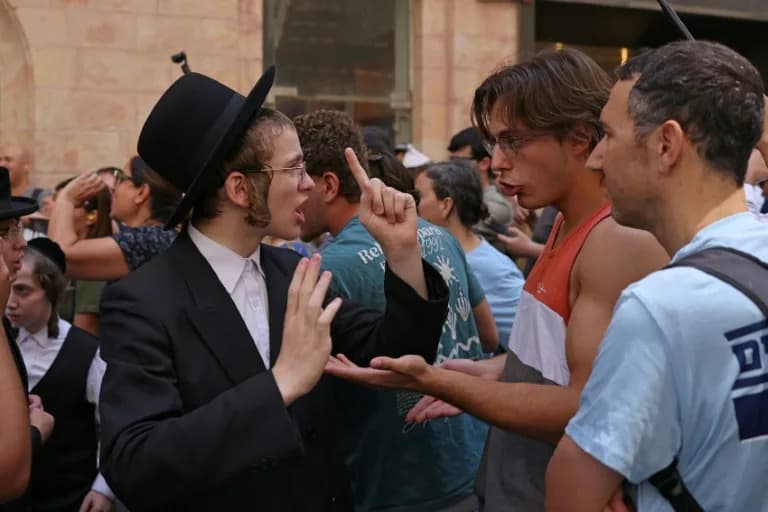
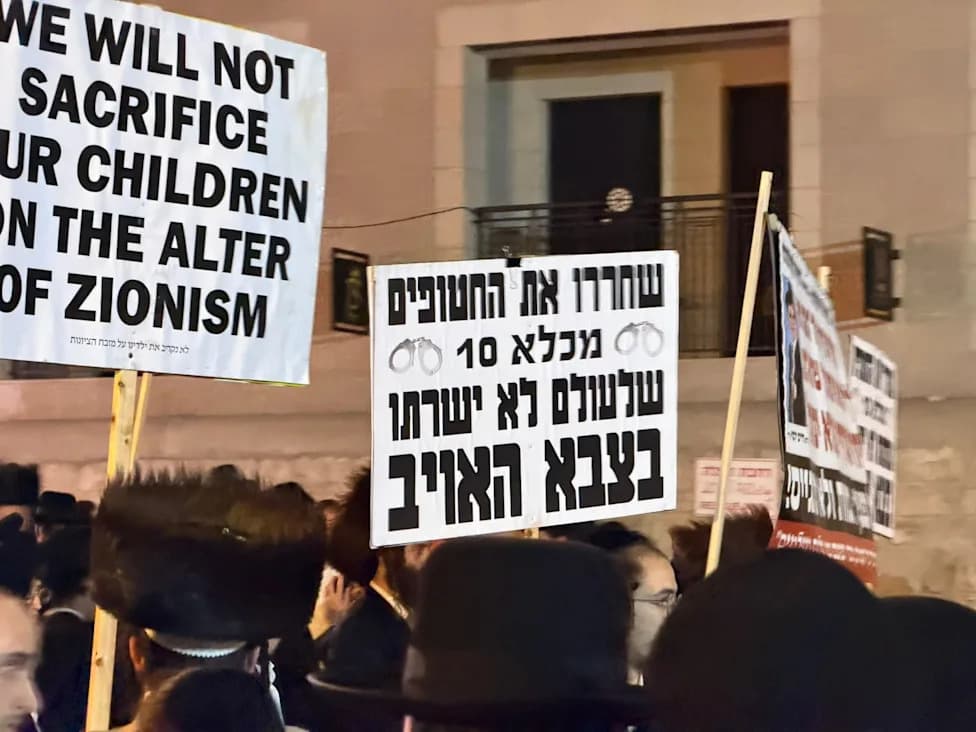
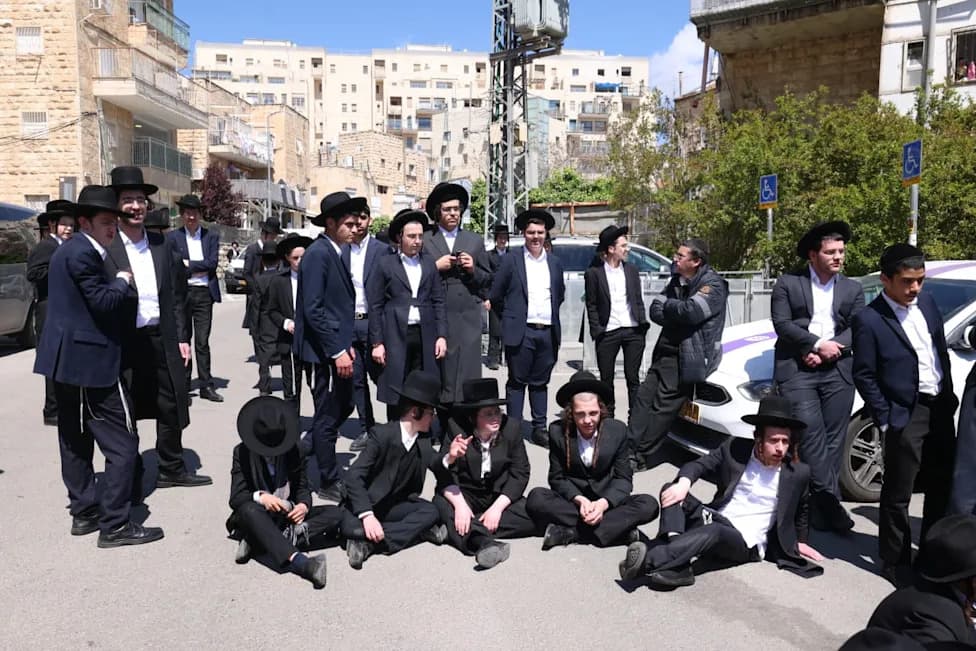
Ultra-Orthodox protesters demonstrate against Cafe Basimta operating on Shabbat, the weekly Jewish day of rest, as secular activists stage a counter-protest in support of the cafe, in central Jerusalem (AHMAD GHARABLI)
Alma Ronen has been on near-constant military duty for more than two years. On a Saturday without her uniform, wearing a T-shirt and jeans, she wanted nothing more than to sit outside and drink coffee — and resented that her more religious fellow citizens expected otherwise.
Since June, ultra-Orthodox protesters have repeatedly gathered at Café Basimta in central Jerusalem, located just beside a religious neighborhood, angrily objecting that it opens on the Sabbath (Shabbat) — the day observant Jews refrain from work, machinery and commercial transactions.
Wearing customary modest black suits, dozens of ultra-Orthodox men and boys marched toward the café chanting "Shabbat!" Some younger protesters escalated the confrontation with screams and theatrical gestures, while secular Israelis organized a counter-demonstration, blowing whistles to drown out the chants and wearing pink lapel buttons bearing a middle finger. One counter-protester held a banner reading: "Our Holy Right to Drink Coffee."
Anger Over Military Service
For many secular Israelis, the café standoff crystallises long-standing resentments: under recent governments, many ultra-Orthodox men receive stipends to study religious texts and are largely exempt from mandatory military service. The issue has become especially fraught as Israel's military has been stretched by the regional war that followed Hamas's attack on October 7, 2023.
"I feel anger in my heart that only some people must go to the army and serve," said Ronen, 20, who has been deployed in Gaza and southern Lebanon.
"The Orthodox are parasites. You can't say any other word for this," said Amit Yair, 77, waiting in line for coffee. "All they want is money from the government. They say it's God's land but they want to kill everything that is here to make it a Halachic state."
The café's owner is publicly known for supporting Christian proselytising efforts toward Jews — a fact many in the Jewish community deplore — though customers say the owner's beliefs do not determine their choice to visit.
Politics, Demographics And A Polarized Public
Prime Minister Benjamin Netanyahu, personally secular, has relied on ultra-Orthodox parties for political support for nearly two decades. In the current, very right-wing government, those parties have increased their influence, a source of frustration for many Israelis who view the arrangement as granting political protection to community privileges.
According to a study last year by the Jewish People Policy Institute, 53% of Jewish Israelis identify as completely or somewhat secular. At the same time, religious communities are growing as a share of the population — producing simultaneous trends toward both greater secular public life (more businesses and some public transport operating on Shabbat, broader acceptance of LGBTQ rights) and rising religious influence in politics and demography.
Shlomit Ravitsky Tur Paz, head of the Religion and State programme at the Israel Democracy Institute, said tensions have sharpened because ultra-Orthodox parties sit in government and influence decisions while many secular Israelis shoulder a disproportionate share of the burden of military service.
Netanyahu's principal challengers, led by former military chief Gadi Eisenkot, have made ending draft exemptions — and equalizing national service obligations — a central campaign issue ahead of the October 27 elections.
Aya Lewkowicz of the activist Pink Front, who travelled from secular Tel Aviv to protect the café, summed up the secular argument: "Everyone should have the freedom to rest the way they want to rest and not have it be dictated by a small minority that gets backing from the government."
After several hours of noisy confrontation, the ultra-Orthodox protesters dispersed but vowed to return the next Saturday. Each week the café's struggle attracts more attention and a steadily growing queue for coffee.
Help us improve.