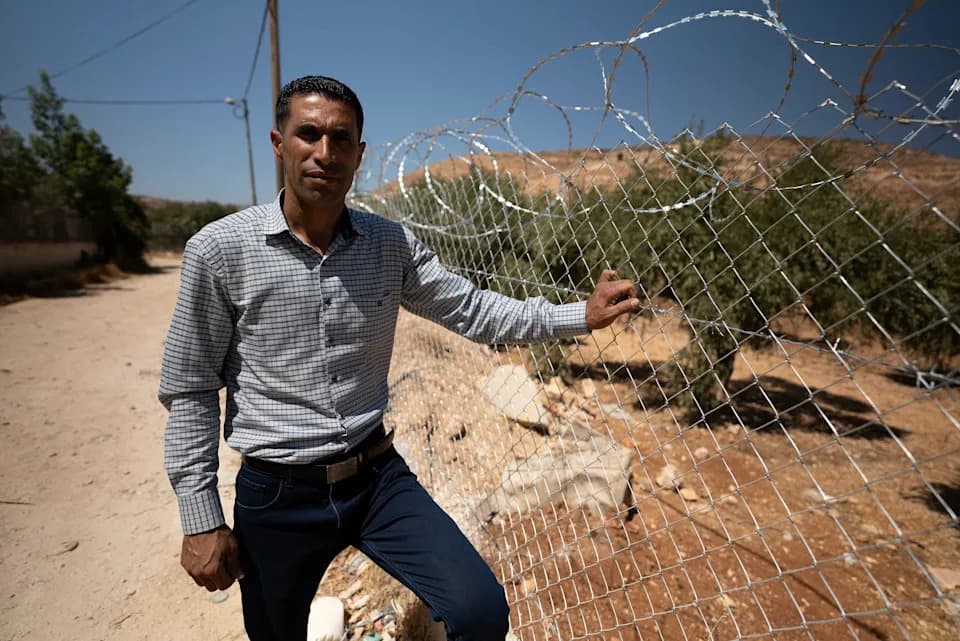
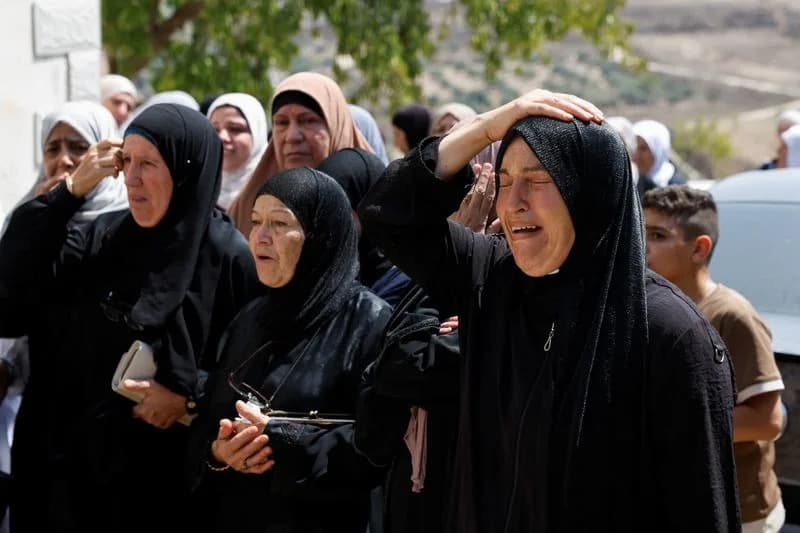
The siege of Qusra has entered a second week, with 15 Palestinians, including two children, confined to three homes and cut off from food, water and electricity amid a settlers' blockade backed by military forces. A UNICEF convoy was intercepted; food reached the area in two vehicles while a water tanker was expelled and utility repairs were attacked. Residents say they will remain in their homes despite the pressure, while rights groups and Palestinian leaders warn the operation could set a wider precedent amid a surge in outposts and settlement plans.
“Water and Salt”: Qusra Families Besieged as Settlers and Israeli Forces Cut Off Supplies
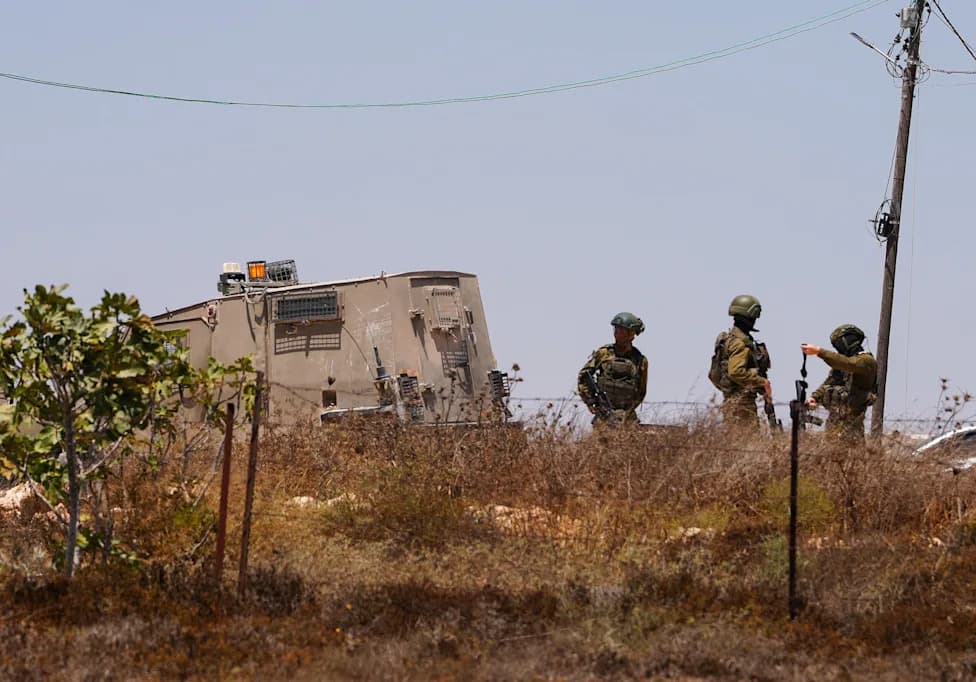
Israeli army soldiers stand near a Palestinian house which was besieged by Israeli settlers in Qusra village in the Israeli-occupied West Bank August 13, 2026 [Ali Sawafta/Reuters]
As the siege on Qusra enters its second week, 15 Palestinians — including two children — remain confined to three homes in the Ras al-Ain area south of Nablus. Armed Israeli settlers, operating alongside military battalions and convoys, have surrounded the houses and cut the families off from food, water and electricity.
The United Nations warned that the residents are "trapped inside their homes in a state of terror, unable to attend to their basic needs and without access to water or electricity." On Sunday the Israeli army intercepted a UNICEF convoy attempting to deliver aid; while two vehicles were permitted to bring limited food supplies, a water tanker was blocked and expelled, leaving the households to endure continuing shortages.
Local officials say attempts to restore services were thwarted. Settlers reportedly attacked municipal workers and a bulldozer that tried to repair utility lines. Qusra Mayor Abdel Azim Wadi told Al Jazeera, "We were unable to restore electricity and water to the three besieged homes in the town." He added: "Humanely, we have often heard about human rights, about children's rights, and about women's rights, but today what our families in Jabal Ras al-Ain are experiencing is truly stripped of humanity."
Witnesses and rights groups describe coordinated action. Al Jazeera correspondent Laith Jaar, reporting from Qusra, said the military has directly enforced the blockade: "The Israeli army is the one providing this support to these settlers, and the Israeli army is moving in the area with the participation of settlers who are trying to distance Palestinians and expel them from their homes." He characterized the operations as "continuous siege operations that completely tighten the stranglehold on the Palestinians."
The Israeli army has converted a hilltop house into a makeshift barracks and declared the zone a closed military area, expelling international solidarity activists and members of the Israeli group Peace Now. At the same time, the military has reportedly declined to implement nine eviction orders against an illegal outpost established by the Hilltop Youth militia on the town's western outskirts in Area B — the outpost from which settlers are operating the siege.
"We will remain steadfast and we will remain patient... even if we drink water and salt... we made a pact with ourselves and our neighbors ... that we will not leave here except as martyrs," said besieged resident Qusai Abu Reida to Al Jazeera.
Political analysts and rights advocates warn the Qusra siege may reflect a broader strategy. Mustafa Barghouti, Secretary-General of the Palestinian National Initiative, told Al Jazeera the operation has deliberate tactical and strategic aims: to seize lands, expel residents and set a precedent for other West Bank villages. Erika Guevara Rosas, Amnesty International's Senior Director for Research, Advocacy, Policy and Campaigns, said the events "reflect the relentless escalation and expansion of an accelerating and well-documented pattern of coordinated and strategic settler terror, enabled, backed and funded by the State of Israel."
Observers link the siege to a rapid expansion of settler outposts and settlement planning: the Wall and Settlement Resistance Commission reports more than 300 outposts established since October 2023, and the Israeli government has advanced plans for some 104 new settlements.
Humanitarian and legal concerns: The blockade raises immediate humanitarian concerns for the besieged families and broader legal and political questions about the role of security forces and the enforcement of eviction orders. International actors, rights groups and Palestinian leaders have called for urgent access and protection for civilians.
Help us improve.