The Israel Antiquities Authority uncovered a 1,300-year-old planned industrial and commercial complex beneath Ramat Gan’s Winter Stadium parking lot during excavations for a new bus terminal. The site—dated to the Umayyad/Abbasid and later Fatimid periods—features straight, intersecting streets, rooms used as shops or storerooms, pottery kilns, and numerous artifacts including intact oil lamps and coins. Researchers suggest it was either a regional trade/production hub or part of an as-yet-unlocated nearby settlement. An IAA open day is set for August 19; the remains will then be reburied for preservation while display options are considered.
1,300-Year-Old Planned Trade and Production Complex Found Beneath Ramat Gan Stadium Parking Lot
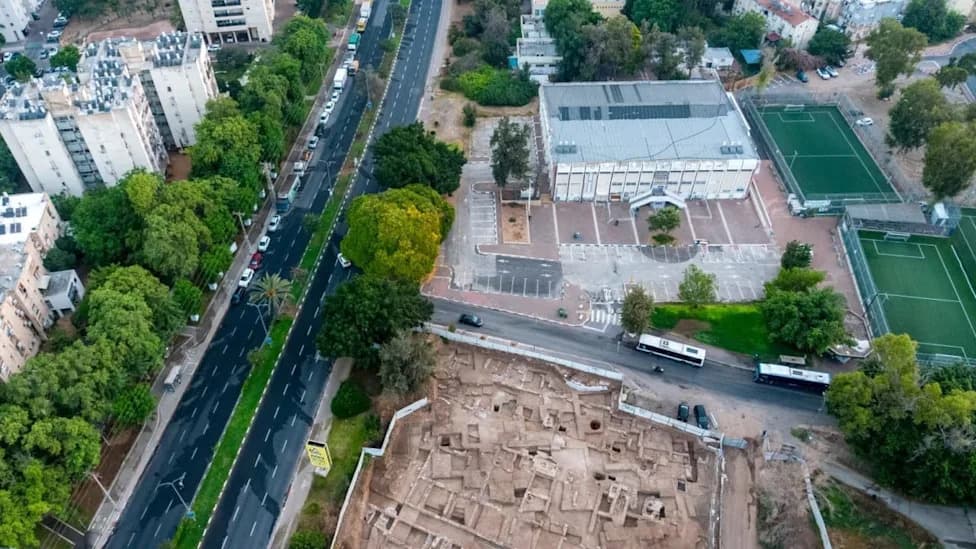
Aerial view of the Israel Antiquities Authority excavation in Ramat Gan, August 16, 2026. (photo credit: Assaf Peretz/Israel Antiquities Authority)
Archaeologists from the Israel Antiquities Authority (IAA) have uncovered a surprisingly well-preserved 1,300-year-old industrial and commercial complex beneath the Winter Stadium parking lot in Ramat Gan. The discovery emerged during recent excavations conducted ahead of construction for a large bus terminal by Netivei Ayalon.
The dig exposed straight, intersecting streets lined with rows of rooms that appear to have functioned as shops or warehouses, alongside plastered production facilities and several pottery kilns. Excavators also recovered dozens of intact oil lamps and pottery vessels, bronze tableware and cosmetic implements, iron pickaxe heads, a sickle, numerous nails, dozens of coins, and substantial quantities of local and imported pottery and glass fragments.
Dating and occupation phases. According to the IAA, the earliest phases of the site date to the 7th–8th centuries CE (Umayyad and early Abbasid periods). Later layers correspond to the Fatimid period. The complex appears to have been active for roughly 150 years before an initial abandonment; it was resettled in the 10th century CE and then abandoned again in the late 11th century CE, prior to the Crusader conquest.
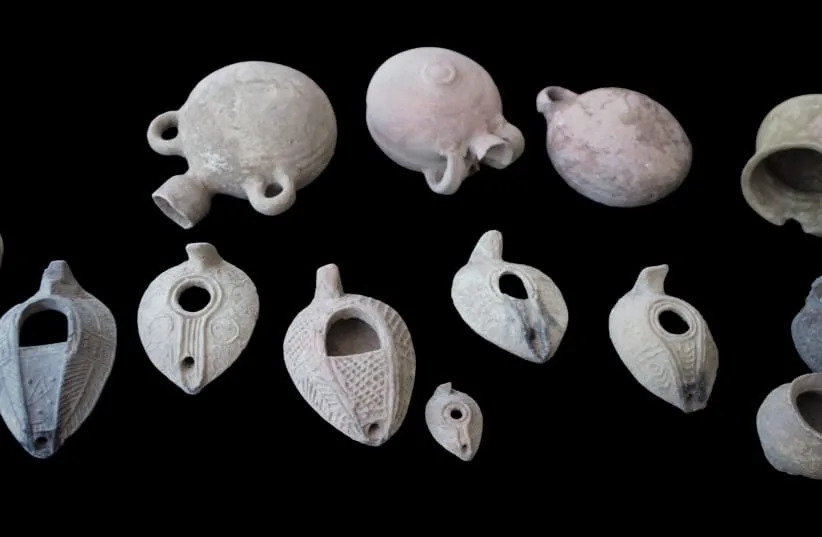
Collection of oil lamps uncovered in the Ramat Gan excavation, August 16, 2026. (credit: EMIL ALADJEM/ISRAEL ANTIQUITIES AUTHORITY)
Function and location. Researchers propose two main interpretations: the complex was either a planned regional trade and industrial station serving travelers and local commerce, or it formed part of a nearby settlement that has not yet been located. Excavation directors Yoav Arbel and Lior Rauchberger note the site's likely strategic placement close to the main road that linked Jaffa, Ramla (then a district capital), and Jerusalem, and possibly on a secondary road branching from that artery. The surrounding fertile land and available water sources would have supported production and trade.
"The excavation uncovered an organized, planned complex featuring straight, intersecting streets. Lining these streets was a series of rooms that served as shops or warehouses, plastered industrial facilities, pottery kilns, and more," the directors said. "Its main phase appears to have been planned in detail by engineers and may have been organized or funded by regional authorities."
Cultural context. Contemporary rural and urban communities in the region included Muslims, Christians, Jews, and Samaritans. The excavations did not produce artifacts that clearly identify the complex with a single religious or ethnic group, suggesting it served a multi‑communal or commercial function.
Public access and preservation. The IAA scheduled an open day for the public to view the finds on Wednesday, August 19. After the viewing, the remains and most artifacts will be carefully reburied to preserve them in situ while the IAA assesses whether certain objects can be conserved and displayed publicly in the future.
Photo credit: Emil Aladjem / Israel Antiquities Authority.
Help us improve.