Brief: A confrontation in Dearborn between far‑right activist Jake Lang and bystanders sparked a wave of AI‑generated Islamophobic posts on Facebook, including calls for violence and appeals to Sturgis motorcycle rally attendees to travel to Dearborn. Meta removed some flagged items but left others visible. The incident underscores how manipulated media and viral misinformation can radicalize audiences and heighten real‑world risks.
AI-Generated Islamophobia Floods Facebook, Inciting Violence Against Muslim Americans

A triptych of images shows an army of robotic-looking Crusaders armed with guns, a poster calling for a "Christian Crusader March on Dearborn," and a man roasting a pig in front of a mosque.
Summary: After a confrontation in Dearborn, Michigan, posts and AI‑generated imagery on Facebook sparked an online wave of Islamophobic content, including explicit threats and calls for violence. The incident highlights how manipulated media can amplify hate and potentially mobilize real‑world actors.
What Happened
Earlier this month, far‑right activist Jake Lang — a white nationalist who previously served four years in prison for his role in the January 6 attack — arrived at a peaceful religious procession in Dearborn carrying a sign that read, "deport 100 million" Muslims. A scuffle followed between Lang and a small but angry crowd; authorities later reported three arrests.
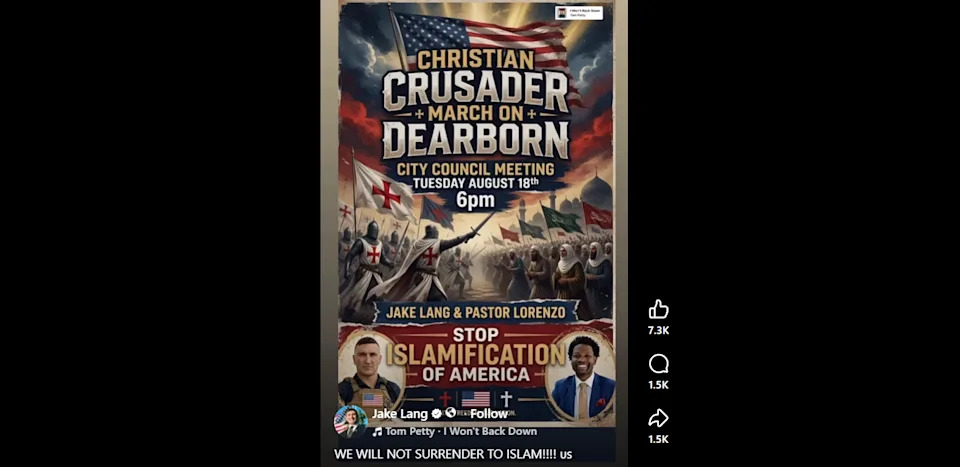
A screenshot shows an AI-generated poster on Facebook advertising a "Christian Crusader March on Dearborn" to "stop Islamification of America" and saying "WE WILL NOT SURRENDER TO ISLAM!!!!!"
Lang framed the episode as evidence of the "Islamification of America" and promoted a self‑styled "Christian Crusader March on Dearborn" using an AI‑generated poster that depicted armored Christian fighters charging at a crowd of Muslims with the slogan: "CRUSADE OR BE REPLACED!" The imagery invoked the historical Crusades, a series of medieval religious wars that led to widespread bloodshed.
How Social Media Amplified It
On Facebook, the call to action spread rapidly. AI‑generated posts and manipulated videos — including one that appeared to depict Dearborn Police Chief Issa Shahin — accumulated hundreds of hostile comments and explicit threats. Some posts urged attendees of the Sturgis Motorcycle Rally (roughly 665 miles away) to ride to Dearborn to confront Muslim residents.
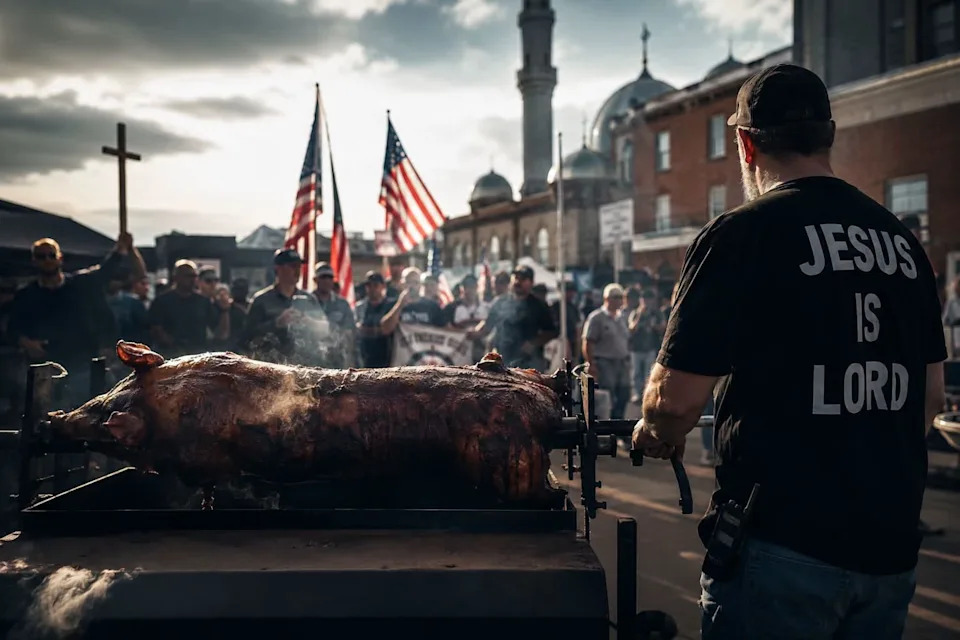
An AI-generated image depicting a group of Christian protestors roasting a whole pig while a mosque looms in the background.
Examples of violent online rhetoric included posts telling people to "do something about Dearborn" and claims that opponents would "leave in a [body bag]." Other comments used dehumanizing language and called for forced removal of Muslim families.
Investigators and reporters who flagged specific posts say Meta removed some of the content but left other extreme items visible for extended periods, including a false claim that a man had been "stoned to death" and comments likening Muslims to vermin. Meta referred to its hateful conduct policy and said it protects refugees, migrants and asylum seekers from the "most severe attacks" while allowing debate over immigration policy.
Context And Risk
The surge of AI‑mangled Islamophobic content echoes past episodes in which platform algorithms amplified misinformation and fueled real‑world violence — from disinformation around the January 6 uprising to the 2017 Rohingya crisis in Myanmar. According to public accounts, Lang was later pardoned by Donald Trump during his second presidential term; reporters should treat such claims with appropriate sourcing.
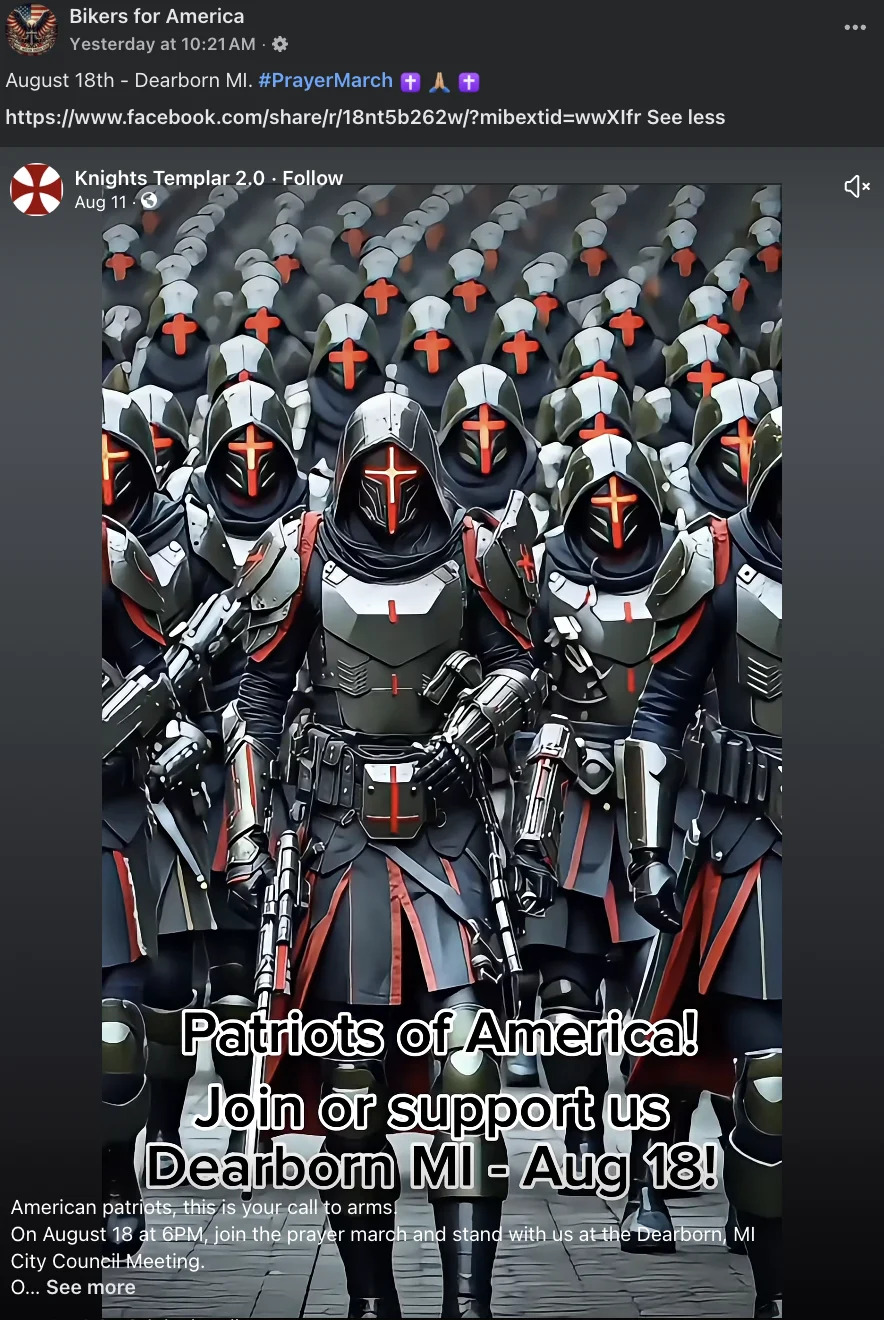
A screenshot of an AI-generated reel from the group "Bikers for America," featuring robotic Christian crusaders marching with guns and a call-to-action to join the protest on August 18.
With an August 18 gathering on the calendar, it remains unclear whether online calls for violence will translate into a coordinated physical attack. Regardless, the episode demonstrates how synthetic media and viral misinformation can radicalize audiences, escalate threats, and deepen community fear long after a single post goes live.
If you have seen hateful AI‑generated content on social media, contact [email protected].
Help us improve.