Western ballistic missile defences — largely US-made Patriot and THAAD systems — have been heavily depleted by recent conflicts, notably the Iran war. Interceptor inventories have fallen sharply (Patriot from ~2,330 to ~800; THAAD from ~452 to ~250), while US production rates are limited by factory capacity and specialised components. Analysts warn that growing missile arsenals from Russia, China, Iran and North Korea are outpacing defensive production, forcing difficult choices about prioritisation and long-term industrial investment.
How Recent Wars Have Hollowed Out Western Ballistic Missile Defences
An image of Donald Trump looking through a red screen with a scorched hole in it
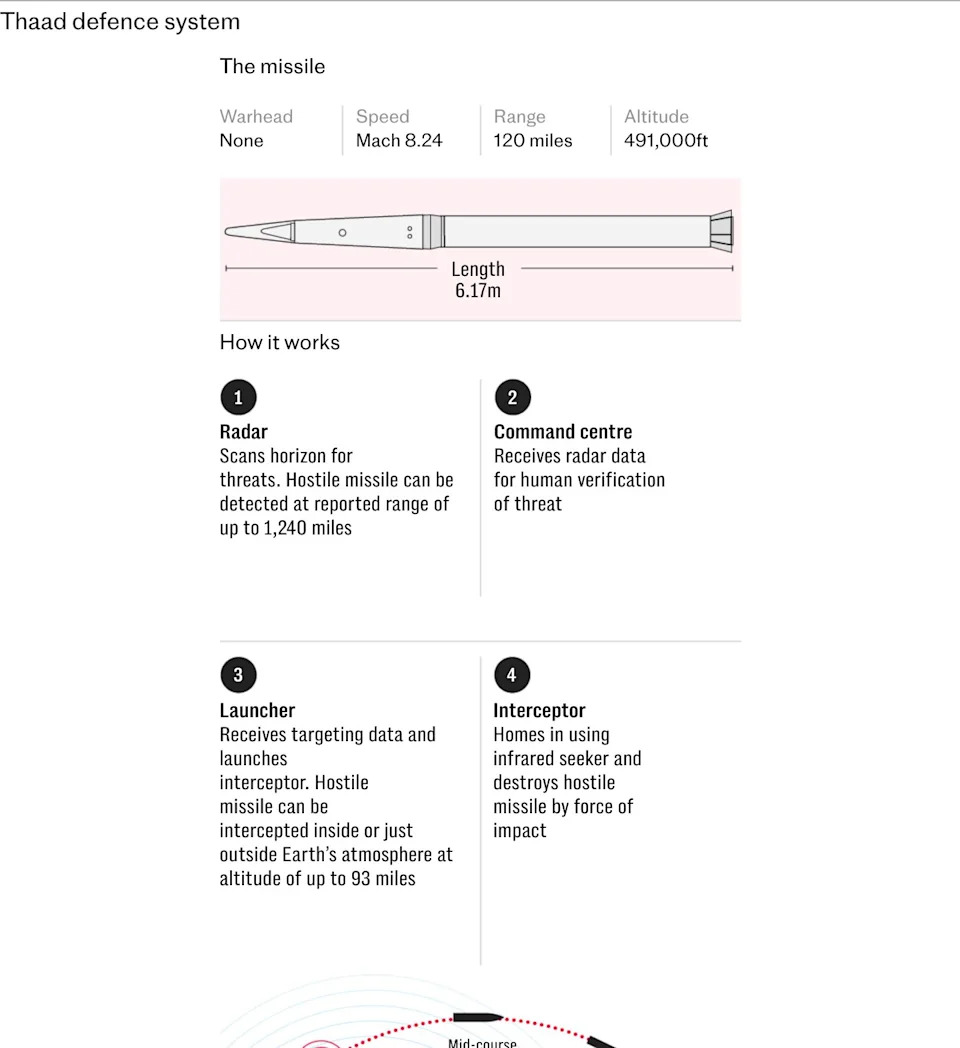
Short-range ballistic missiles tear through the atmosphere at roughly a mile a second, carrying warheads toward targets from Kyiv to Gulf capitals. When one of these missiles is inbound, air-defence systems have only minutes to detect, track and defeat it with an interceptor — a technical challenge often likened to trying to hit a bullet with another bullet.
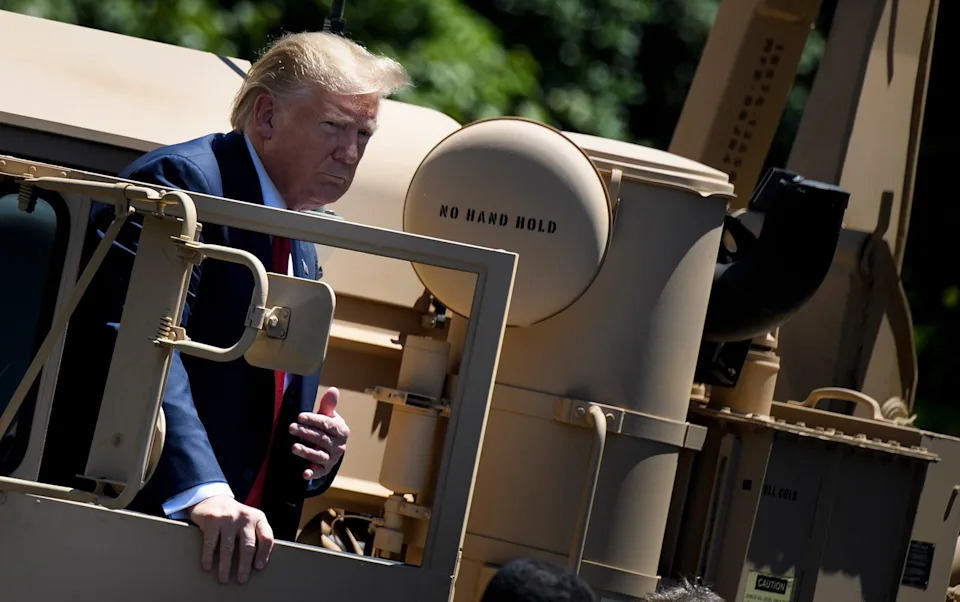
Donald Trump gets out of a Thaad missile truck during a showcase of US-made products at the White House - Getty
Because of that difficulty, ballistic missile-defence systems are among the most advanced and costly items in modern arsenals. For decades the United States has led the development and export of such systems, producing batteries like Patriot and Terminal High Altitude Area Defense (THAAD) that now shield cities and bases across the Gulf, Europe and Asia.
Effectiveness — and Rapid Attrition
Those systems have proved effective in recent conflicts. Early phases of the Iran war saw Gulf states and US installations intercept a large share of incoming missiles. But this protection has come at a steep cost to interceptor inventories: several years’ worth of production were expended in months.
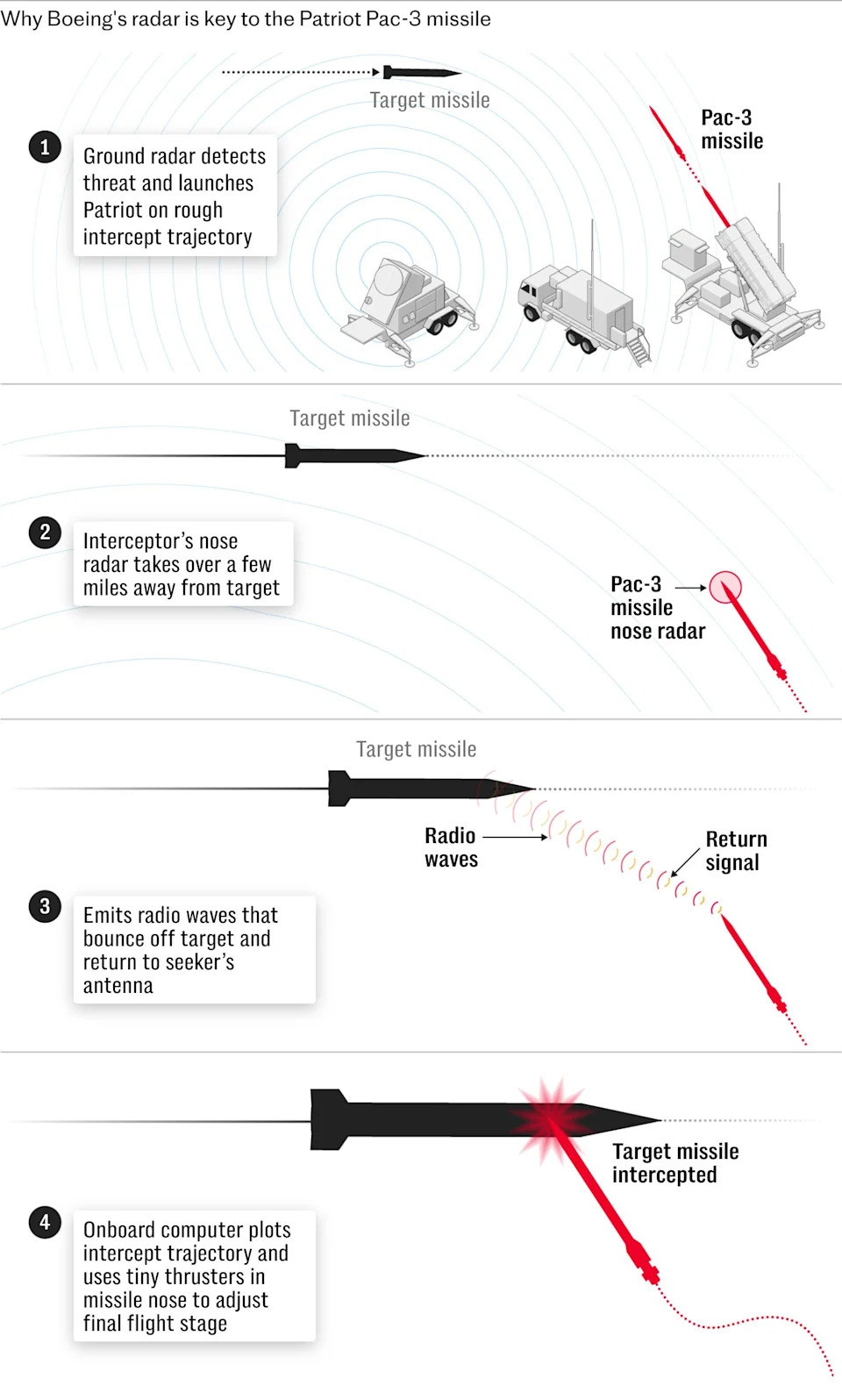
Analysts at the Center for Strategic and International Studies estimate the US has used about two-thirds of its pre-war Patriot stocks and roughly 40% of its THAAD inventories. Reported estimates put Patriot interceptor stocks falling from roughly 2,330 to about 800, and THAAD interceptor inventories from about 452 to roughly 250.
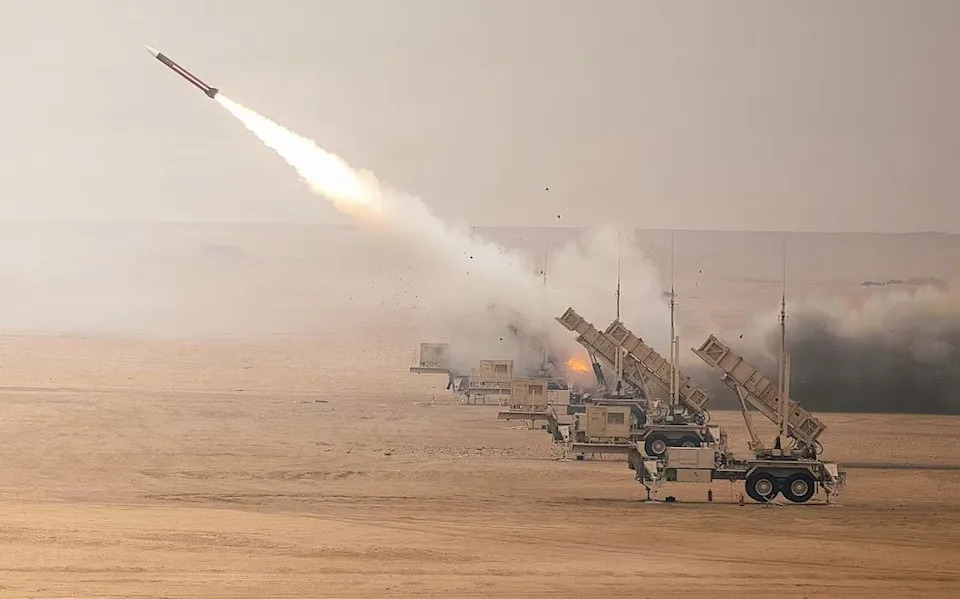
A Patriot missile launch. The US policy of firing two interceptors at a target has increased the rate with which stocks have been depleted - US Central Command
Production Limits and Bottlenecks
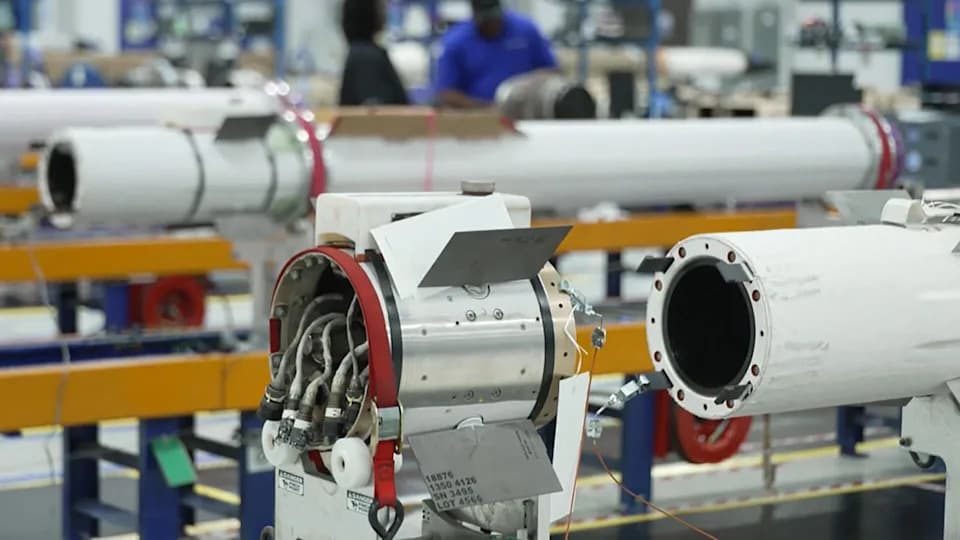
US factories currently produce only about 650 Patriot interceptors per year (each priced at roughly $4 million) and, until recently, about 96 THAAD interceptors per year (about $16 million each). Scaling production is not simply a matter of adding assembly lines: specialised components such as seeker heads, advanced electronics and missile motors are limited, and supply chains take time and investment to expand.
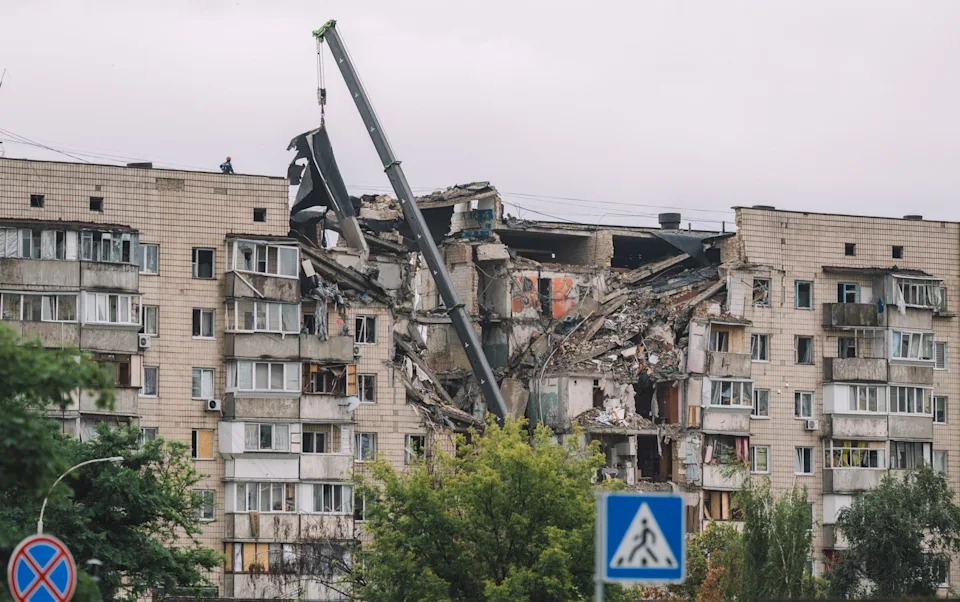
A collapsed apartment building in Kviv following missile and drone attacks by Russian last month - Andrew Kravchenko / Bloomberg
Compounding the consumption rate is a doctrinal choice: under current US practice, defenders often fire two interceptors at each incoming missile to raise the chance of a kill, effectively doubling the rate at which stocks are consumed in intense exchanges.
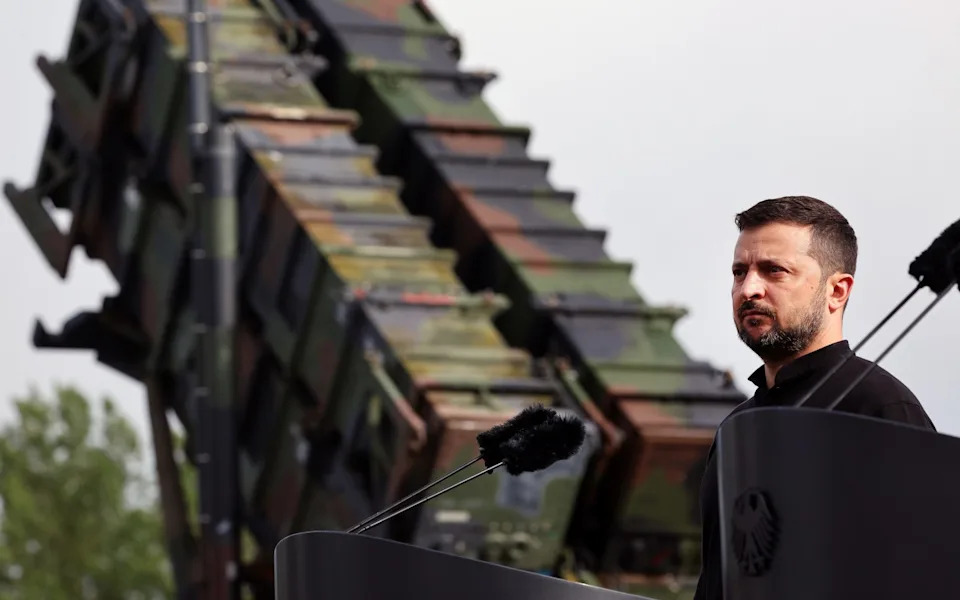
Volodymyr Zelensky with a Patriot missile system. His country's ability to intercept Russian attacks appears to be diminished - Getty
Global Implications
The depletion is not only an American problem. Nineteen countries operate Patriot systems, including Germany, Poland, Ukraine, Japan, Qatar, Saudi Arabia and Egypt. Most rely on US production and supply chains, so shortfalls in US output quickly translate into global shortages. Japan can produce Patriots under license and Germany is building a factory, but these efforts are small relative to US capacity and will take years to meaningfully scale.

At the same time, missile arsenals are growing. China is estimated to field about 3,000 ballistic missiles, Russia is reportedly capable of producing roughly 120 missiles per month — about twice the current US Patriot production rate — and North Korea has been exporting missiles. These trends increase the mismatch between offensive missile inventories and available interceptors.
Hard Choices Ahead
Experts say the immediate catalyst for depletion was the Iran war, on top of earlier transfers to Ukraine and efforts to defend Israel after large-scale attacks. "The idea was we could stockpile for limited wars, but now Ukraine and this war have shown you cannot stockpile your way through a major war," said Sascha Bruchmann of the International Institute for Strategic Studies. He and other analysts argue that the solution requires sustained investment to boost production capacity — an effort that will take years and billions of dollars.
As stocks thin, planners will face difficult prioritisation decisions. US commanders in the Pacific, the Middle East and Europe could find themselves competing for a limited pool of interceptors. Allies with smaller industrial bases — notably Ukraine — are particularly exposed. Kyiv reported a steep increase in ballistic-missile attacks and warned that its Patriot interceptors were running low; Ukrainian leaders have raised the prospect of developing local production, a process that officials say could take one to five years.
Industry Response And Strategic Consequences
US defence firms have pledged to raise output. Last month Lockheed Martin won a seven‑year, $58.6 billion contract intended to substantially increase production of the latest Patriot interceptor by the end of 2030. Other countries — including Israel, South Korea, France and Italy — operate indigenous missile-defence systems that may help plug gaps but lack the industrial scale to replace US production alone.
Analysts warn that the imbalance between expanding missile arsenals and limited interceptor production may shape Western responses to provocations below the threshold of open war. Jennifer Kavanagh of Defense Priorities suggested the shortfall will force allies to be more cautious about escalation in the "grey zone," even if it is unlikely to alone prompt large-scale invasions.
Bottom line: Advances in missile technology combined with a recent high consumption of interceptors have exposed shortfalls in Western missile-defence stocks and production, creating strategic and industrial challenges that will take years and major investment to resolve.
Help us improve.