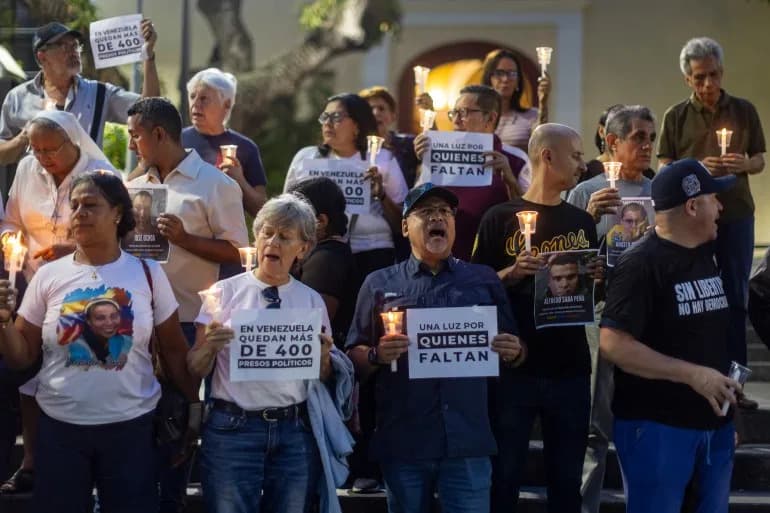
Venezuela released 131 people considered political prisoners under an interim government program, with AFP reporting emotional reunions outside El Rodeo I prison in Guatire. The move comes amid U.S.-brokered transition talks led by opposition negotiator Dinorah Figuera and government representatives. Negotiators agreed to pursue frozen overseas assets for earthquake recovery and judicial reform, but the political-prisoner issue remains unresolved. Rights group Foro Penal says dozens were confirmed freed while about 391 political prisoners remain in custody.
Venezuela Releases 131 Prisoners Amid Post‑Maduro Transition Talks
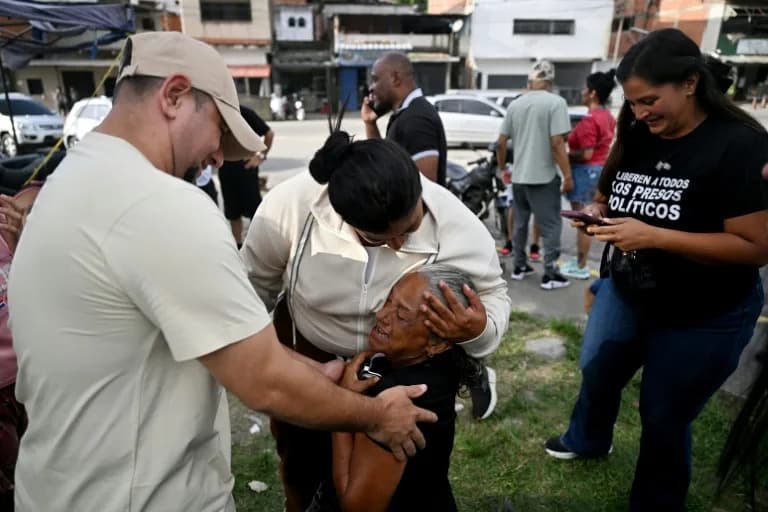
Relatives of political prisoners gather outside El Rodeo I prison (Juan BARRETO)
Venezuela on Friday freed 131 people regarded by authorities and rights groups as political prisoners, a move the interim government said marked progress in negotiations to manage the country’s transition after the fall of the previous administration.
The releases were granted under the government’s "Program for Peace and Democratic Coexistence," which it described as providing "alternative measures from incarceration." AFP reporters at El Rodeo I prison in Guatire, about 50 kilometres (31 miles) east of Caracas, saw tearful reunions as many former inmates embraced relatives.
U.S. reaction and totals: U.S. Secretary of State Marco Rubio called the latest frees "a crucial step for the nation's reconciliation process" and said that "since January 3rd, 1,046 Venezuelans have been released."
Rights groups and confirmed releases: The Foro Penal organisation— which advocates for people it describes as political detainees—said six women were among those freed and later confirmed the release of "at least 40 political prisoners." As of Monday, Foro Penal said some 391 people it classifies as political prisoners remained behind bars.
Negotiations and outstanding issues: The prisoner releases come as opposition negotiator Dinorah Figuera leads talks with government representatives. The first round of U.S.-brokered negotiations began last week and concluded on Wednesday. A joint statement released after the talks said both sides had agreed to cooperate on retrieving frozen assets held overseas to help finance recovery from the June earthquakes, and to work on judicial reforms. The statement did not comprehensively resolve the political prisoner question.
Dinorah Figuera (on X): "Not everyone has been released, and they all deserve full freedom. Let's continue to demand this tirelessly until every citizen is reunited with their family."
Notable cases: Among those freed was Emirlendris Benitez, the Foro Penal director Alfredo Romero said on X. Benitez was arrested after a 2018 attack in which two explosive-laden drones flew toward then-president Nicolás Maduro during a military parade; the drones detonated and seven soldiers were injured. Benitez—who was four months pregnant at the time—was arrested with her partner, Yolmer Escalona. Both denied involvement but were later sentenced to long prison terms. Human rights groups say Benitez suffered torture in detention that led to a miscarriage and partial paralysis.
Political context: The reconciliation talks are being led by Dinorah Figuera for the opposition and Jorge Rodríguez, the National Assembly chief, for the government. Notable exiled opposition figures, including Maria Corina Machado, were not at the negotiating table. Many Venezuelans hope the dialogue will open the way to credible elections after years of deeply contested polls and international criticism.
Reporting credits: mbj/lp/cr/des/acb
Help us improve.