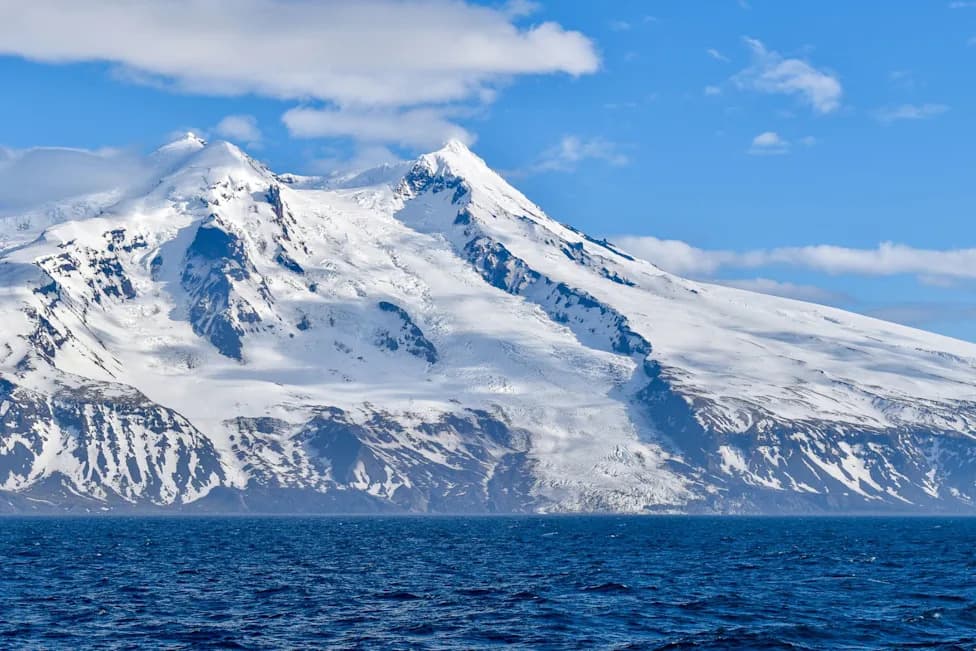
Seasonal melt from the Mendenhall Glacier has repeatedly filled Suicide Basin above Juneau, producing outburst floods that reached the town in 2023, 2024, August 2025 and again on Aug. 12–13, 2026. Melting glaciers worldwide are creating thousands of new lakes—many held by fragile ice dams or moraines—raising the risk of sudden, fast-moving floods and debris flows. Enhanced monitoring, cellphone-based early warnings, selective lake lowering and land-use planning can reduce exposure, but warming and permafrost thaw make future events harder to predict and more dangerous.
Glacial Lake Floods Strike Juneau Again — A Growing Global Hazard as Mountain Ice Melts
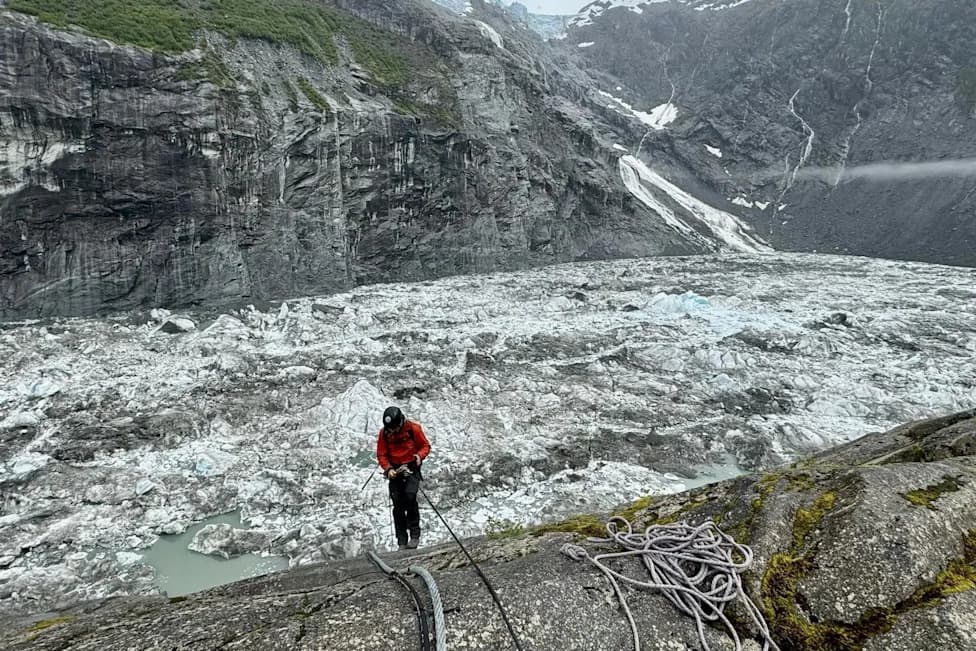
U.S. Geological Survey staff check monitoring equipment in Suicide Basin in June 2025. By August, the basin had filled with meltwater.Jeff Conaway/U.S. Geological Survey
Each summer meltwater from the vast Mendenhall Glacier in the mountains above Juneau, Alaska, drains into high-altitude lakes and then flows down the Mendenhall River through the city. Since 2011, one basin in particular—Suicide Basin, an ice-dammed hollow on an arm of the glacier—has been monitored closely as it repeatedly fills and releases large pulses of water.
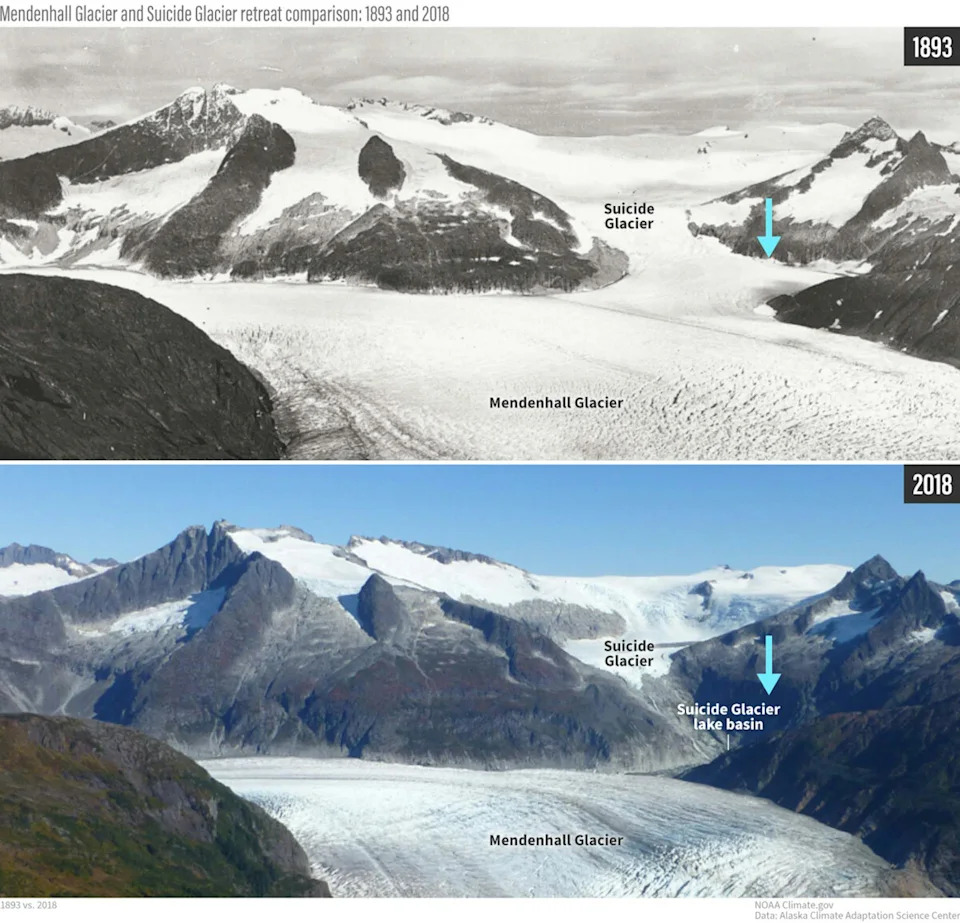
Two photo shows the same scene 125 years apart. The glacier loss is evident, and the lake didn't exist in 1893.NOAA/Alaska Climate Adaptation Science Center
Recent Events Near Juneau
In the summers of 2023 and 2024, meltwater filled Suicide Basin, overflowed or drained through englacial tunnels, and sent surges that inundated riverfront neighborhoods. In August 2025 a surge from Suicide Basin reached record levels at Mendenhall Lake. Emergency flood barriers erected in advance helped limit the damage. On Aug. 12–13, 2026, a similar event occurred: the flood crest was lower and caused less damage than in prior years, but a few unprotected homes still were reached by floodwaters.
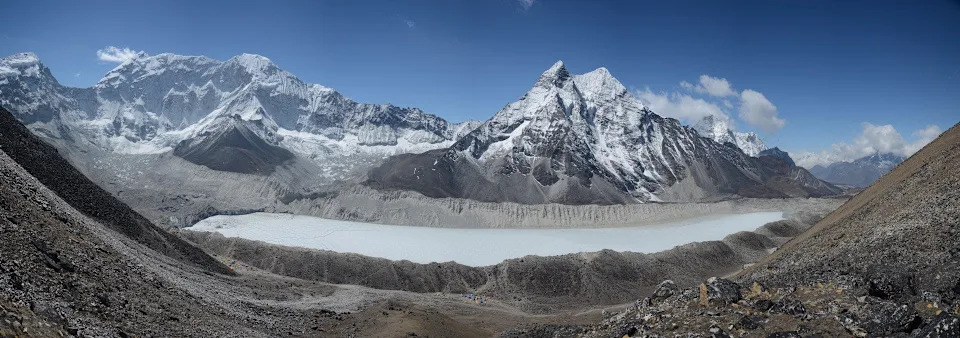
Imja Lake, a glacial lake in the Mount Everest region of Nepal, began as meltwater ponds in 1962 and now contains 90 million cubic meters of water. Its water level was lowered to protect downstream communities. Alton Byers
Why These Floods Are Increasing
As a cryosphere scientist and a mountain geographer, we see several linked reasons these events are becoming more frequent and hazardous worldwide:
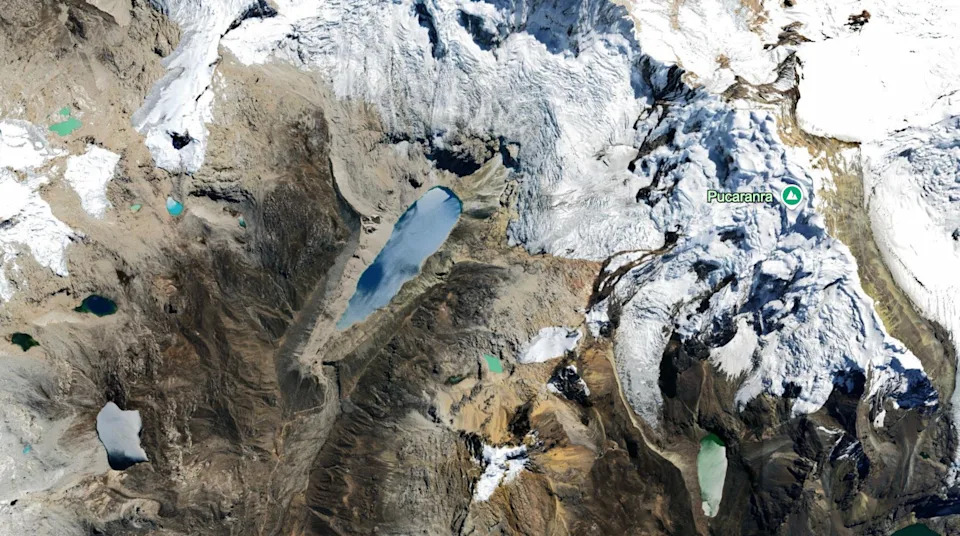
Teardrop-shaped Lake Palcacocha, shown in this satellite view, has expanded in recent decades. The city of Huaraz, Peru, is just down the valley to the right of the lake.Google Earth, data from Airbus Data SIO, NOAA, U.S. Navy, NGA, GEBCO
- Glacier Retreat: Warmer temperatures cause glaciers to shrink, leaving behind depressions that fill with meltwater to form lakes. For example, the Alps and Pyrenees lost roughly 40% of their glacier volume between 2000 and 2023.
- Unstable Dams: Many new lakes are contained by fragile ice dams or moraine ridges (rock and sediment left by glaciers) that can fail suddenly.
- Permafrost Thaw: Warming thaws mountain permafrost—the "glue" that stabilizes slopes—making rock and debris more prone to collapse and generating large landslides that can trigger lake breaches.
- Englacial Conduit Floods: Meltwater routed through tunnels and cavities inside glaciers can suddenly transfer between conduits, producing rapid, hard-to-predict floods that burst out of the ice.
Global Examples And Human Cost
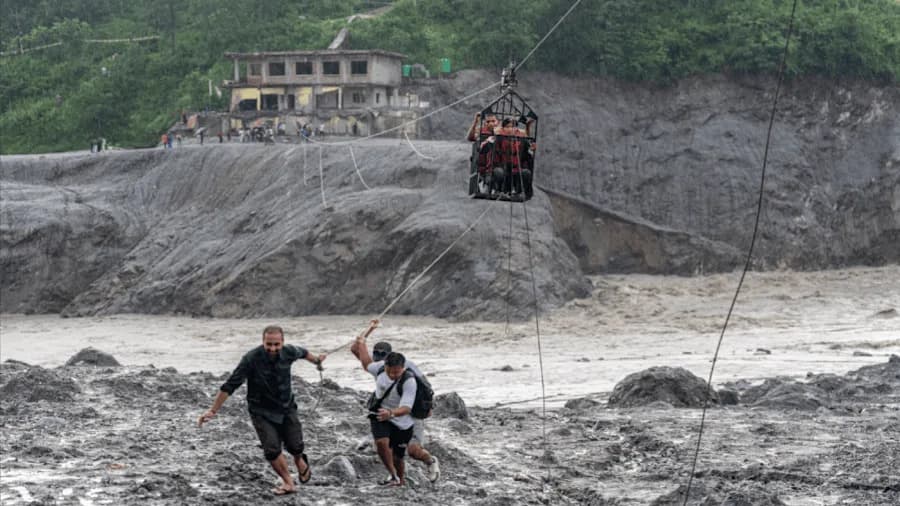
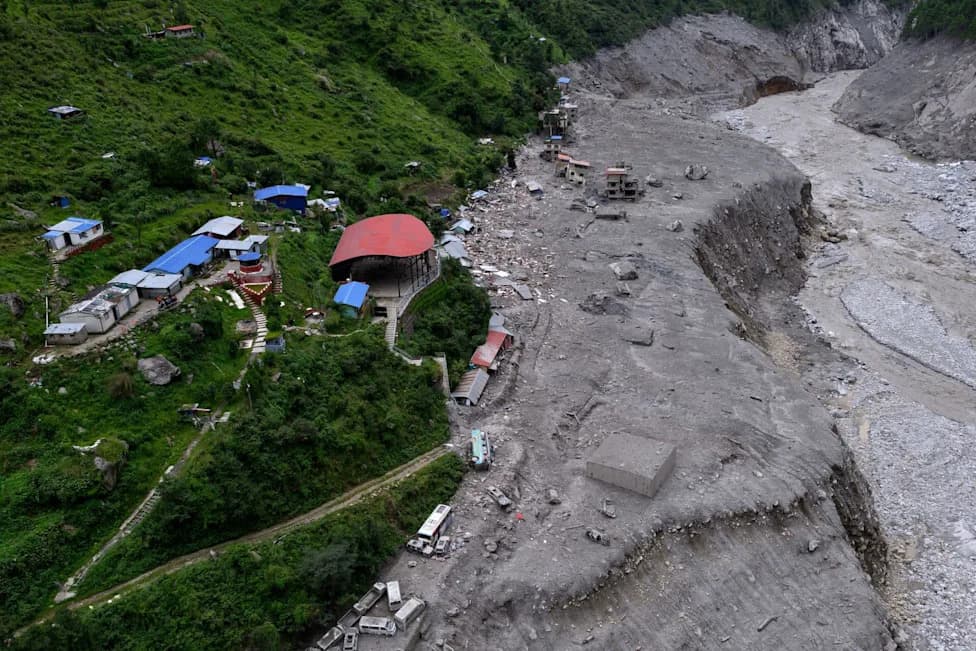
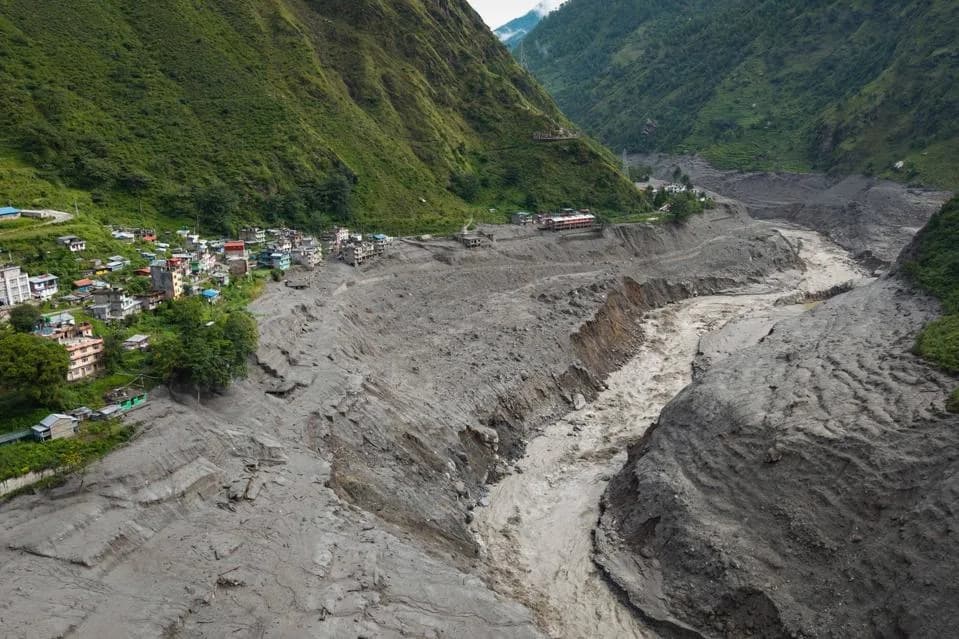
Glacial lake outburst floods—often called jökulhlaups when ice is the main impoundment—affect mountain ranges worldwide. In the Sikkim Himalaya in October 2023, a glacial lake outburst damaged more than 30 bridges and destroyed a hydropower plant; more than 50 people died. In Peru, a 1941 avalanche into Laguna Palcacocha produced a wave that overtopped the moraine and devastated part of Huaraz, killing an estimated 1,800 people. Since then Palcacocha has expanded to more than 14 times its 1941 size; today its valley threatens many thousands of residents.
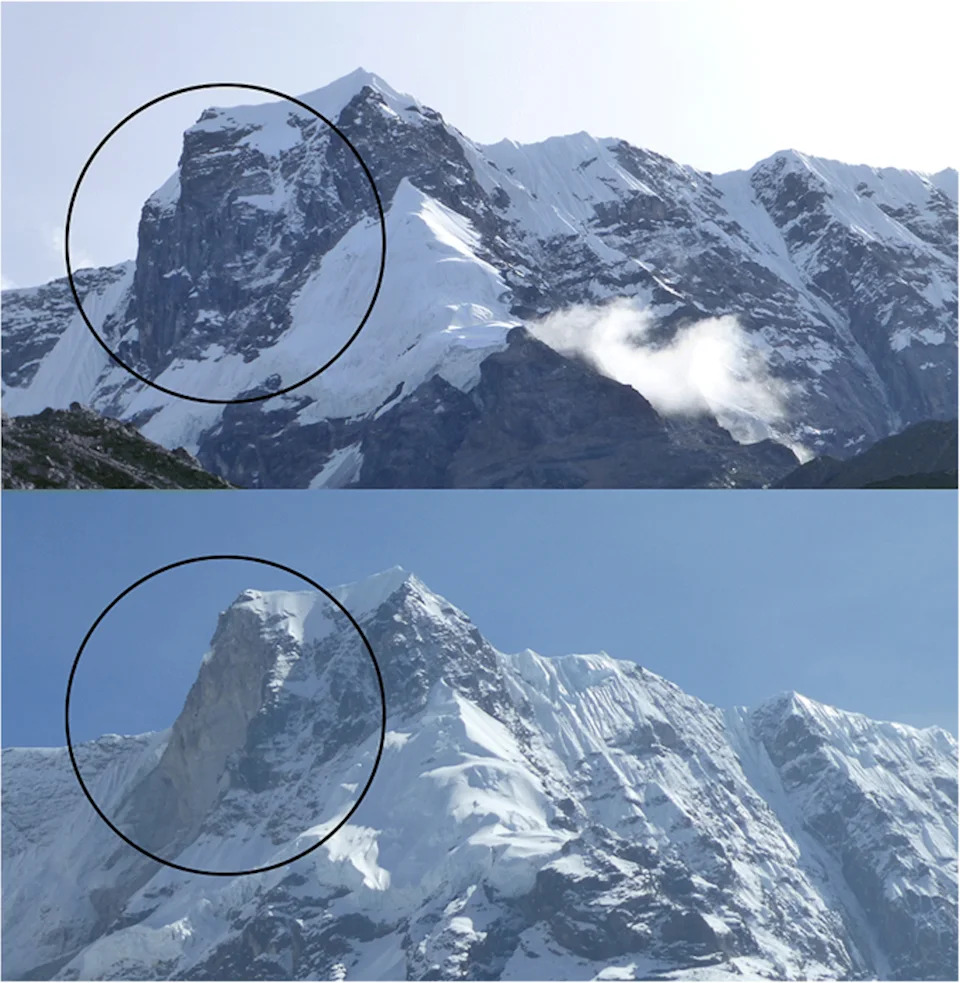
A glacial outburst flood in Barun Valley started when nearly one-third of the face of Saldim Peak in Nepal fell onto Langmale Glacier and slid into a lake. The top image shows the mountain in 2016. The lower shows the same view in 2017.Elizabeth Byers (2016), Alton Byers (2017)
Globally, a 2024 study mapped more than 110,000 glacial lakes and estimated roughly 10 million people live in areas exposed to possible glacial lake outburst floods. Nearly 2 billion people depend on glacier-fed water supplies for at least part of their freshwater needs.
What Can Be Done?
Authorities and communities have a range of tools to reduce risk, though none are a panacea:
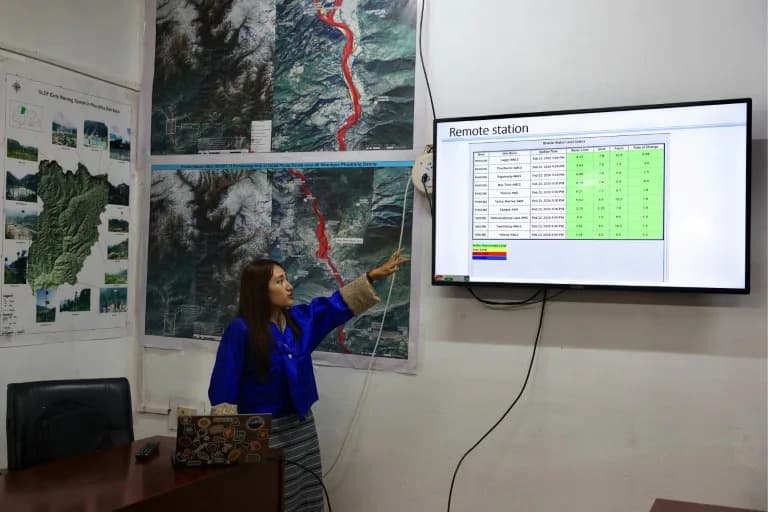
- Monitoring and Early Warnings: Intensive monitoring—such as the U.S. Geological Survey's surveillance of Suicide Basin when it begins to fill—combined with cellphone alerts and apps that show near–real-time water levels, can provide life-saving lead time.
- Engineering Measures: Lake lowering projects, outlet stabilization and diversion structures (for example, gabions—rock-filled wire cages) can reduce the volume or redirect floodwaters. However, some lake-lowering efforts have fallen short of modeled targets, demonstrating the technical difficulty and expense involved.
- Land-Use Planning and Education: Zoning that limits development in flood-prone channels, public education campaigns and evacuation planning reduce exposure and help communities prepare.
- Prioritizing Small Lakes: Draining or stabilizing small, newly forming lakes before they grow large can be more cost-effective than trying to mitigate very large lakes later.
Key Takeaways
Seasonal glacial floods near Juneau exemplify a larger global trend: melting mountain ice is creating new lakes and new hazards. A combination of science-driven monitoring, community warning systems and targeted engineering can reduce risk, but rising temperatures and thawing permafrost are increasing the frequency and complexity of triggers.
This article was updated from an original March 19, 2025, piece to include the latest Alaska flooding. It was written by Alton C. Byers, University of Colorado Boulder, and Suzanne OConnell, Wesleyan University, and is republished from The Conversation.
Help us improve.