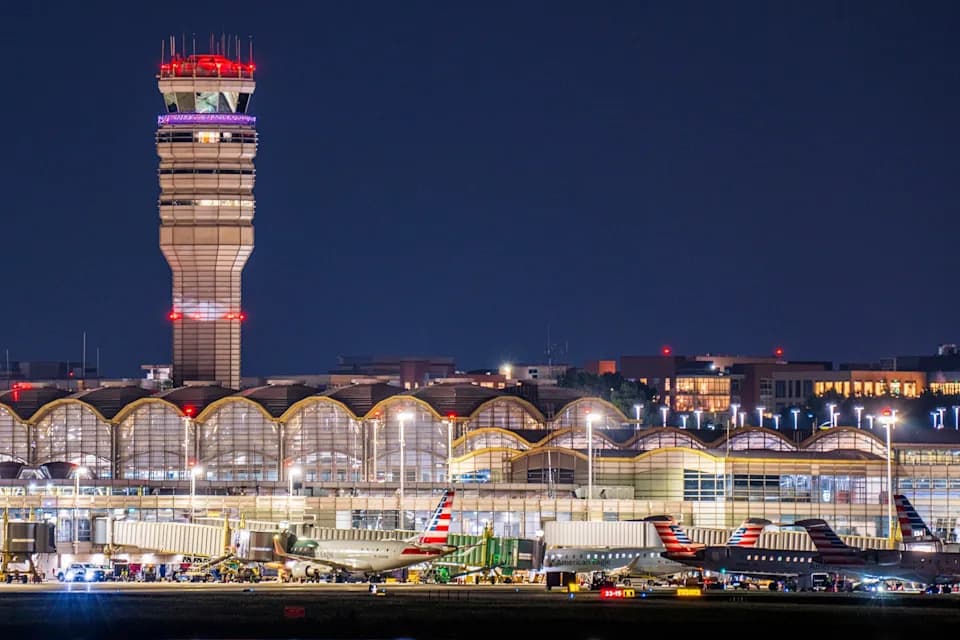
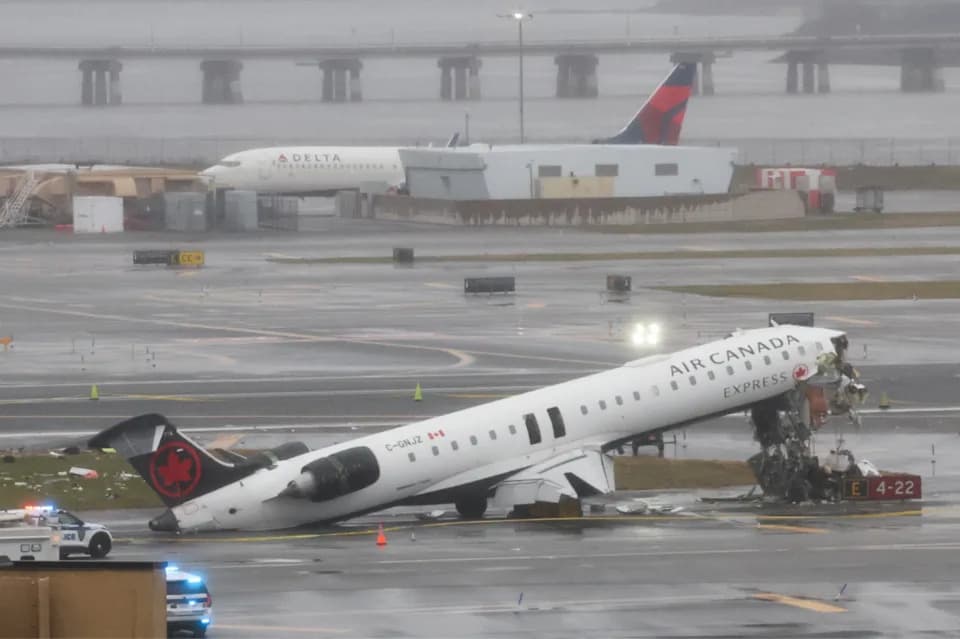
The near-miss between Marine One and a passenger regional jet underscores persistent safety problems in the congested, high-security airspace around Reagan National Airport. FAA officials blamed telecommunications breakdowns and convened a safety review, while investigators point to broader issues exposed by a January 29, 2025 collision that killed 67 people and prompted 50 NTSB recommendations. Lawmakers remain split over bills to mandate wider ADS‑B usage and other fixes; investigators and safety officials say faster regulatory, procedural and technology changes are essential.
Marine One Near-Miss Highlights Persistent Airspace Safety Failures at Reagan National
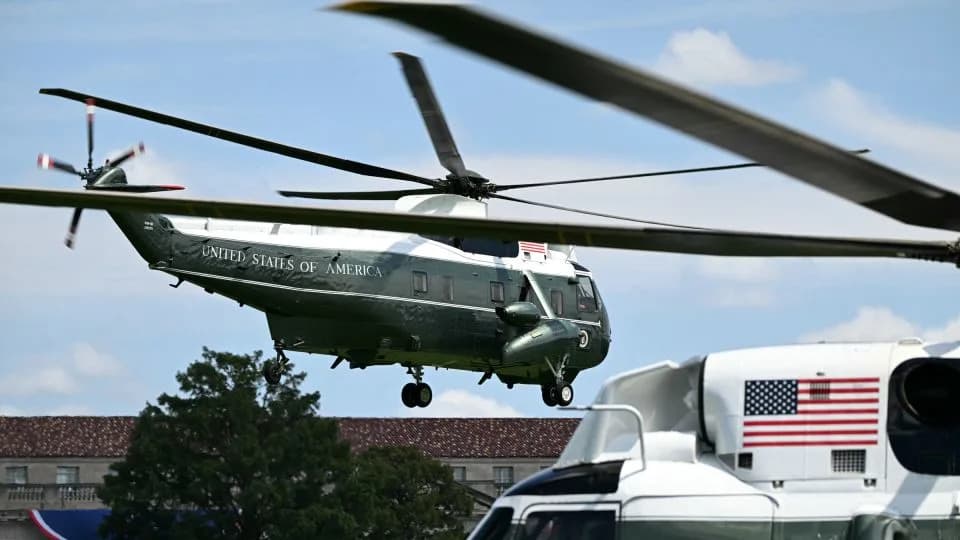
Marine One with US President Donald Trump on board departs from the Ellipse near the White House in Washington, DC, on August 4. - Alex Wroblewski/AFP/Getty Images
Last Tuesday, as Marine One lifted off from the Ellipse south of the White House with President Donald Trump aboard, at least one American Airlines regional jet entered the helicopter's protective separation zone. The Federal Aviation Administration (FAA) described a "momentary loss of separation" but said the aircraft moved apart and the President was never in danger. Transportation Secretary Sean Duffy attributed the incident to telecommunications problems between the Marine One team and air traffic control.
Immediate Response and Review
The FAA convened a safety review panel and agency leaders met with the White House Military Office helicopter unit. The agency said the group will "enhance coordination on three-minute lift notification and boost signal frequencies" to reduce the chance of a repeat. Audio released from air traffic control shows Marine One pilots repeatedly announcing an imminent departure while the tower apparently did not receive those transmissions.
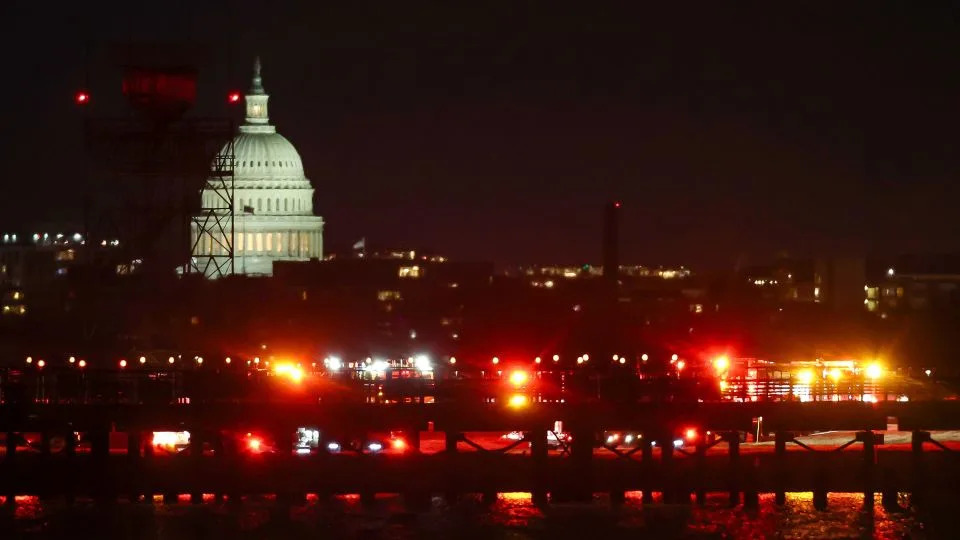
Emergency response units assemble on the tarmac as search and rescue operations are underway in the Potomac River at Ronald Reagan Washington Airport on January 29, 2025 in Arlington, Virginia. - Win McNamee/Getty Images
Context: A Broader Pattern of Close Calls
The episode adds to a string of safety concerns surrounding Ronald Reagan Washington National Airport (Reagan National, DCA), which sits in highly constrained, high-security airspace. On January 29, 2025, a US Army Black Hawk training helicopter and an American Airlines regional jet collided over the Potomac River, killing 67 people. The National Transportation Safety Board (NTSB) subsequently issued 50 safety recommendations, many directed at the FAA.
The NTSB's final report identified several causes of the fatal collision: helicopter routes too close to airplane approaches, insufficient analysis of close-call data by the FAA, an overreliance on pilots to "see and avoid," and tower controllers losing situational awareness amid heavy workloads. Investigators also documented 15,214 near-miss events at Reagan National from 2021 to 2024 where aircraft were within one nautical mile and less than 400 feet vertically of each other.
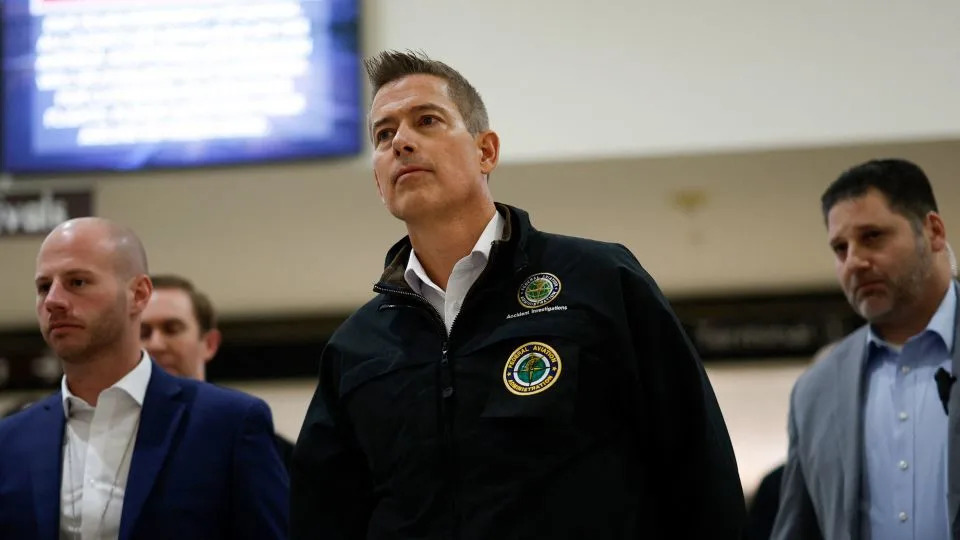
US secretary of transportation Sean Duffy (C) listens during a media briefing at Reagan National Airport after a plane crashed into the Potomac River outside Washington, DC, January 30, 2025. - Ting Shen/AFP/Getty Images
Other Incidents and Systemic Problems
Beyond the collision, a series of incidents raised further concerns: an alleged altercation in the control tower, a close call involving a Delta A319 and US Air Force T-38 fighters, and a Pentagon helicopter flight that forced two commercial flights to abort landings. A congressional hearing revealed that a dedicated "hotline" between Reagan National controllers and the Pentagon had been inoperative since March 2022 without the FAA's knowledge.
Officials say the challenges stem from the combination of congested, security-sensitive airspace, aging equipment, staffing pressures, and stalled legislation that could accelerate safety upgrades. The FAA has taken several steps, including reducing hourly arrivals at Reagan National from 36 to 30, adding more certified controllers and support staff, and banning routine helicopter cross-traffic with arriving jets except for presidential, law enforcement, or first-responder movements (when airspace is typically shut down for safety).
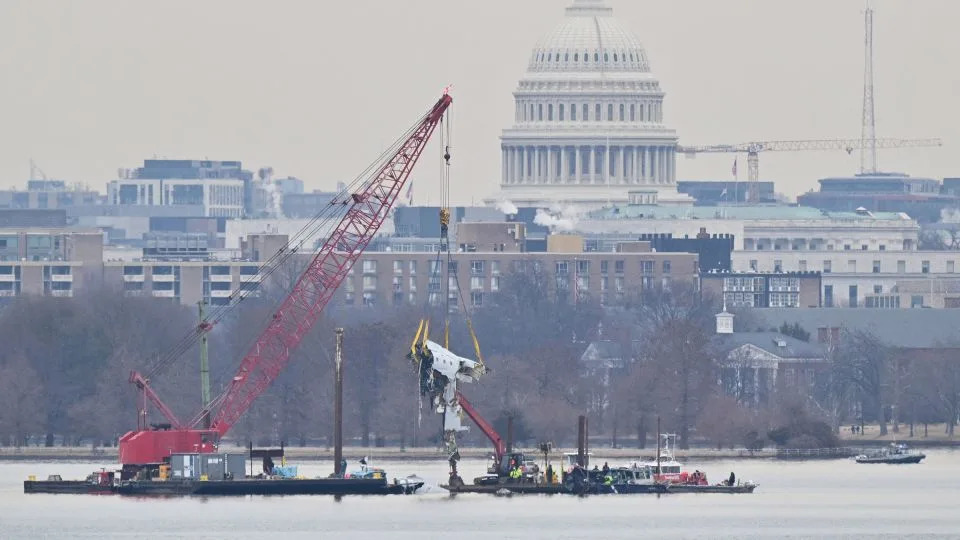
A crane removes airplane wreckage from the Potomac River, where American Airlines flight 5342 collided with a US Army helicopter, near Ronald Reagan Washington National Airport. February 3, 2025. - Roberto Schmidt/AFP/Getty Images/File
Technology, Legislation and the Path Forward
One central technical issue is inconsistent use of automatic dependent surveillance–broadcast (ADS‑B) systems. ADS‑B transmits an aircraft's position, altitude and speed and can enable collision alerts and cockpit displays of nearby traffic. At the time of the January collision, the airliner was broadcasting ADS‑B but the Army helicopter was not, and neither cockpit had ADS‑B In data to show the other aircraft.
Lawmakers remain divided. The Senate-passed ROTOR Act would have required broader ADS‑B In capability and mandatory ADS‑B transmissions for most aircraft but failed in the House. A competing House measure, the ALERT Act, claims to address all 50 NTSB recommendations but does not mandate ADS‑B In for every aircraft. NTSB Chair Jennifer Homendy has urged Congress to reconcile differences and act swiftly.
"We are no closer today to addressing many of the serious safety gaps that contributed to this terrible tragedy," Homendy said, urging regulatory, procedural and legislative changes to prevent more tragedies and close calls.
What's Next
FAA officials say some recommendations will take years to implement because they require rulemaking or collective bargaining. Meanwhile, the agency has posted a timeline tracking steps it is taking. Safety advocates and investigators stress that improved telecom reliability, broader uptake of surveillance technology, better data analysis, and clearer procedures for presidential and other sensitive movements are all needed to reduce risk.
Help us improve.