AFP found that a widely shared photo claiming to show thousands of bullet casings from Rawalakot is likely AI-generated and not verifiably linked to the July 2026 election clashes. Forensic analysis revealed distorted limbs, blurred faces, footwear merging into the ground and perspective errors, while OpenAI’s verification tool detected a Google SynthID watermark. The image was shared on social media, including by PTI and a former deputy speaker, but no credible original source could be found.
AI-Generated Photo Falsely Linked to Kashmir Poll Violence, Forensic Checks Show
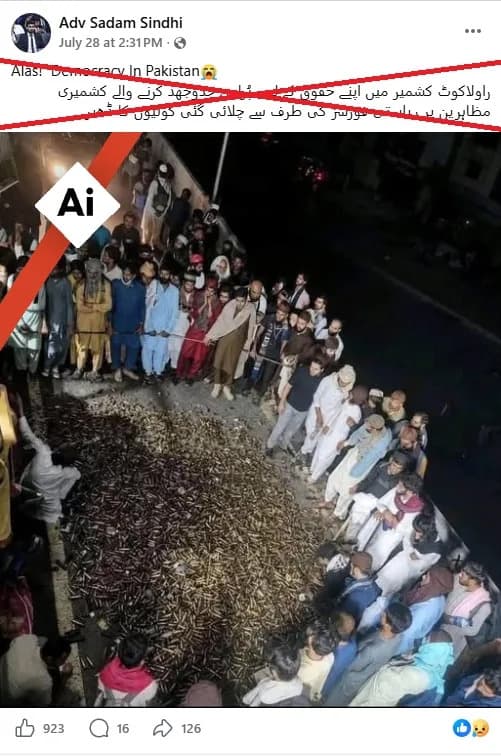
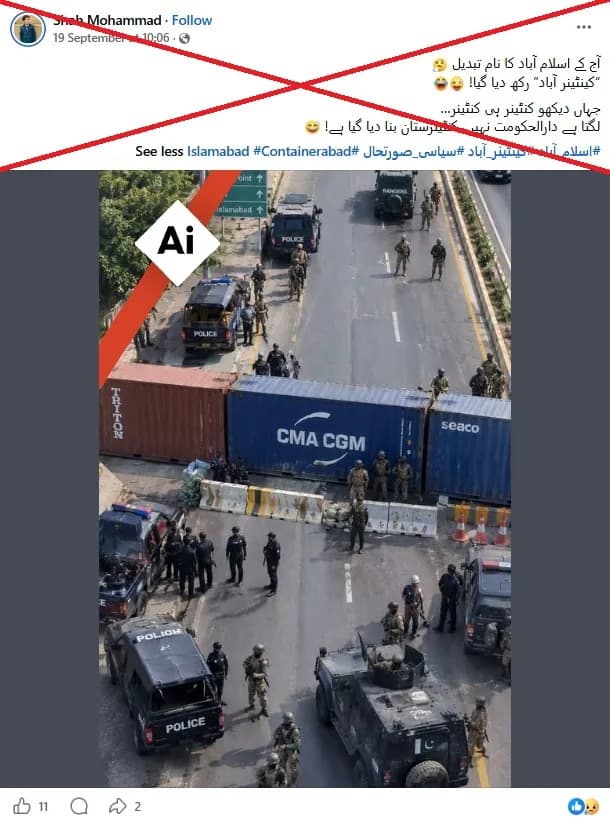
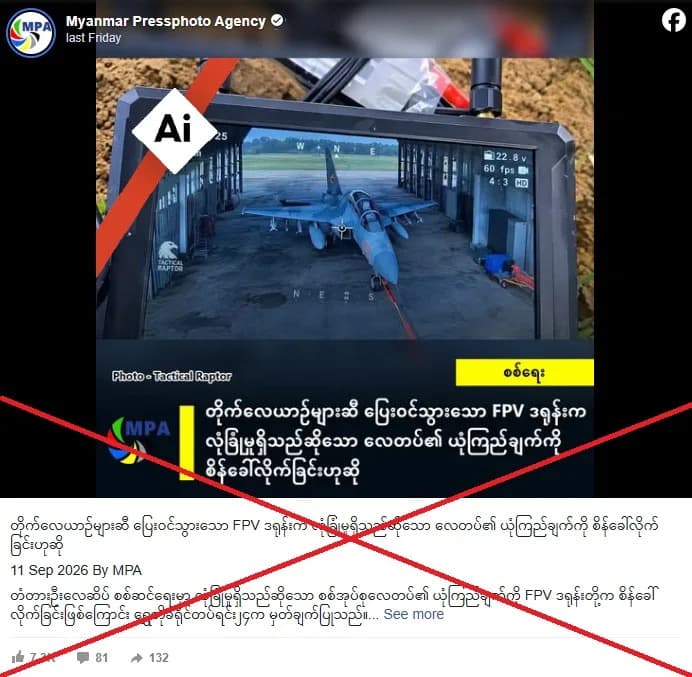
Screenshot of the false post captured on August 10, with a red X and AI label added by AFP
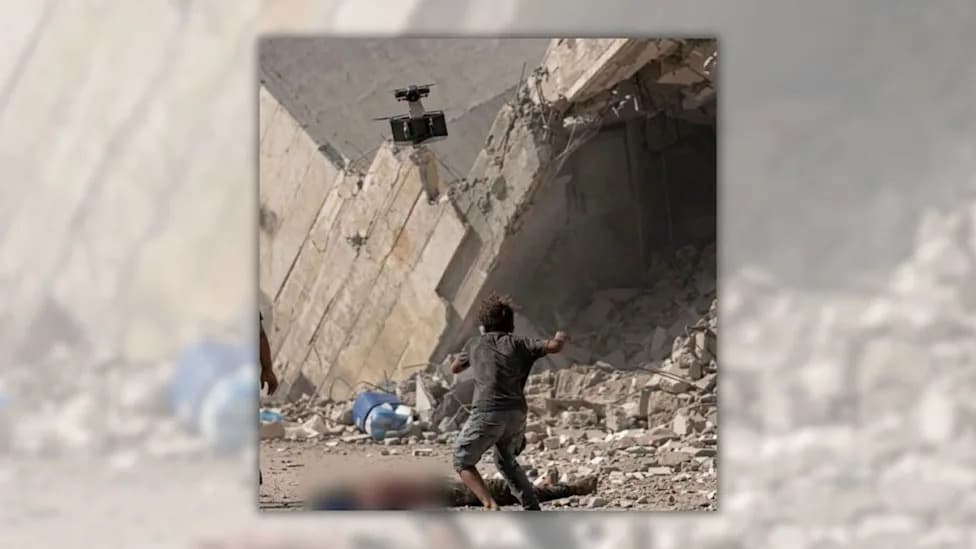
An image widely shared online that purported to show a pile of spent bullet casings from clashes in Rawalakot during the July 2026 elections in Pakistan-administered Kashmir has been identified as AI-generated and cannot be reliably linked to the unrest.
Alas, Democracy in Pakistan! A heap of bullets fired by state forces at Kashmiri protesters in Rawalakot, Kashmir, who were peacefully struggling for their rights.
What AFP’s Analysis Found
AFP examined the circulating photograph and found multiple visual inconsistencies and technical signals that point to fabrication rather than a genuine scene from the clashes. The image was shared on social platforms — including the official X account of the opposition Pakistan Tehreek-e-Insaf (PTI) and by Qasim Khan Suri, former deputy speaker of Pakistan’s National Assembly — but AFP could not find any credible news organisation that originally published the photo.
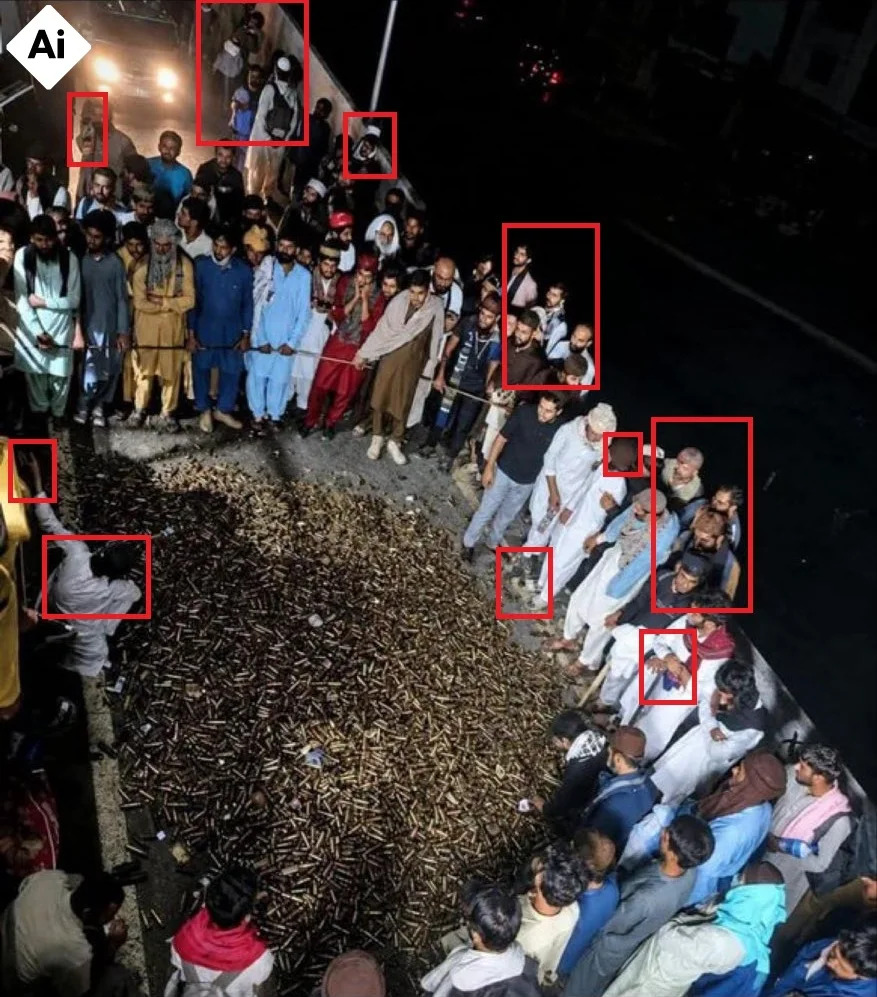
Screenshot of the fabricated image with the visual errors highlighted and AI logo added by AFP
Visual Forensics
Distorted Anatomy and Blurred Faces: Several figures in the picture show unnatural hands, arms and fingers; some faces are unnaturally blurred or smeared — common artefacts of synthetic image generation.
Footwear and Clothing Errors: Shoes and soles appear to merge with the ground, and the layers of warm clothing, scarves and headwear visible in the image do not match what local AFP stringers say Kashmiri residents typically wear in July.
Perspective Problems: Some people seem to be positioned behind a low wall while others appear level with it, and the wall’s height shifts noticeably relative to nearby figures, indicating compositing or other synthetic generation errors.
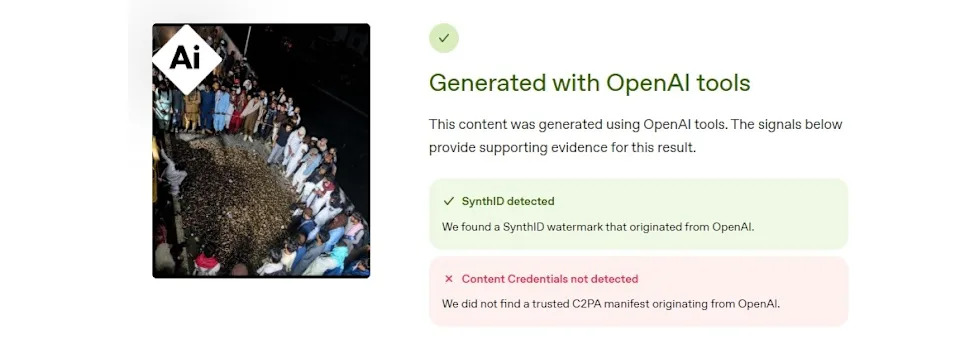
Screenshot of the OpenAI image verification tool's detection results
Technical Detection
Detection tools flagged the photograph as synthetic. OpenAI’s image verification utility reported that the file contained an invisible SynthID watermark originating from Google — a digital signal Google embeds in images created with certain AI platforms. These watermarks are designed to survive common edits, such as cropping and filtering.
Context of the Violence
Violent confrontations between protesters and security personnel did occur as voting began in parts of Pakistan-administered Kashmir. The unrest began on July 27, 2026, with the most intense clashes reported around Rawalakot — the focal point of weeks of demonstrations. A spokesperson for the Joint Awami Action Committee (JAAC) alleged about 20 supporters were killed; AFP could not independently verify that figure. Sardar Waheed, the city’s top civilian official, told AFP one member of the security forces died and three others were wounded.
JAAC has been protesting seats in the local assembly reserved for people who left the portion of Kashmir administered by India; the group says those seats are exploited by national parties to influence the regional legislature.
Why This Matters
Synthetic images can spread rapidly during politically sensitive moments and are often difficult for the public to distinguish from real photos. This case highlights the need for both human scrutiny and technical verification when evaluating dramatic visual claims. AFP’s combined forensic review and tool-based checks found the image unreliable and not provably connected to the July election violence.
Bottom line: The widely circulated photo of a mound of bullet casings is likely AI-generated and should not be treated as verified visual evidence of the Rawalakot clashes.
Help us improve.