Excavations in a sealed side chamber of Suder Vagnhus cave on Lilla Karlsö uncovered the remains of a teenage woman and fetal bones consistent with 32–34 weeks gestation. Researchers estimate the burial dates to roughly 8,000–9,500 years ago, potentially making it one of the oldest known pregnant burials with fetal remains in situ. Radiocarbon dating and DNA analysis are planned to confirm age and relationships, and further excavation may clarify the burial position and context.
9,000-Year-Old Burial of a Pregnant Teen Uncovered in Swedish Cave
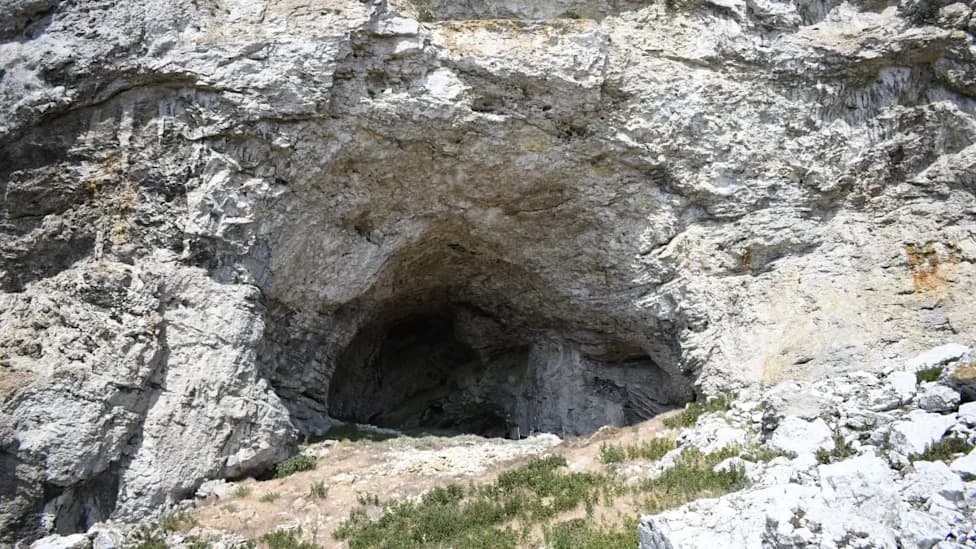
The mouth of Suder Vagnhus cave on Lilla Karlsö. (Alexander Roesen Sjöstrand/Uppsala University)
Archaeologists have uncovered a rare and poignant burial in a sealed side chamber of Suder Vagnhus cave on Lilla Karlsö, an uninhabited island off Gotland in the Baltic Sea. Excavations led by Alexander Sjöstrand of Uppsala University in 2023 revealed the remains of a teenage woman and fetal bones consistent with about 32–34 weeks of gestation.
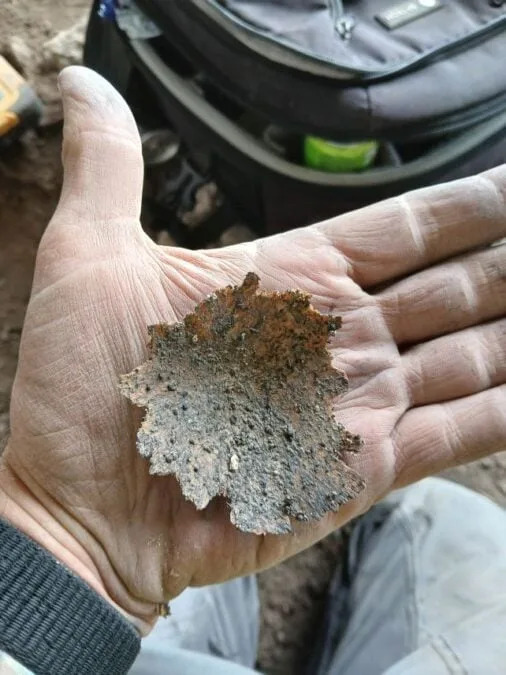
Sjöstrand holding the fetus's parietal (skull) bone. (Alexander Roesen Sjöstrand/Uppsala University)
The small side chamber was first revealed in 1992 when rubble was cleared from the base of the cave's eastern wall. To protect the niche from animals and visitors, it was later sealed with limestone blocks until modern excavation resumed. Early finds in the chamber included animal bones, and a sheep skull from the entrance area was radiocarbon-dated to the 14th century, suggesting the niche remained largely undisturbed for centuries.
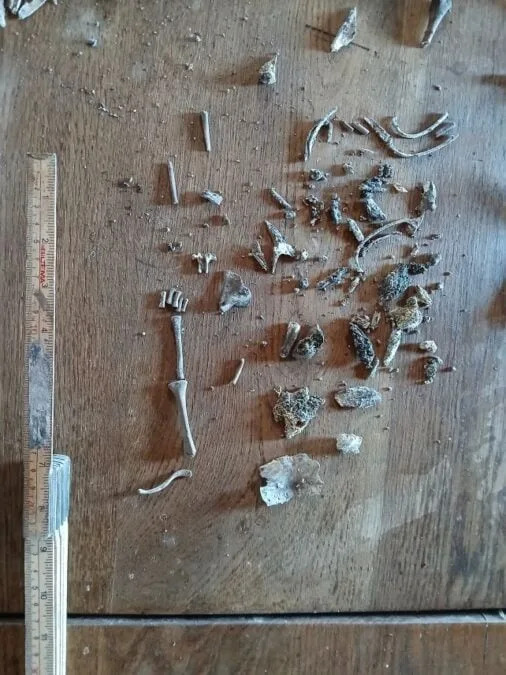
Some of the recovered fetal bones, plus some additional fragments, likely from the woman. The fetus's arm has been partially reconstructed on the left. (Alexander Roesen Sjöstrand/Uppsala University)
What was found
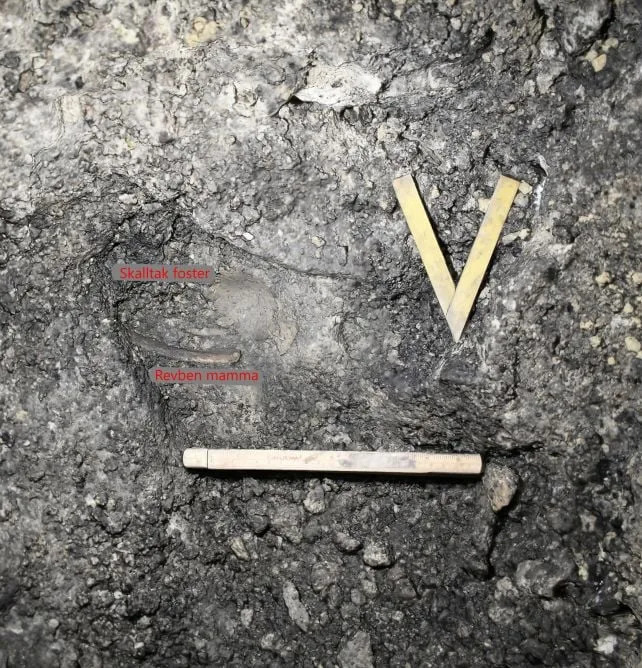
The rib of the woman (labeled "Revben mamma") and skull fragment of the fetus ("Skalltak foster") as they were found in excavations of the cave. (Alexander Roesen Sjöstrand/Uppsala University)
The fetal bones were located in the abdominal area and were positioned with the fetal head toward the mother's feet. Some of the mother's ribs were found nearby, strongly indicating the fetus remained inside the body at burial. Measurements of the long bones place the fetus in the third trimester, while the woman's skeletal elements indicate she was likely a teenager, roughly 14–19 years old.
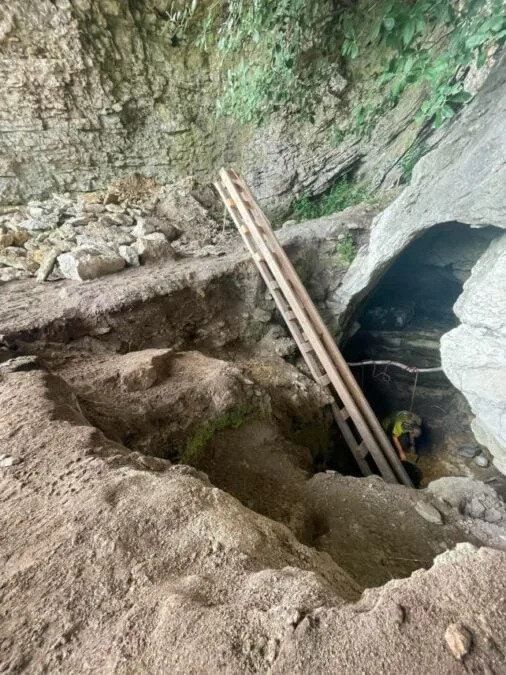
The excavated sidecave entrance, with Sjöstrand inside working on the dig. (Alexander Roesen Sjöstrand/Uppsala University)
"The fetus was located in the abdominal area with some of the mother's ribs found, strongly indicating the fetus was inside," Sjöstrand said. "The fetus is positioned head towards the mother's feet, and the mother's partial position—face toward the spine—aligns with a late-term fetus having turned in the womb."
The woman's partial skeleton suggests she may have been interred in a curled or 'Hocker' position on her side, a burial pose known from other prehistoric burials in the region. In addition to the mother and fetus, the team has identified one or possibly two other individuals from fragmentary bones, including at least one young child, indicating the chamber was used as a burial space or place of deposition.

Subscribe to ScienceAlert's free fact-checked newsletter
Age, preservation and significance
Based on the cave's stratigraphy and comparisons with nearby finds on Stora Karlsö, researchers currently estimate the burial's age between about 8,000 and 9,500 years, with 8,000–9,500 years considered the most likely range. Radiocarbon dating of the human remains is planned and should provide a more precise age. DNA analysis is also planned to confirm biological relationships and to investigate links among the individuals found in the chamber.
Preservation of fetal remains from this deep in prehistory is exceptionally rare: fetal and infant bones are small and fragile, and organic material generally decomposes. That rarity, together with the apparent in-situ position of the fetus, makes this a particularly important find for understanding burial practices and maternal health in Mesolithic/early Neolithic communities of the Baltic region.
Open questions and ongoing work
At present, the cause of death for the woman—and whether the pregnancy was related—is unknown. The team cautions against premature conclusions while excavation continues. Sjöstrand noted the mother remains fragmented but well preserved, and that further excavation to recover hip, leg and shoulder elements will help confirm her exact burial position and the context of interment.
Archaeologists will combine radiocarbon dating, DNA analysis and continued careful excavation of the sediment to refine the chronology and better understand whether the cave served as a family or community burial site. For now, much of the most important information may still be buried within the chamber's layers.
Help us improve.