Experts say President Trump’s repeated vows to "smack," "hit" or "beat" Iran reflect an intentional propaganda technique known as "glittering generalities," which promises grand but vague outcomes. Historians like Nick Cull and researcher Emma Briant warn this rhetoric transforms abstract threats into vivid images of violence that militaries usually avoid and that can blur the line between a regime and its civilian population. The language has been echoed abroad while Trump alternates between threats and economic pressure, creating unpredictability that experts say undermines norms of stable democratic diplomacy.
Experts: Trump’s Violent Rhetoric Toward Iran Is an Intentional Propaganda Tactic
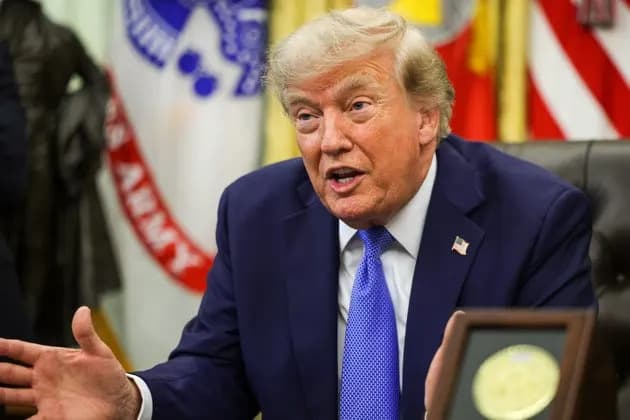
Trump is known for using "glittering generalities" in his speeches and threats, propaganda experts say. Alex Wong via Getty Images
President Donald Trump has repeatedly framed the United States' campaign against Iran in blunt, physical terms as the military operation enters its sixth month. His repeated vows to "smack," "hit" or to "beat the **** out of them" have alarmed historians and propaganda experts, who say the language appears strategic rather than accidental.
How Experts Classify the Language
Scholars identify this approach as a form of propaganda called "glittering generalities," one of seven techniques cataloged in the 1930s by the Institute for Propaganda Analysis. Under this method, a speaker promises grand outcomes with vague, emotionally charged language. Other classic propaganda devices include name-calling, recruiting testimonials from admired or reviled figures, and "plain folks" appeals that cast leaders as ordinary people.
"Trump is a master of glittering generalities," said Nick Cull, a historian of propaganda and a professor at the USC Annenberg School for Communication and Journalism. Cull cited Trump's 2016 campaign line, "We are going to win so much you may even get tired of winning," as a prior example.
Why This Rhetoric Is Concerning
When applied to a conflict, experts say, the technique becomes darker because the promised outcome is violence rather than abstract success. "He has hit on a dark version of glittering generalities where it is the promise of violence that is inflated but unfocused — just raging against an evil 'other,'" Cull said. "He is building himself up as the man in charge, which plays well to his base in the short term."
Emma Briant, a researcher who studies contemporary propaganda and information warfare, noted that conventional military messaging often emphasizes limits and proportionality. By contrast, visceral phrases that evoke blood and bruises create vivid mental images militaries usually avoid. "Under Trump, the war is being justified in a very different way, not with the legitimacy of limited government authority, but as a kind of war of the streets," she said.
Experts warn that personalizing conflict risks widening who is considered an enemy. "I see dangerous territory as it erases the gap between an evil regime and its wider population," Cull said. Such rhetoric can make entire groups appear legitimate targets rather than focusing narrowly on military objectives.
International Echoes and Shifting Tone
The bellicose language has reverberated abroad. In April, Trump warned of bombing Iran "back to the Stone Age," a phrase that Iranian officials later echoed; in early August, a spokesperson for the Iranian Parliament’s National Security and Foreign Policy Committee warned that a strike on Iran could prompt a similarly sweeping response.
At the same time, Trump’s tone has not been consistent. He later said he was relying more on economic pressure to extract concessions from Tehran and told Axios the administration was "low-keying it," emphasizing sanctions and financial strain over immediate large-scale military action.
What Experts Say It Signals
Briant argued that unpredictability in rhetoric and posture sends its own message: democracies traditionally do not want to appear chaotic or erratic in international affairs. "Being seen as a predictable, stable superpower isn't his goal," she said, suggesting that rhetorical volatility can itself undermine diplomatic norms and increase the risk of escalation.
Bottom line: Experts say the combination of visceral language, personal framing of conflict, and shifting tactics risks normalizing violence, widening potential targets, and making international relations more unpredictable.
Help us improve.