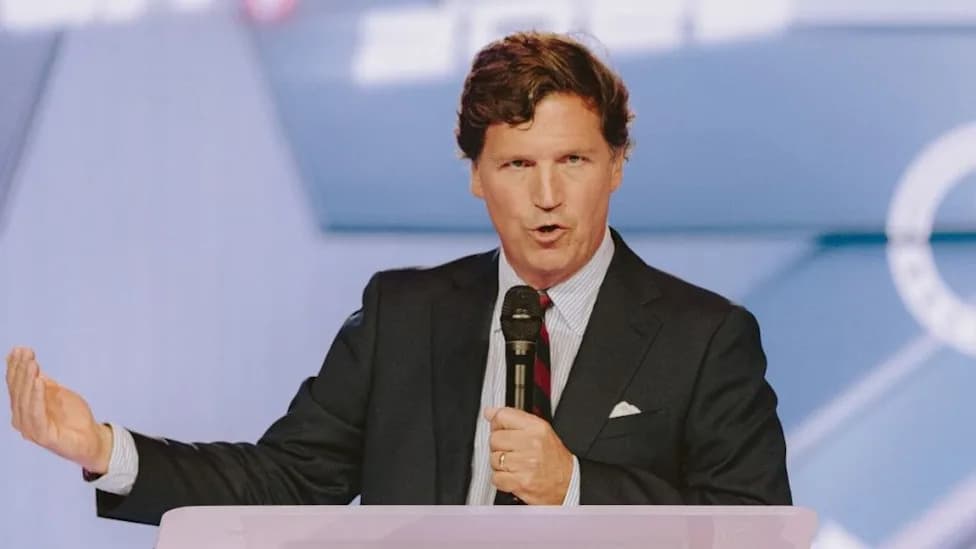
Chuck Ross, now at the Washington Free Beacon, says Tucker Carlson angrily refused in 2020 to verify emails exchanged with Hunter Biden that were part of the laptop story. The messages allegedly included a request from Carlson for a recommendation for his son. Ross shared the account after Carlson's recent interview with Hunter Biden, in which Carlson discussed the laptop's provenance and criticized Donald Trump.
Reporter Says Tucker Carlson 'Lashed Out' When Asked To Verify Hunter Biden Emails
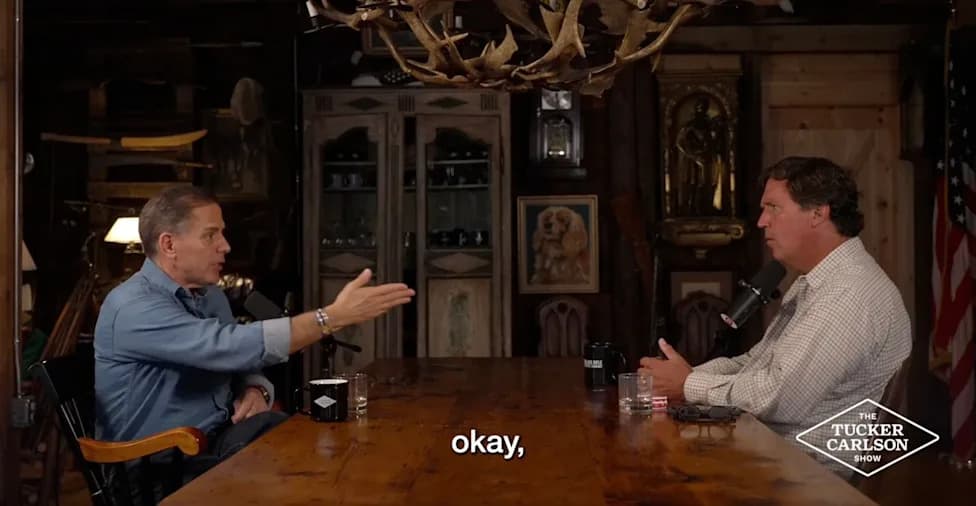
(Screenshot via @TuckerCarlson on X)
Washington Free Beacon reporter Chuck Ross says Tucker Carlson 'lashed out' when asked to confirm emails exchanged with Hunter Biden that surfaced in 2020 as part of the Hunter Biden laptop story. Ross says he and colleagues at The Daily Caller — the conservative site Carlson co-founded — expected Carlson to help verify the messages, which reportedly included a request from Carlson asking Hunter Biden to write a recommendation for Carlson's son to attend Georgetown University.
Ross's Account
Ross wrote on X that Daily Caller reporters contacted Carlson in 2020 about the emails and were surprised by his reaction. Rather than cooperating, Ross alleges, Carlson responded angrily and called a potential story an 'attack on my family' or words to that effect. Ross characterized the response as evidence that Carlson is a 'complete phony and fake populist.'
Interview And Laptop Context
Ross posted the recollection after Carlson's recent interview with Hunter Biden. During that interview, Carlson described President Donald Trump as the most 'flamboyantly corrupt' leader in American history and suggested Hunter Biden deserved greater 'grace' while dealing with addiction. On the subject of the laptop itself, Carlson said the device had been brought to him while he worked at Fox News by 'Israelis connected to Benjamin Netanyahu.' He said he believed the laptop's contents were authentic but questioned the manner in which the material circulated through the media.
Why This Matters
The exchange highlights tensions between journalists seeking verification of contested documents and public figures who may be implicated. Ross's public recollection renews attention on the laptop story and raises questions about transparency, journalistic verification, and how politically sensitive materials are handled by news organizations.
Reporting note: Ross's account was posted on X; the emails at issue were first reported by the New York Post in 2020.
Help us improve.