A total solar eclipse will cross parts of the Northern Hemisphere on Aug. 12, 2026. While totality — when the Moon completely covers the Sun — will be visible only along a narrow path, many locations across North America and Europe will witness a partial eclipse. This guide explains where the eclipse will be visible, how to watch safely, and where to find live coverage.
Where the Eclipse Will Be Seen
The path of totality will sweep across Greenland, Iceland, northern Russia, the Atlantic Ocean, mainland Spain and a small section of Portugal. Observers located directly in that path will experience totality and may see the Sun's corona — the Sun's faint outer atmosphere normally hidden in daylight.
Many areas across the Northern Hemisphere will see a partial eclipse. In North America, parts of Alaska to North Carolina and most of Canada will fall inside the Moon's penumbra (partial shadow), meaning the Moon will cover only part of the Sun.
Safety: How To Watch
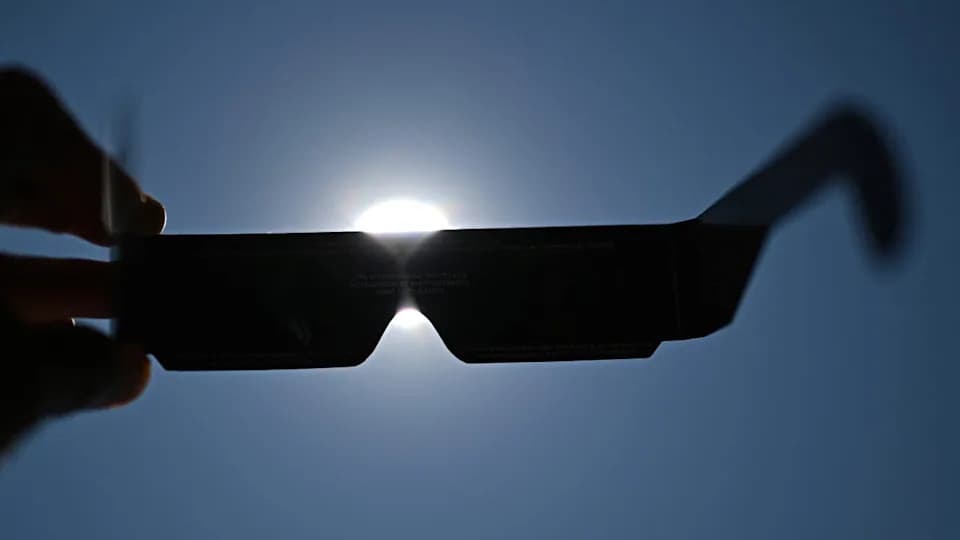
Never look directly at the Sun during a partial eclipse without certified eye protection. Ordinary sunglasses — even very dark ones — do not protect your eyes. Use eclipse-viewing glasses that meet the ISO 12312-2 safety standard. Discard glasses that are torn, scratched or otherwise damaged.
Do not look at the Sun through a camera, telescope, or binoculars while wearing eclipse glasses. Those optics concentrate sunlight and can damage your eyes. If you plan to use cameras or telescopes, fit them with purpose-built solar filters that attach to the front of the instrument; never use improvised filters.
If you don't have certified eyewear, use an indirect viewing method such as a pinhole projector to project the Sun's image onto a surface. You can also watch the dappled light under leafy trees: small gaps between leaves will project crescent-shaped images of the Sun during partial phases.
Watch Online and Plan Ahead
People outside the path of totality — or those with cloudy skies — can follow the eclipse via live streams. NASA and other astronomy organizations typically stream live video from sites along the path with expert commentary. Confirm broadcast details and viewing links closer to Aug. 12 on NASA's official website and reputable science outlets; avoid publishing exact broadcast times until official schedules are posted.
Plan ahead: check local weather forecasts, verify time conversions for your location, and obtain ISO-compliant eyewear from reputable vendors well before the event. Local astronomy clubs and planetariums often host safe viewing events and educational programs.
Why Totality Matters
During totality, the Sun's bright disk is fully covered and the much fainter corona becomes visible — a rare opportunity for scientific observation and dramatic viewing. The next notably long total solar eclipse will occur on Aug. 2, 2027, offering up to about 6 minutes and 23 seconds of totality in parts of southern Spain and across North Africa and the Middle East.
Source: Reporting based on information from NASA, The Associated Press and local reporting.