Former Defense Secretary Mark Esper called Iran’s new conditions for reopening the Strait of Hormuz “ridiculous,” saying demands such as full U.S. troop withdrawal, war reimbursements and an end to sanctions would derail negotiations. He warned the demands signal Tehran’s confidence and leverage from controlling the strait, including pressure via regional proxies. Esper also highlighted U.S. munitions strains—saying some systems take years to produce—and traced stockpile shortfalls to long-term policy choices and recent wartime expenditures.
Mark Esper Calls Iran’s Demands To Reopen Strait Of Hormuz 'Ridiculous' — Warns Of Munitions Shortages
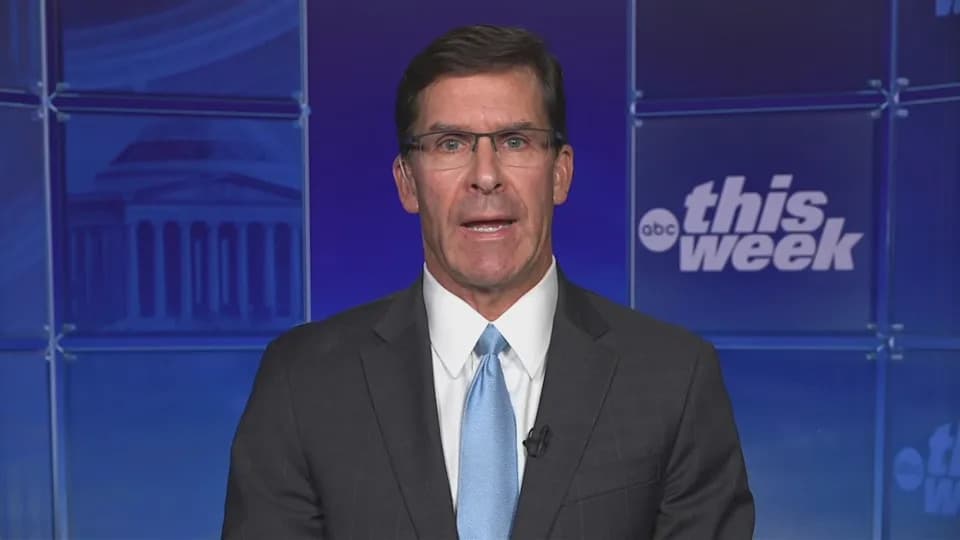
ABC News - PHOTO: Former Defense Secretary Mark Esper appears on ABC News' "This Week" on Aug. 9, 2026.
Former U.S. Secretary of Defense Mark Esper on Sunday denounced Tehran’s newly announced conditions for reopening the Strait of Hormuz as a “ridiculous” package of demands that, he said, would cripple any realistic chance of negotiation.
“They've put forward demands of the United States, which, frankly, are ridiculous and should be rejected out of hand,” Esper, who served as defense secretary during President Donald Trump’s first term, told ABC News’ This Week co-anchor Jonathan Karl. “Demands such as the withdrawal of all U.S. forces from the region, reimbursement for the costs of the war, the fact that we would end our blockade, we would end sanctions. So it's gone beyond the pale.”
Why Esper Says The Demands Matter
Esper argued that the list of Iranian conditions — which include a full U.S. troop withdrawal, payment for wartime costs, and the lifting of sanctions and blockades — signals that Iran believes it holds the upper hand by controlling access to the strategic waterway. He said the posture reflects confidence and leverage, and that Tehran is also leveraging regional proxies to exert pressure.
“It shows that they believe that they have the upper hand, they believe they are winning,” Esper said, adding that the demands indicate Iran feels emboldened and is signaling strength across the region.
Munitions Shortages And Long-Term Production Constraints
Esper also commented on a looming U.S. munitions shortfall tied to prolonged conflict and inventory decisions over decades. He praised current administration efforts to ramp up production but warned that some systems take years to produce.
“The administration is trying hard in multiple ways,” Esper said. “But when you're talking about taking two years to build a Patriot missile, whatever we do now is not going to help in the short term, but nonetheless needs to be done for strategic reasons.”
An unnamed U.S. official told ABC News last week that U.S. stockpiles of ballistic missile interceptors “are extremely low,” a constraint that has influenced Washington’s assessment of military options. President Trump also acknowledged the need for more munitions while saying supplies vary by type: some are effectively abundant and others are tighter but being replenished.
Explaining the origins of the shortfall, Esper traced it back to post–Cold War decisions and the heavy expenditures of the Iraq and Afghanistan wars, and he said the situation was further strained when the U.S. provided ordnance to Ukraine under the Biden administration.
PHOTO: Former Defense Secretary Mark Esper appears on ABC News' "This Week" on Aug. 9, 2026.
Help us improve.