
The Luigi Mangione murder trial is already generating intense attention and controversy over limited press access. The defense alleges selective exclusion of reporters, claiming only six journalists may attend jury selection on Sept. 8 and demanding names of accredited press. Prosecutors deny any role in picking reporters, while journalists and legal experts say a media pool or an overflow courtroom — standard in other high-profile cases — would reduce tensions and curb the risk of the trial becoming a spectacle.
Press-Access Clash Raises Fears Mangione Murder Trial Could Become a Media Circus
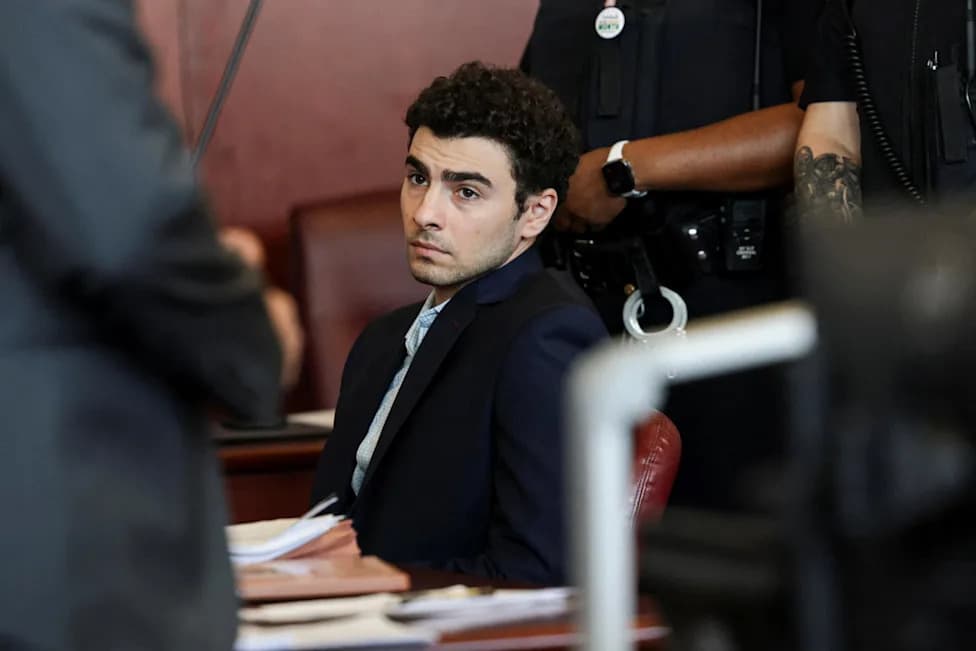
Luigi Mangione appears at an evidence suppression hearing at the Manhattan supreme court in New York City on 18 May 2026.Photograph: Jeenah Moon/Reuters
Weeks before Luigi Mangione is set to face a jury on charges that he shot UnitedHealthcare executive Brian Thompson, the case is already drawing intense attention — and a contentious fight over limited press access that threatens to amplify the spectacle.
What’s at Issue
Mangione's lawyers say court administrators have effectively limited coverage by allowing only six reporters into jury selection on Sept. 8 and by maintaining a reserved seating list. In a late-week filing to Judge Gregory Carro, the defense called the arrangement a 'partial exclusion' of the public and press and demanded the names of the journalists granted access, along with lists of accredited reporters.
Prosecutors And Court Officials Push Back
Manhattan prosecutors told the court on Aug. 3 they had 'no role in developing' the media-access plan and 'will have no role in selecting which news reporters attend the trial.' The defense later filed a clarification saying it has 'no personal knowledge' of communications between court administrators and prosecutors and asked the court to disclose whether any such discussions occurred.
'I was as surprised as anyone by the defense claim that prosecutors were even indirectly hand-picking reporters,' said freelance journalist Laura Italiano, who is covering the case. 'This is in no way true.'
Practical Constraints And Standard Solutions
Observers note that jury selection in high-profile cases often leaves few seats for the media because most courtroom benches are occupied by prospective jurors. To cope, news organizations typically use a rotating 'pool' of reporters who attend in turns and share notes with colleagues outside the room. Italiano pointed to pool arrangements in other major trials — including the 2024 hush-money case involving Donald Trump and Sean 'Diddy' Combs's 2001 trial — as routine practice.
Many journalists and legal experts say the simplest fix would be an overflow courtroom with a live video feed, a measure commonly used in large cases to reduce friction between news organizations and the court. Defense attorneys have formally requested such a feed.
Legal Posturing And Broader Risks
Some legal commentators view the defense filings as strategic moves to preserve potential appellate issues. 'It seems to me they're trying to do everything they can, as careful lawyers, to create appellate issues,' said Erik S. Groothuis of Schlam Stone & Dolan. Others warn that public disputes over access could fuel misinformation and turn the trial into a social-media spectacle.
Court administrators did not respond to requests for comment, and lawyers for Mangione declined to comment. The Manhattan district attorney's office reiterated in its Aug. 3 letter that it does not select which reporters attend proceedings.
Why It Matters
The clash over press access matters beyond logistics: it touches on the Sixth Amendment right to a public trial and shapes how the public perceives high-profile criminal proceedings. Without clear, commonly used accommodations such as media pools or overflow rooms, observers fear the Mangione trial could devolve into a chaotic, coverage-driven event rather than a focused legal proceeding.
Help us improve.





















