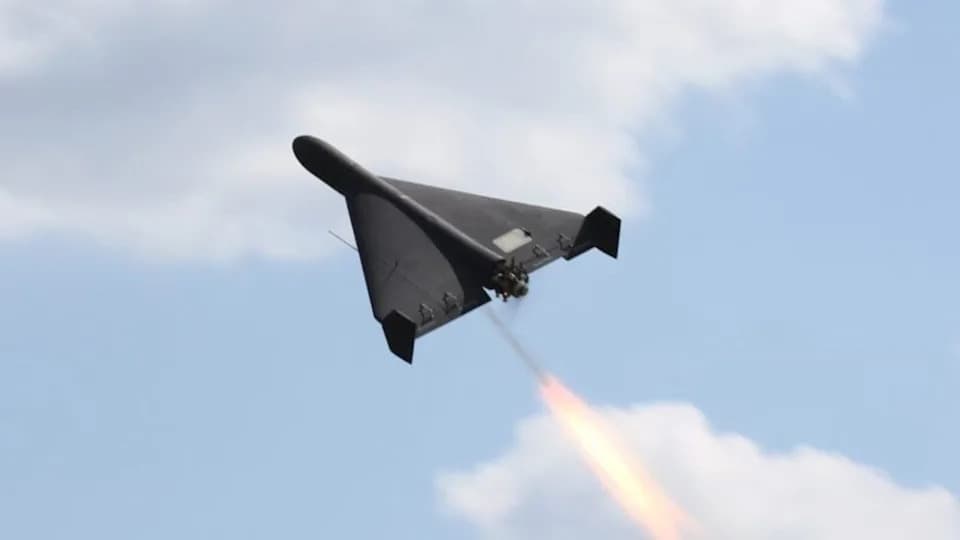
Summary: The US Army is seeking a Next Generation C‑sUAS Missile (NGCM) to extend counter‑drone reach and speed while integrating with the existing Coyote Launcher. The missile must engage Group 2 (21–55 lb) and Group 3 (up to 1,320 lb) UAS, clear its launcher within five seconds, and meet initial intercepts beyond 16 km at about 6 km altitude, with a future goal past 25 km at ~8 km. The programme targets TRL‑7 by FY2027, 50 missiles for operational assessment by early 2028, and a planned buy of ~5,000 missiles at under $150,000 each.
US Army Seeks Faster, Longer-Range Counter-Drone Missile — NGCM To Plug Into Coyote Launcher
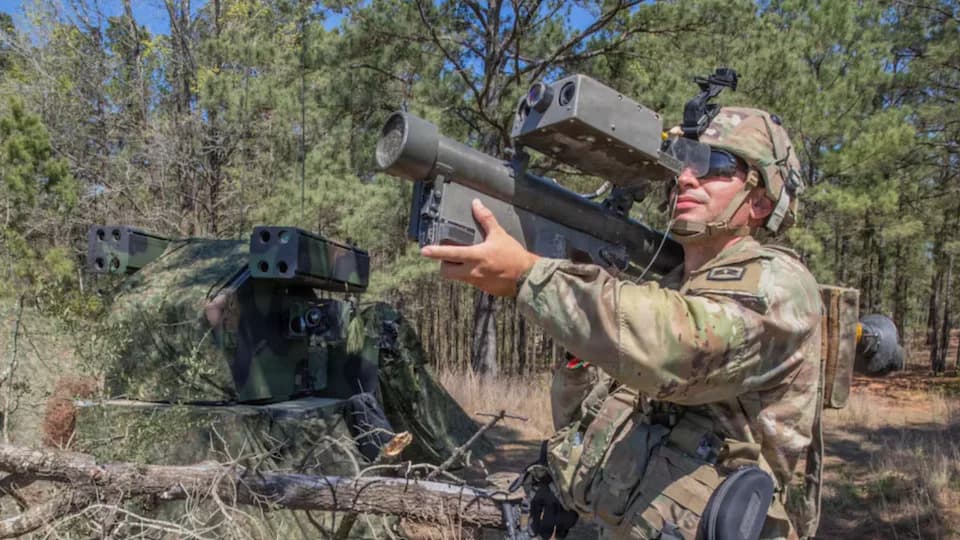
Credit: Sgt. Marc Morgenstern/U.S. Army
Photo credit: Sgt. Marc Morgenstern/U.S. Army
The US Army has released requirements for a Next Generation Counter–small Unmanned Aircraft Systems Missile (NGCM) intended to defeat small and mid-sized drones while extending the reach of existing counter‑drone systems. The programme prioritizes rapid launch, extended interception range and compatibility with the Army’s current Coyote Launch System and battlefield radar network.
Key Requirements
The Army's specification calls for a missile that can:

Google logo on a black background next to text reading 'Click to follow TechRadar'
- Engage Group 2 UAS (e.g., Boeing ScanEagle) — 21–55 lb platforms operating below 3,500 ft and under 250 kt;
- Engage larger Group 3 UAS (e.g., Insitu RQ‑21 Blackjack) — up to 1,320 lb, operating below 18,000 ft and under 250 kt;
- Exit the launcher within five seconds of an operator firing command during an engagement;
- Use a radar seeker so it can cooperate with existing air‑defence sensors and networks;
- Integrate with the Coyote Launcher with minimal or no launcher modifications, and be compatible with Sentinel A3/A4, LTAMDS and TPQ‑53 radars.
Performance Goals and Schedule
Initial performance requirements specify intercept capability beyond 16 km horizontal range while engaging targets around 6 km altitude. Future objectives raise that goal to engagements beyond 25 km at roughly 8 km altitude. Contractors must respond to the Army’s Sources Sought notice by August 20.
Officials want the programme to reach Technology Readiness Level (TRL) 7 through field prototype testing by the end of Fiscal Year 2027. The procurement timeline also requests delivery of 50 missiles for an operational assessment by early 2028 ahead of any larger production decision.
Planned Quantities And Cost Considerations
Army planning documents indicate an ambition to buy roughly 5,000 missiles via bulk procurement with a target unit cost under $150,000. That would make NGCM far less expensive than high‑end interceptors such as the Patriot (about $4 million each), yet still costlier than inexpensive attack drones like the Iranian Shahed‑136 (estimated around $35,000), which can be deployed in swarms. That cost differential helps explain continued investment in lower‑cost directed‑energy options (lasers, microwave systems), even as kinetic missiles remain necessary for poor weather or other conditions that limit directed energy effectiveness.
Deployment Concepts
The Army plans both fixed‑site configurations using multiple sensors and mobile variants mounted on tactical vehicles capable of firing while stationary or on the move. Integration with existing launch infrastructure is intended to accelerate fielding and reduce logistics and training burdens.
Bottom line: NGCM aims to deliver faster engagement timelines and much greater stand‑off against small and mid‑size unmanned threats, while leveraging the established Coyote launch ecosystem and Army radar networks.
Help us improve.