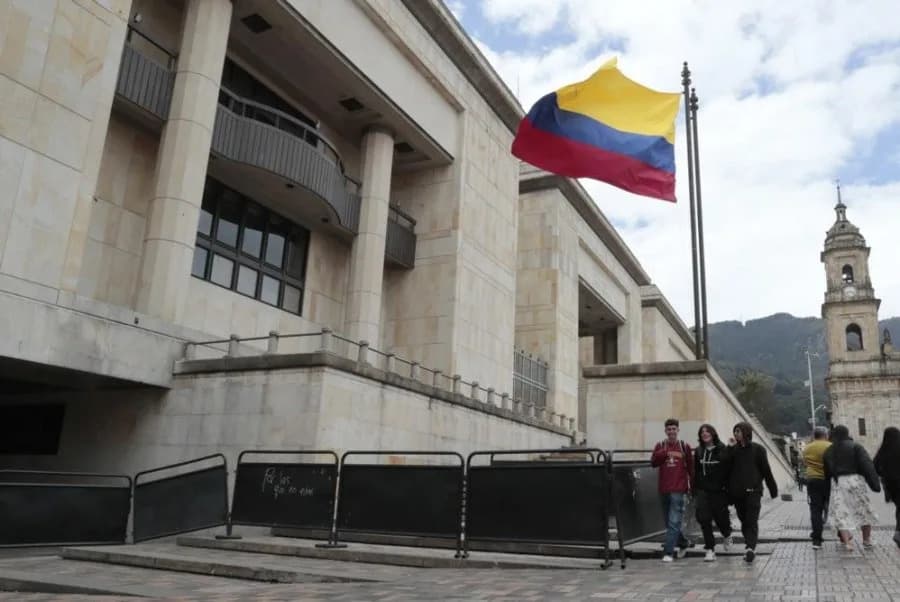
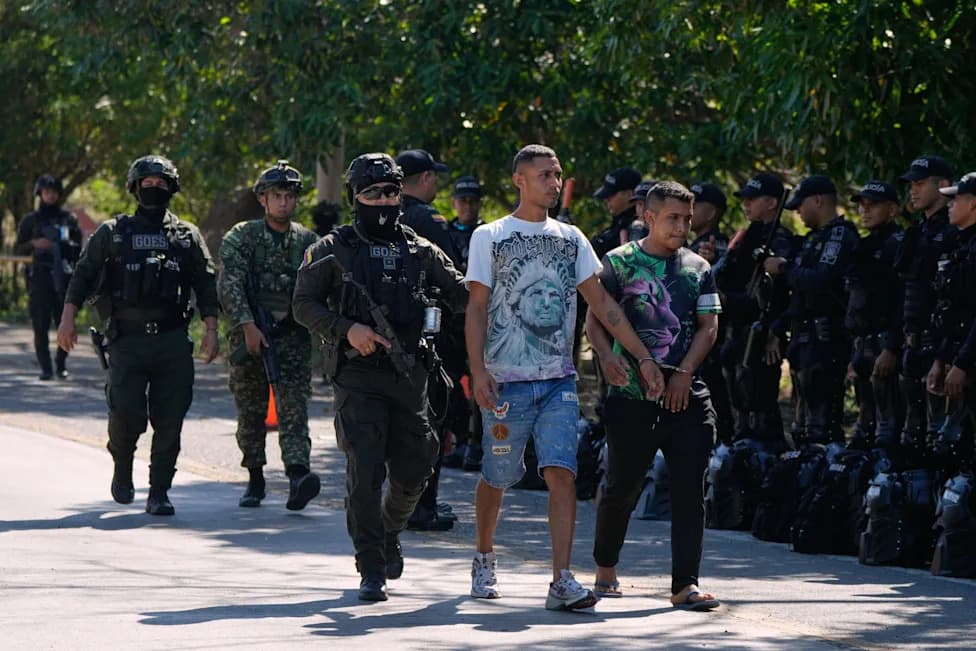
One day after Abelardo de la Espriella's inauguration, a car bomb detonated at a toll plaza on the Pan‑American Highway in Cauca, injuring two security guards. The military blames two armed groups that splintered from the FARC. The new hardline president has pledged a militarised crackdown, backed by a $1bn U.S. security pledge, while human rights organisations warn the approach risks abuses.
Car Bomb Hits Pan‑American Highway Toll Plaza A Day After Colombia's Hardline President Takes Office
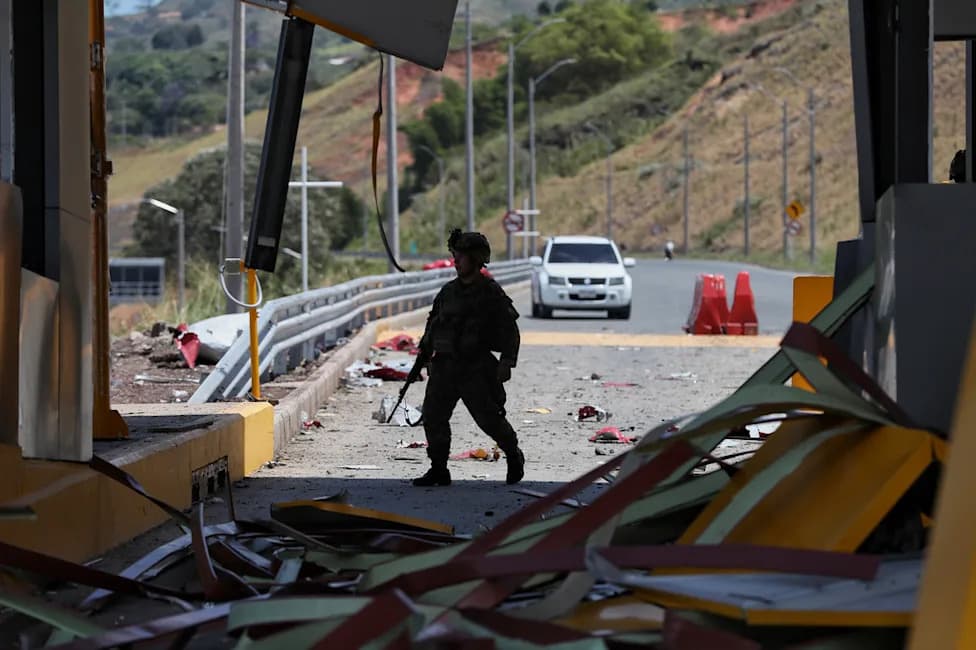
A soldiers on August 8 walks through a toll plaza along the Pan-American Highway damaged in a explosion attributed to FARC dissident groups [Santiago Saldarriaga/AP Photo]
A car bomb exploded at a toll plaza on the Pan‑American Highway in the coastal department of Cauca, southwestern Colombia, one day after far‑right lawyer Abelardo de la Espriella was sworn in as president. Two security guards suffered minor injuries in the blast, officials said.
What Authorities Say
The military attributed the attack to two armed groups that splintered from the Revolutionary Armed Forces of Colombia (FARC), the former rebel organisation that demobilised under a 2016 peace agreement. A witness described an attacker leaving a vehicle at the toll booth and fleeing the scene on a motorcycle.
Government Response
The new administration pledged a robust response. Transportation Minister Elsa Noguera said on social media, "Colombia will not kneel before violence, nor will it allow the destruction of the infrastructure that connects our regions." She cited President de la Espriella's inaugural commitment to "defeat narco‑terrorism" and restore public order.
"As President Abelardo de la Espriella said yesterday, the time for restoring order has begun. We will recover security, control of our territories, and the peace of mind of Colombians." — Transportation Minister Elsa Noguera
Political Context
De la Espriella, a political newcomer who narrowly defeated leftist Senator Iván Cepeda in a runoff by less than 1 percentage point, has campaigned on a promise of harsher, more militarised tactics to confront armed groups and drug trafficking. He has said he will abandon the "Total Peace" strategy of his predecessor, Gustavo Petro, arguing that the option of dialogue is "exhausted."
International Backing and Concerns
U.S. President Donald Trump has welcomed de la Espriella's inauguration and pledged $1 billion in security assistance. The Trump administration has also pushed for expanded U.S. military engagement in the region to counter narcotics and organised crime. Human rights groups warn that escalated military tactics — including targeting boats and aircraft suspected of carrying illicit drugs — raise the risk of abuses by state forces and collateral harm to civilians.
Background
Colombia has endured more than six decades of armed conflict involving right‑wing paramilitaries, leftist guerrillas, state forces, and criminal networks. The country remains the world’s largest producer of coca, the plant used to make cocaine and some traditional Andean medicines. Analysts say entrenched violence and illicit economies will pose immediate challenges for the incoming government.
Ongoing investigations are under way to identify the perpetrators and any broader threat to infrastructure or public safety along the Pan‑American corridor.
Help us improve.