Gabriel Johnson, a 55-year-old Liberian pastor from North Carolina, suffered a stroke while in ICE custody and remains partially paralyzed. Family members were recently allowed a roughly one-hour visit in Texas after earlier difficulties accessing him following hospitalization. They allege he did not consistently receive prescribed medication and lacked adequate food and water while detained, and have filed a habeas petition and sought an emergency stay of removal. The case has renewed concerns about medical care and oversight in the expanding U.S. immigration detention system.
Family Finally Visits North Carolina Pastor After Stroke in ICE Custody, Presses for Release and Rehab
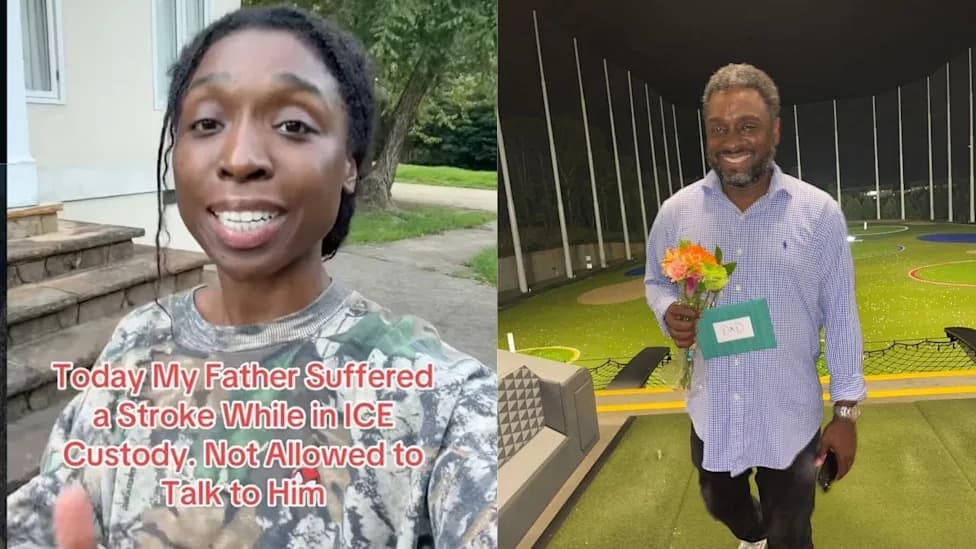
Gabri Johnson, Gabriel Johnson. (Photo credit: Gabri Johnson)
Gabriel Johnson, a 55-year-old pastor from North Carolina, remains partially paralyzed after suffering a stroke while in U.S. Immigration and Customs Enforcement (ICE) custody. His family was recently allowed an in-person visit in Texas after earlier difficulties accessing him following his hospitalization.
Johnson, a Liberian immigrant who has legally lived in the United States since age 15, was taken into ICE custody at his family's home in Cary, North Carolina, on July 15. He was transferred through multiple detention facilities and, according to his family, suffered a stroke on July 30 after arriving in Texas.
Relatives told NBC News they traveled to Texas and were permitted a roughly one-hour visit with Johnson after struggling to reach him while he was hospitalized. The family reports he remains paralyzed on one side and faces a long recovery that will require prompt rehabilitation.
Johnson's daughter, Gabri Johnson, and other relatives say he has a history of high blood pressure and prior minor strokes. They allege that, while detained, he did not consistently receive prescribed medication and sometimes lacked adequate food and water—conditions they believe contributed to his deteriorating health before the stroke.
ICE has described Johnson as a Liberian national who was targeted during an immigration enforcement operation. The family emphasizes that Johnson arrived in the U.S. as a teenager, has maintained legal status for decades, and has deep community ties in North Carolina as an ordained pastor, husband, father of four and graduate of North Carolina Central University.
Legal Steps and Family Demands
The family has pursued legal remedies while seeking more transparency about Johnson's detention and medical care. A federal habeas corpus petition challenging his detention was filed on July 23 in the U.S. District Court for the Middle District of Georgia, where he was held prior to the transfer to Texas. Relatives have also sought an emergency stay of removal, arguing that Johnson needs time in the U.S. to obtain medical treatment and rehabilitation before any removal proceedings continue.
Family members say their ability to communicate with Johnson and learn his location was limited after his hospitalization; they were initially informed of the stroke by a hospital, and only later gained more direct access. Now that they have seen him in person, their immediate priority is securing his release so he can receive comprehensive rehabilitation outside federal custody.
Broader Concerns
The case has intensified scrutiny of medical care and oversight in the expanding U.S. immigration detention system. In North Carolina, proposed expansions of detention capacity—including plans involving the former Rivers Correctional Institution in Hertford County—have prompted state and immigrant-rights advocates to raise concerns about medical care, supervision and conditions.
Family Statement: “We want him home,” relatives say, pressing officials to prioritize Johnson’s medical needs and allow him to recover with family support and access to rehabilitation services.
The family's fight continues on multiple fronts: securing transparency about the care Johnson received while detained, pursuing legal avenues to prevent his removal, and arranging timely rehabilitation for the lasting effects of his stroke.
Help us improve.