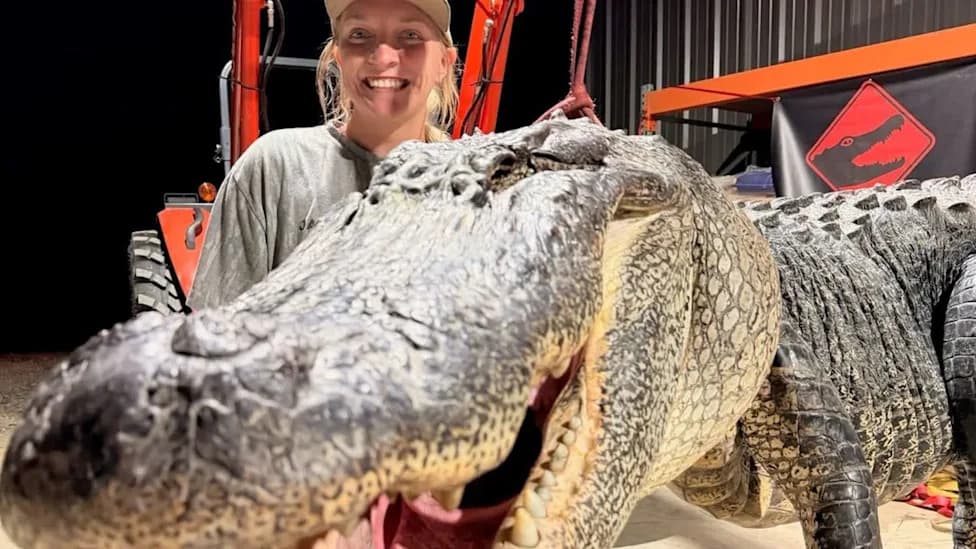
The capture of a 10-foot alligator from a Los Fresnos backyard pool highlights increasing human–wildlife encounters in residential areas. Jacob Reinbolt, a licensed nuisance trapper, said the reptile—initially underestimated at 6–8 feet—was captured in about 15 minutes and showed signs of prior trauma, including bite wounds, a shortened tail and a healed bullet wound. Officials estimate about 25,000 alligators in the Rio Grande Valley; residents are urged not to handle alligators, to report sightings to professionals, and to follow safety guidelines near water.
Texas Trapper Removes 10-Foot Alligator From Backyard Pool — 'Had Been to War'
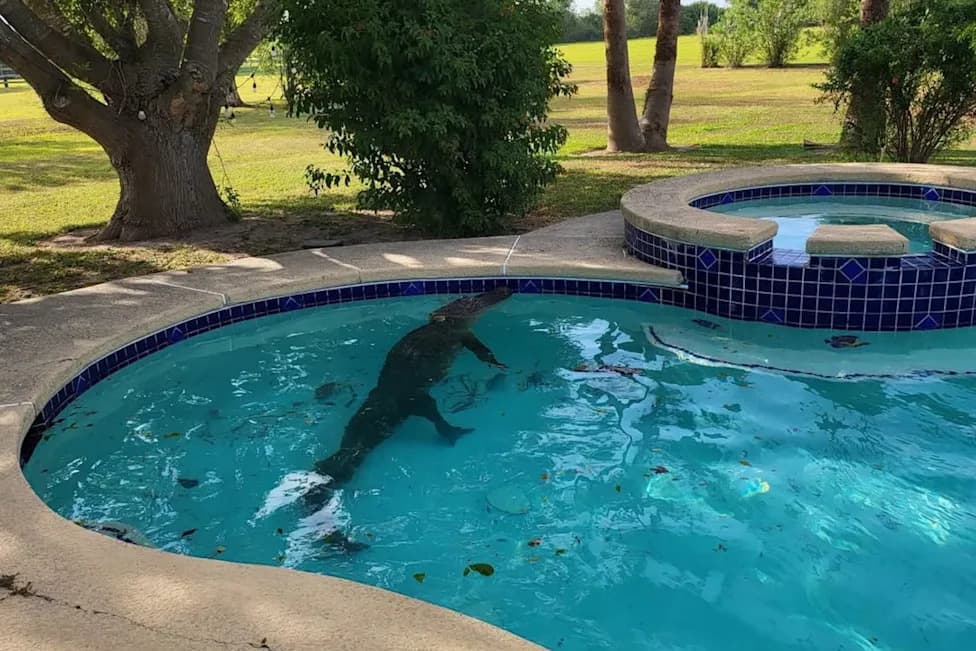
Photo Credit: South Padre Island Birding,Nature Center & Alligator Sanctuary
A 10-foot American alligator turned a Los Fresnos, Texas, backyard swimming pool into an unexpected rescue scene after wildlife specialists were summoned to remove the animal, ValleyCentral reported.
Homeowners discovered the reptile in their pool and called sanctuary staff to handle the situation. Jacob Reinbolt, an educator, alligator specialist and a licensed nuisance alligator trapper with the South Padre Island Birding Nature Center and Alligator Sanctuary, responded to the call.
Reinbolt said the animal was first estimated at 6–8 feet, but he recognized immediately that it was much larger. He and his team completed the capture in roughly 15 minutes and observed that the alligator continued to avoid humans throughout the operation.
“As soon as I walked up to the pool, [the gator] immediately went underwater, swam to the other side and tried to hide, so even at that size, they do have a natural fear of humans,” Reinbolt told ValleyCentral.
The animal bore evidence of prior trauma: a bite mark higher on its tail, the last four to six inches of the tail missing, and a healed bullet wound to the face. Reinbolt said these injuries suggest the alligator "had been to war" and may have been displaced from its usual territory by fights with other alligators or by poaching-related injury.
Texas Parks and Wildlife estimated in January 2024 that about 25,000 alligators live in the Rio Grande Valley, where the species is native. As development expands along waterways and habitat edges, encounters between people and wildlife are becoming more common.
Safety, Legal Risks, and Practical Advice
Reinbolt emphasized that attempting to capture or handle an alligator is both dangerous and often illegal. He urged residents to report sightings to trained professionals rather than trying to intervene themselves.
Legal penalties can be steep: feeding an alligator can result in a minimum $500 fine, and unlawful possession can carry fines up to $1,500 per foot, Reinbolt said.
To reduce risk, residents should stay alert near water—especially after dark—keep pets close instead of letting them roam near shorelines, secure trash and food sources, and contact local wildlife authorities if they spot an alligator.
“There is no such thing as a scary animal; there are only scared people and animals they haven’t taken the effort to understand. Education is how you bridge that gap,” Reinbolt concluded.
Help us improve.