
The Republican-controlled Tennessee legislature redrew congressional boundaries in May, splitting majority-Black Memphis into three districts days after the U.S. Supreme Court narrowed protections under the Voting Rights Act. Community leaders warn the change dilutes Black voting power and have stepped up voter education and mobilization. Residents report confusion about new boundaries, but organizers say early voting showed pockets of strong turnout. The move reflects a wider wave of Southern redistricting that could reshape representation in the midterms.
Memphis Split: Tennessee Redraws Congressional Map, Raising Fears of Diluted Black Vote
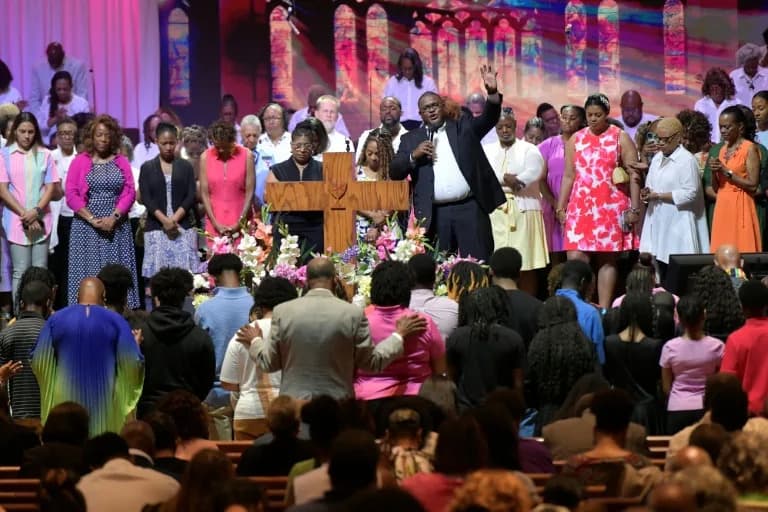
Pastor J. Lawrence Turner works to inform voters through the Black Clergy Collaborative (Brandon DILL)
For Jadu Bin Ahmed Bin Hassan, a 76-year-old African American who grew up in segregated Memphis, Tennessee's decision to divide the city's once-majority-Black congressional district into three seats feels like a return to last-century racial exclusion.
"As a child, you couldn't even go to certain stores... because they would not sell to you. You see, it was so prejudiced and so racist here," he said. "And it still is, and it's not changing, right? It's not changing."
What Changed
In May, Tennessee's Republican-controlled legislature adopted a new congressional map that splits Memphis among three districts. The action followed a late-April U.S. Supreme Court decision that weakened key protections of the Voting Rights Act — protections that had helped ensure at least one of the state's nine congressional districts remained majority-Black. That protected seat, the 9th District centered on Memphis, had been reliably Democratic.
Why It Matters
The new districts extend deep into rural parts of Tennessee and are widely expected to favor Republican candidates. Community leaders and civil-rights advocates warn that the reconfiguration will dilute Black voting strength in Memphis and make it harder for the city to elect representatives who reflect its needs and priorities.
Local Response And Mobilization
Black clergy and civic groups in Memphis — including the Black Clergy Collaborative and Up The Vote 901 — have intensified voter education and turnout efforts. "There’s definitely some angst because (people) know that the black vote has been diluted in Memphis," said Reverend Earle Fisher, pastor of Abyssinian Baptist Church.
Reverend Lawrence Turner of Mississippi Boulevard Christian Church noted that combining Memphis neighborhoods with largely rural counties "makes that a whole lot more difficult than has been in the past." Volunteers have been going door-to-door in neighborhoods such as Whitehaven to explain new districts and help voters find their polling places.
Many residents reported confusion about their new congressional boundaries, but local organizers said turnout during early voting was strong in some areas. Lee Kendrick Harris, 34, who voted at a Whitehaven church, described the redistricting as "a test of resiliency" and vowed to continue organizing to protect the community's voice.
Broader Trend
After Tennessee's map was adopted, several other Republican-led Southern states moved to redraw their congressional districts. Civil-rights groups warn that the combination of the Supreme Court ruling and state-level redistricting could weaken political influence for Black voters across the region, making the upcoming midterm elections a critical test of civic mobilization.
Help us improve.





















