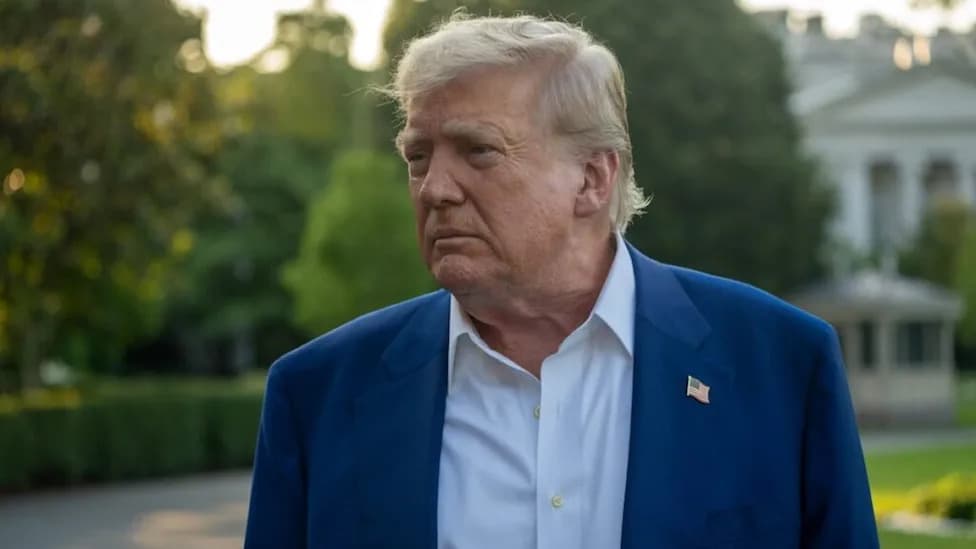
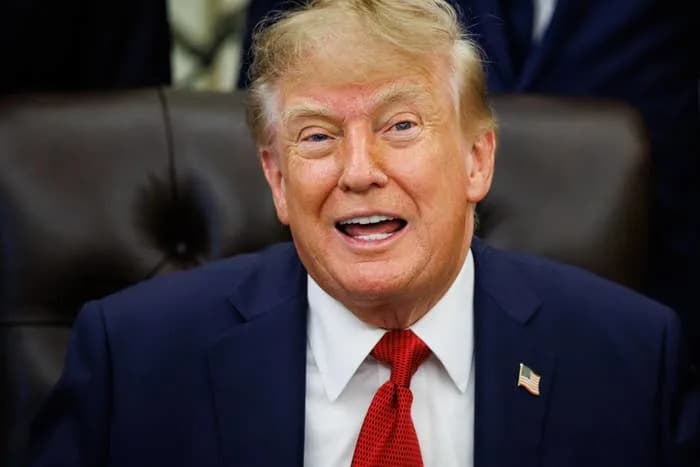
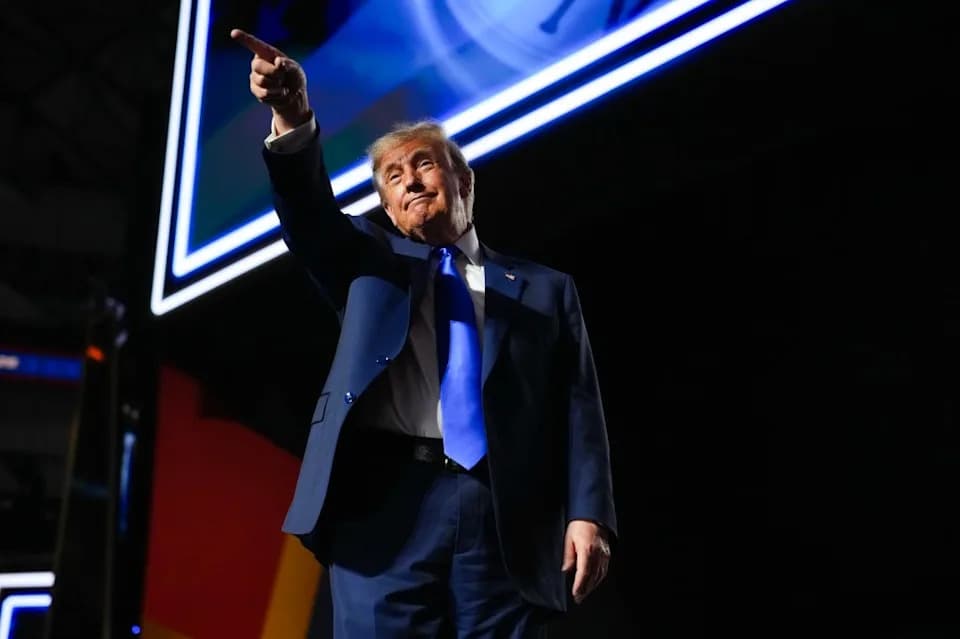
Donald Trump has repeatedly teased a third presidential term and promoted "Trump 2028" imagery, but legal experts warn the remarks are more than harmless jokes. The 22nd Amendment bars anyone from being elected president more than twice, and the 12th Amendment forecloses using the vice presidency as a loophole. While a third elected term is legally implausible, scholars caution that repeated rhetoric can normalize testing constitutional limits and serve political strategies that keep Trump central to GOP politics.
Trump Keeps Joking About 'Trump 2028.' Legal Experts Warn the Risk Is Real
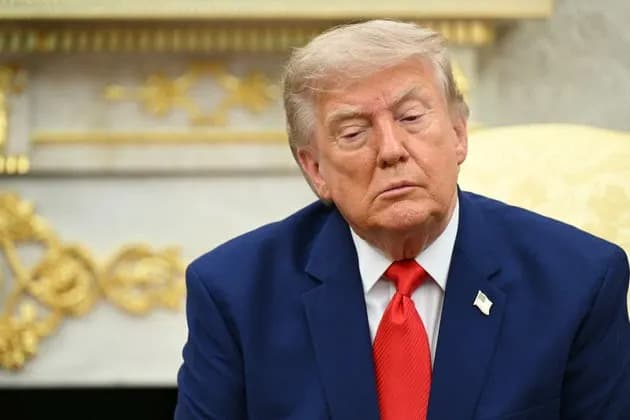
"Trump believes the Constitution exists to serve him; when in reality, the reverse is true," said James Sample, a professor of constitutional law. "He cannot serve a third term. He will not serve a third term." SAUL LOEB via Getty Images
President Donald Trump has repeatedly turned the prospect of a third presidential term into a recurring gag, but legal scholars warn the repetition masks a serious constitutional and democratic concern.
What He Said
At the rescheduled White House Correspondents' Dinner in late July, Trump quipped, "I'm going to do it again," and donned a red "Trump 2028" hat sold on his campaign site. He has continued the refrain—posting AI-generated images on Truth Social and teasing audiences at a Michigan event that "in 2.5 years you may have a different president — may."
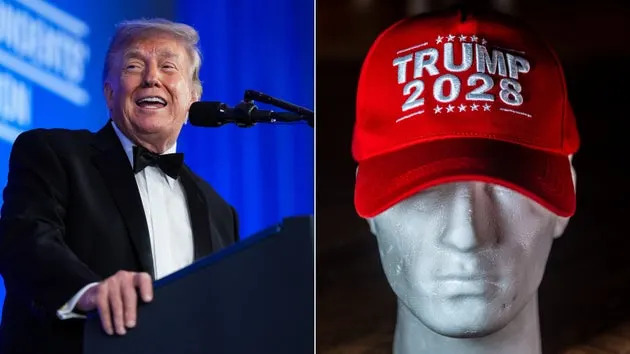
The "Trump 2028" jokes may function as an effective political distraction at a time where Trump is need of one; his approval rating has fallen to the lowest point of either of his terms in office, according to a new Economist/YouGov poll. Eric Lee via Getty Images / Anna Barclay via Getty Images
What the Law Says
The 22nd Amendment plainly states that "no person shall be elected to the office of the President more than twice." Legal scholars emphasize this text is unambiguous: a president may not be elected a third time. They also note the 12th Amendment, which says "No person constitutionally ineligible to the office of President shall be eligible to that of Vice-President of the United States," undercuts proposed workarounds that would try to use the vice presidency as a circuitous path back to the presidency.
"Constitutional limits shouldn't be treated as a punch line," said Anoo D. Vyas, assistant professor of law at the University of Massachusetts School of Law.
"The prohibition on third presidential terms is clear and unequivocal," said James Sample, professor of constitutional law at Hofstra University.
Why Experts Are Concerned
Though a third elected term is legally implausible, scholars warn the repeated jokes matter for several reasons: they may test public acceptance of boundary-pushing legal theories; they can normalize rhetoric that encourages efforts to bend or reinterpret constitutional rules; and, in a highly polarized climate shaped by events such as Jan. 6, even offhand comments can carry outsized consequences.
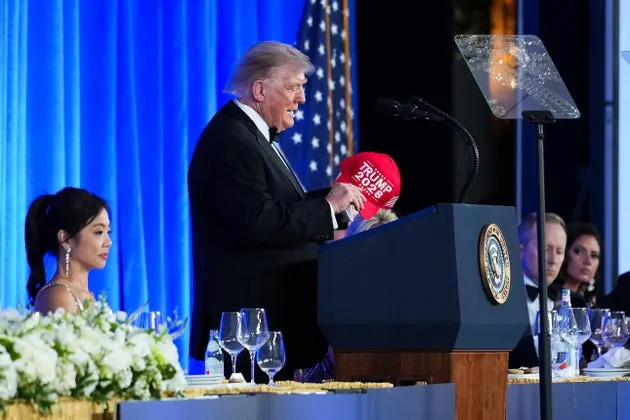
Matthew Beckmann, a political science professor at the University of California, Irvine, said Americans should be alert to Trump's rhetoric about a third term, but also trust that the constitutional system is designed to withstand such challenges. Eric Lee via Getty Images
Political Motives and Effects
Political analysts say the "Trump 2028" talk also has tactical benefits. It energizes core supporters, keeps Trump central to GOP politics, and helps him avoid being labeled a lame-duck figure after the 2026 midterms. As David Schultz, a political scientist, put it: suggesting another run keeps attention focused on Trump and reinforces his influence within the party.
Bottom Line
Experts agree that a third elected term would violate the Constitution and is extremely unlikely to succeed. Still, because Trump has raised the idea repeatedly—sometimes in jest and sometimes seriously—legal and political scholars urge the public and officials to treat such claims with vigilance rather than dismissing them as harmless theater.
Context: Trump has mentioned the idea of a third term on many occasions in recent years, and some allies have suggested plans or timelines, but mainstream constitutional scholarship finds the proposals legally unworkable.
Help us improve.