Russia’s full-scale invasion has severely damaged Ukraine’s agriculture, environment and role in global food supplies. Recent missile strikes killed civilians and worsened a broader pattern of destruction that has verified over 65,000 civilian casualties, damaged more than 500 cultural sites and affected over 210,000 buildings. Combat-related fires, pollution, landmines and infrastructure damage have scarred nearly one million hectares and left large areas unsafe for farming. Ukraine is seeking compensation—ratifying a Council of Europe convention and preparing a claim exceeding $57 billion—while the practical effectiveness of the new arbitration mechanism remains to be seen.
How Russia’s War Has Devastated Ukraine’s Farms, Environment and Global Food Supplies
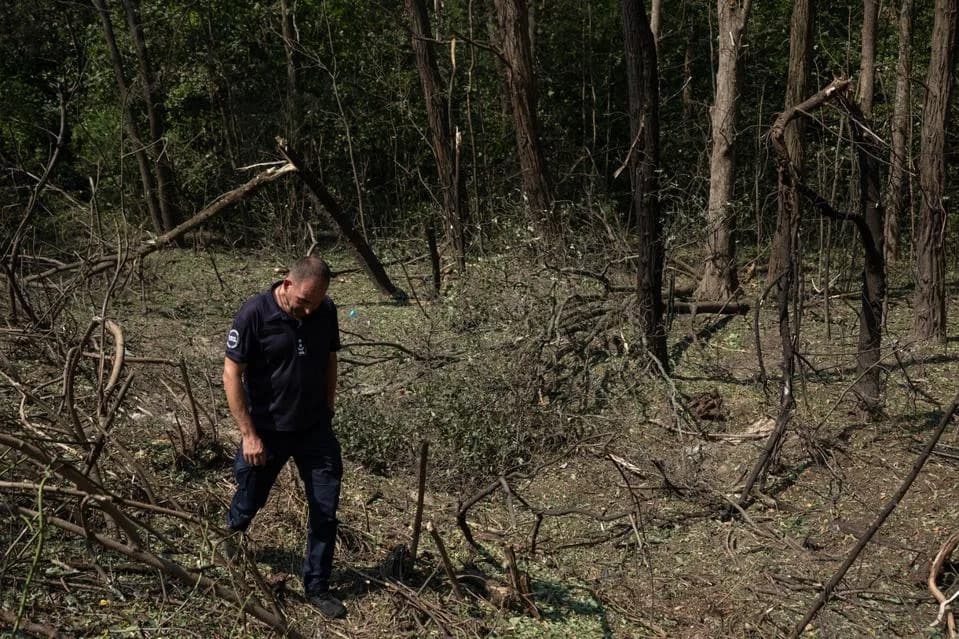
BROVARY, UKRAINE - AUGUST 5: A man walks past shattered trees following a Russian missile strike on a railway station on August 5, 2026 in Brovary, Kyiv Oblast, Ukraine. During a massive attack on Kyiv on the night of August 5, Russian forces damaged commercial warehouses near Kyiv and caused casualties. (Photo by Oleksandr Magula/Suspilne Ukraine/JSC "UA:PBC"/Global Images Ukraine via Getty Images)Global Images Ukraine via Getty Images
On August 5, Russian missile strikes across Kyiv and surrounding towns killed at least 17 people and destroyed major retailers, warehouses and logistics centres. In Brovary, a strike on a railway platform killed eight civilians. The attacks are part of a pattern the United Nations says has intensified in recent months and that continues to hit civilian life and infrastructure across Ukraine.
Humanitarian and Cultural Toll
The UN reported that July was the "deadliest month for Ukrainian civilians since April 2022," documenting repeated missile and drone strikes that have demolished homes, schools, public transport networks, water systems and humanitarian warehouses. Since the February 2022 full-scale invasion, the Office of the United Nations High Commissioner for Human Rights has verified more than 65,000 Ukrainian civilian casualties. UNESCO reported that, as of July 29, more than 500 cultural sites have been damaged, and the New York Times has estimated over 210,000 residential and public structures affected. A joint Rapid Damage and Needs Assessment by the Government of Ukraine, the World Bank Group, the European Commission and the UN estimated reconstruction and recovery costs at nearly $588 billion.
Pre-War Agricultural Strength
Before the 2022 invasion, Ukraine was among the world’s leading agricultural producers and exporters. Using 2021 data, the U.S. Department of Agriculture placed Ukraine seventh for wheat production, sixth for corn, fourth for barley and second for sunflower oil. Ukraine led global exports of sunflower oil and ranked among the top exporters of barley, corn and wheat. The Food and Agriculture Organization reports Ukraine has over 60 million hectares of land, roughly 42.5 million of which are used for agriculture; more than 55% of the country’s land is arable. Ukraine’s fertile chernozem (black earth) was a cornerstone of that productivity.
How The War Has Scarred Land And Ecosystems
The invasion has exacted a heavy toll on farmland and the environment. Radio France Internationale reported that in 2025 nearly one million hectares were scarred by the conflict; satellite data RFI analysed showed fires consumed almost one million hectares, roughly one-third of which was farmland. Combat pollution from exploded ordnance, fuel and weapon residues has contaminated air, soil and water. Large areas—reported estimates suggest up to 30% of land in some zones—are contaminated with landmines and unexploded ordnance and are unsafe for farming. Deforestation and wildfires have further reduced arable acreage, while greenhouse gas emissions linked to the conflict have harmed air quality.
Damage to industrial and municipal infrastructure has compounded environmental harm. Shelling and strikes on factories and utilities have ruptured sewage pipes and damaged treatment plants, allowing wastewater and industrial effluents to enter waterways and threaten drinking supplies and ecosystems.
Flooding, Chemical Spills And Lost Livestock
In June 2023 the Nova Kakhovka dam was destroyed. The collapse released a vast reservoir used to supply Crimea and the Zaporizhzhia Nuclear Power Plant. Reuters reported floods inundated "tens of thousands of hectares of agricultural land in southern Ukraine," rendering much of it unusable and washing oil and assorted chemicals into waterways; hundreds of animals died in the inundated areas.
Grain Theft, Blockades And Global Food Security
Ukraine’s grain exports were disrupted by multiple wartime actions. Early in the war the BBC reported that Russian forces were taking grain and other produce from farmers in contested areas; Forbes reported accusations that hundreds of thousands of tons of grain were seized. Russia also imposed a blockade on the Black Sea that interrupted exports and contributed to global price volatility. A UN-brokered Black Sea Grain Initiative in 2022 temporarily reopened export corridors, but the agreement collapsed in mid-2023. As Russian strikes continue to target ports and vessels, Ukraine has explored alternative export routes to sustain global food supplies.
Risks To Nuclear Facilities
Militarised activity around nuclear sites has raised international alarm. Reports include a Russian drone strike on a spent-fuel storage facility near Chernobyl and earlier damage to containment structures. The International Atomic Energy Agency has documented ongoing military activity around the Zaporizhzhia Nuclear Power Plant and continues to monitor and report risks to nuclear safety that could endanger people, wildlife and terrain.
Seeking Accountability And Compensation
In response to widespread environmental and agricultural destruction, Ukraine has pursued legal and diplomatic avenues for redress. On April 30 the Verkhovna Rada ratified the Convention on the Establishment of an International Claims Commission for Ukraine. By May 20 the Council of Europe recorded that 38 states and the European Union had signed the Convention and that six signatories had ratified it. The Convention is intended to provide a Council of Europe-backed mechanism to review and decide claims for compensation for damage, loss or injury attributed to internationally wrongful acts by the Russian Federation. Ukraine is preparing a claim exceeding $57 billion aimed at wartime greenhouse gas emissions and environmental destruction; the practical operation of the arbitration mechanism is still being established.
Outlook
As fighting continues, damage to civilians, farmland and ecosystems is likely to grow. International institutions, environmental and legal experts, and observers will watch closely to see whether the International Claims Commission delivers compensation and accountability, and whether reconstruction and recovery efforts can restore agricultural production and protect the environment.
Help us improve.