China’s accelerating lunar program and the U.S. pivot to commercial partners have focused both countries on the moon’s south pole, where suspected water ice could enable long-term bases and deeper space missions. China’s Chang'e-7 mission aims to locate and sample ice while Beijing pursues a crewed landing by 2030; the U.S. targets crewed returns through Artemis and industry partnerships. Technical hurdles, legal ambiguity under the Outer Space Treaty, and geopolitical mistrust make this an uncertain and pivotal period for lunar governance and cooperation.
Why 2026 Could Be a Turning Point in the New Moon Race Between China and the U.S.
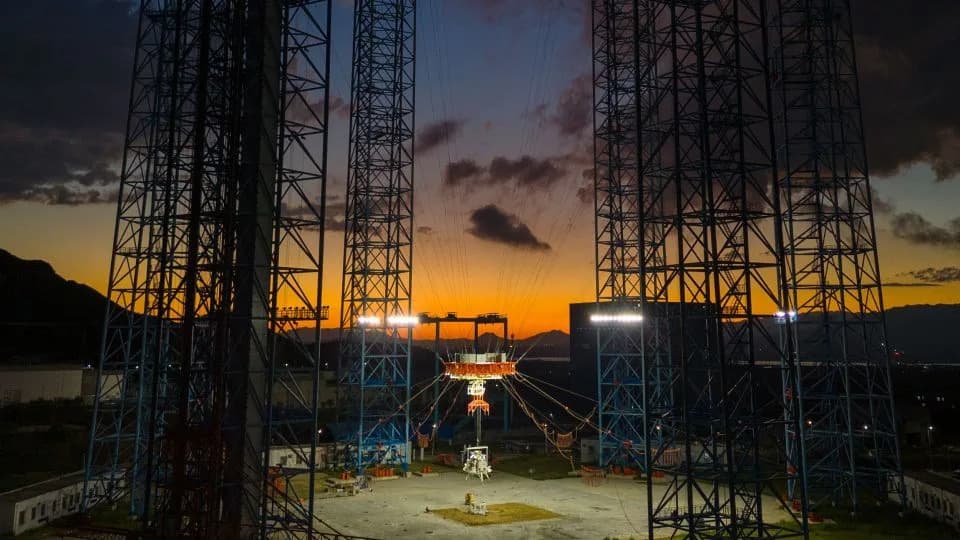
A lunar lander is seen at a test site in Huailai county, in China's Hebei province, in 2025. - Xinhua/Shutterstock
A quietly escalating competition that simmered for decades has surged into public view: China’s fast-moving lunar program and a U.S. strategy that leans on commercial partners are pushing both powers toward the moon’s south pole. That region’s suspected water-ice deposits could enable sustained human presence, in-space fuel production and deeper missions to Mars — making the coming months and years unusually consequential.
Why the South Pole Matters
Scientists prize the lunar south pole because of likely deposits of water ice trapped in permanently shadowed craters. That ice can be converted into rocket propellant, breathable air and drinking water, all essential to sustaining long-term outposts and enabling more ambitious deep-space exploration.
China’s Drive: Chang'e-7 and a 2030 Crew Goal
China has rapidly expanded its space capabilities in recent years. It put the Tiangong space station into orbit and returned the first-ever soil samples from the moon’s far side. Beijing is preparing the complex Chang'e-7 mission — a coordinated orbiter, lander, rover and hopping vehicle — designed to map and directly sample south-pole ice. Chinese leaders and program officials have also stated a goal of landing Chinese crew on the moon by 2030 and envisioning a long-term International Lunar Research Station.
"If lunar water ice is successfully located, it could significantly reduce the cost and time required to transport water from Earth," said Tang Yuhua, deputy chief designer of Chang'e-7, in 2025.
The U.S. Approach: Commercial Partners and Artemis
The U.S. response combines NASA-led programs with heavy reliance on private companies. NASA is funding commercial landers such as Astrobotic’s Griffin, scheduled for the lunar south pole in late 2026, and is working with companies including SpaceX and Blue Origin on human landing systems for future Artemis missions. Artemis II later missions have begun to demonstrate renewed crewed lunar capability, but NASA still depends on industry to build and certify surface landers.
Technical Differences And Key Challenges
China’s planned two-launch architecture — one rocket for a crew capsule and one for a lander that dock in lunar or Earth orbit — aims to avoid the in-orbit refueling step central to the U.S. plan. By contrast, both SpaceX’s Starship and Blue Origin’s Blue Moon concepts require orbital refueling of cryogenic propellants, a capability that has not yet been demonstrated at the necessary scale. Both approaches face substantial engineering risks, and timelines remain uncertain.
Legal, Governance and Security Questions
The 1967 Outer Space Treaty prohibits national appropriation of celestial bodies but leaves ambiguities about resource extraction, exclusion or "safety" zones and industrial installations like power plants. The U.S. has promoted the Artemis Accords, which allow resource extraction and protective safety zones; China and several partners have not signed. These gaps in international rules raise difficult questions about ownership, jurisdiction and conflict avoidance on the moon.
Cooperation, Competition, or Both?
While rivalry is driving rapid progress, many experts argue that long-term safety and scientific goals will require at least selective cooperation — for example, coordinating orbital traffic, sharing data on space debris and collaborating on planetary defense. History shows that adversaries can move from competition to cooperation when mutual interests align, but political friction and national-security concerns complicate such shifts today.
What To Watch Next
- Chang'e-7 launch and its ability to detect and sample south-pole ice.
- Astrobotic’s Griffin lander performance during its planned late-2026 south-pole mission.
- Technical progress on in-orbit cryogenic refueling for U.S. lunar landers.
- Any diplomatic moves to clarify rules for lunar resource use and safety zones.
Both nations face hard engineering problems and legal uncertainties. Landing astronauts again would be a powerful symbol, but building sustainable settlements will be the far larger test — one that may determine how humanity uses and governs off-Earth resources for generations.

At a shopping mall in Beijing, a giant screen shows taikonauts saluting inside the Tianhe core module of China's space station in 2021. - Thomas Peter/Reuters

The moon rises in the sky on night of the Mid-Autumn Festival in September 2024 in Nanjing, in China's Jiangsu province. - Yang Bo/China News Service/VCG/Getty Images
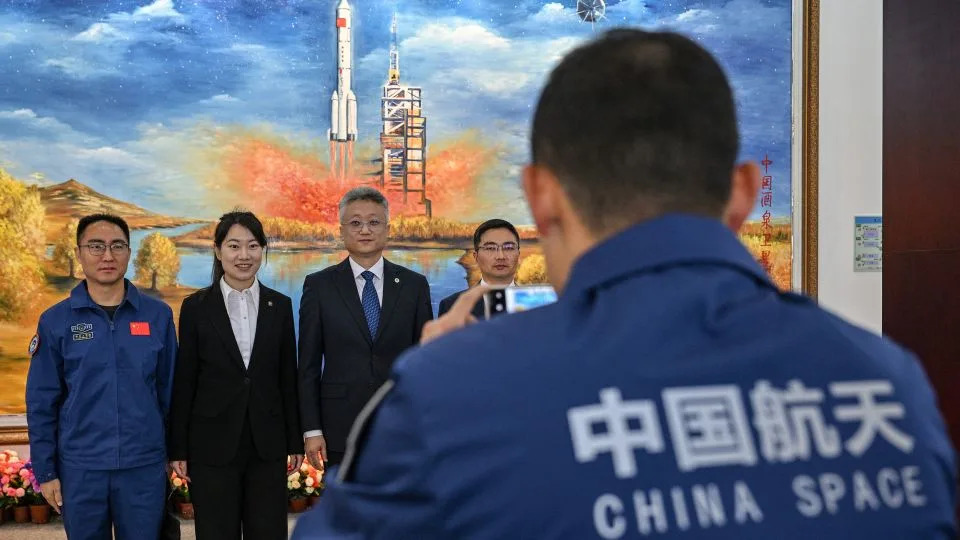
Zhang Jingbo (third from left), spokesperson for the China Manned Space Program, poses with staff members at the Jiuquan Satellite Launch Centre in China's Gansu province in 2025. - Hector Retamal/AFP/Getty Images
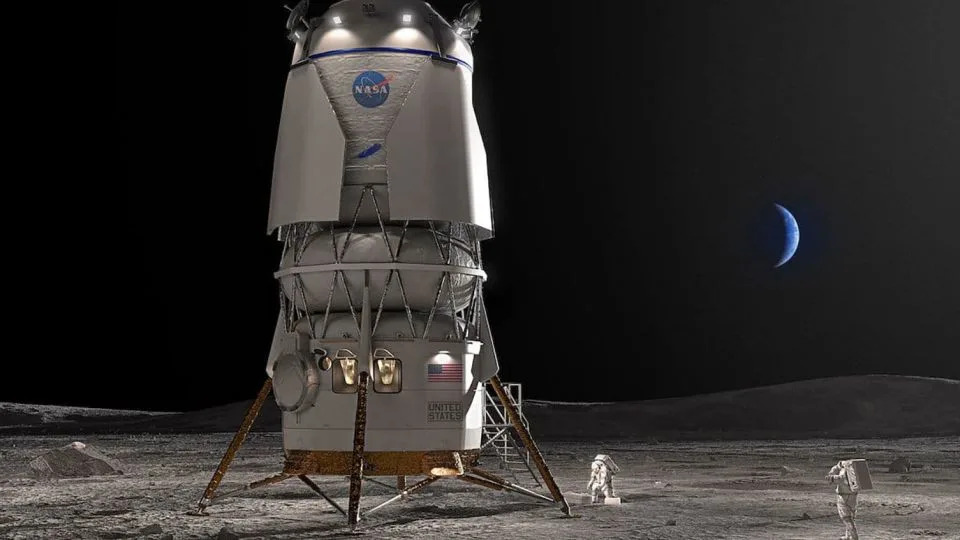
This artist's concept shows Blue Origin's Blue Moon landing system on the moon. - NASA
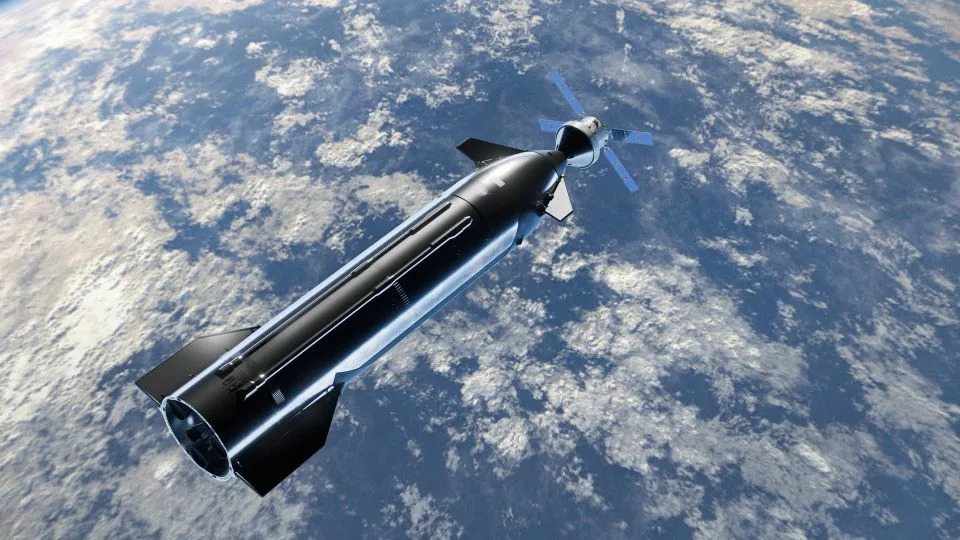
This artist's rendering depicts NASA's Orion spacecraft docking with a test version of SpaceX's Starship human landing system during the upcoming Artemis III mission in low-Earth orbit. - SpaceX/NASA
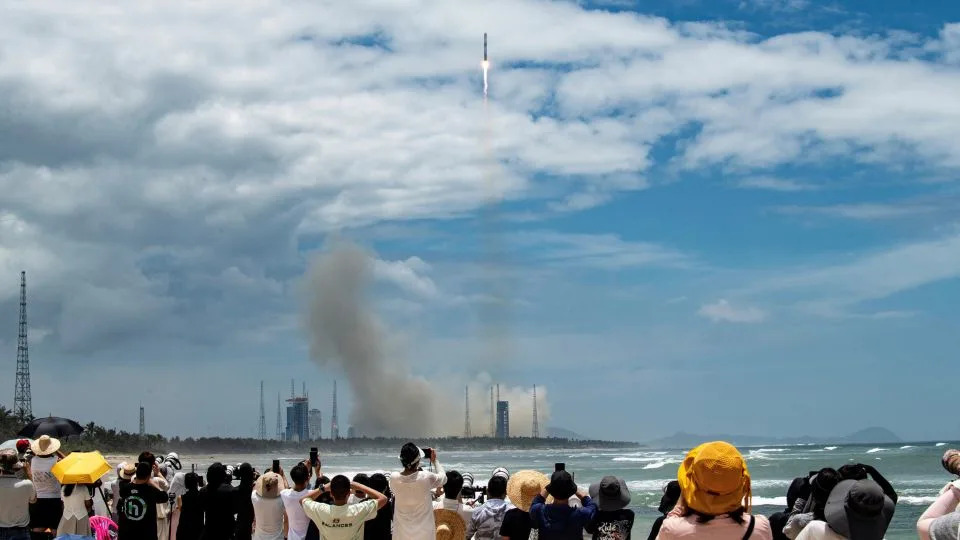
A Long March-10B carrier rocket blasts off from the Hainan commercial spacecraft launch site in Wenchang, in China's Hainan province, in July. - Meng Zhongde/Xinhua News Agency/Getty Images
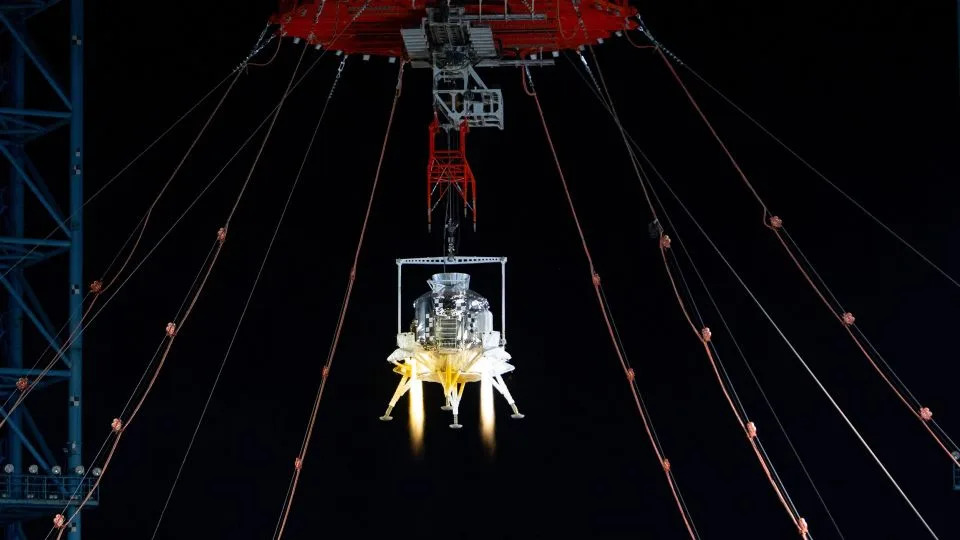
A lunar lander's successful trial in 2025 for extraterrestrial landing and takeoff at a site in Huailai county, in Hebei province, marks a key step in the development of China's lunar exploration program. - Xinhua/Shutterstock
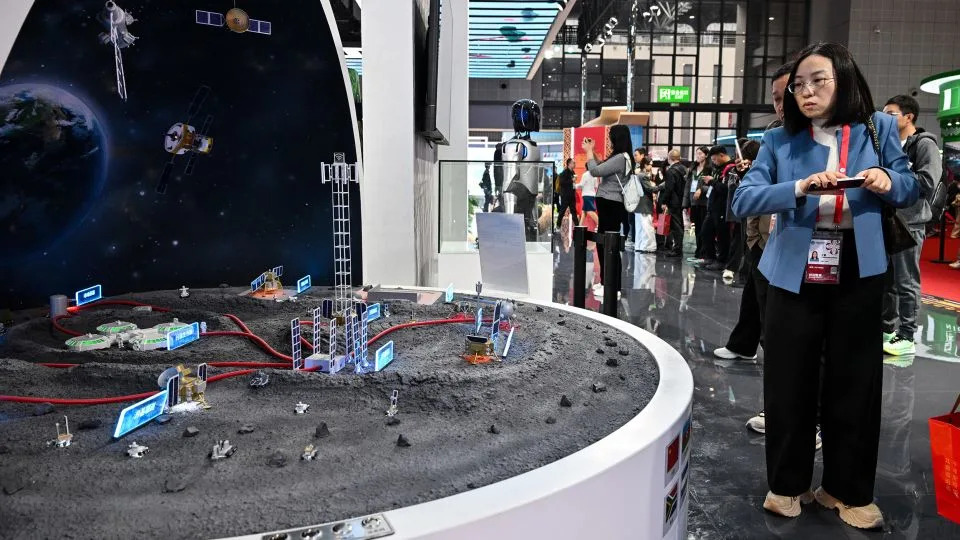
Visitors look at a scale model of the International Lunar Research Station at China's pavilion during the 8th International Import Expo in Shanghai in 2025. - Hector Retamal/AFP/Getty Images

Swiss Federal Councillor Guy Parmelin (right) signs the Artemis Accords beside then-NASA Administrator Bill Nelson during a ceremony at NASA headquarters in Washington, DC, in 2024. - Michael Reynolds/EPA-EFE/Shutterstock
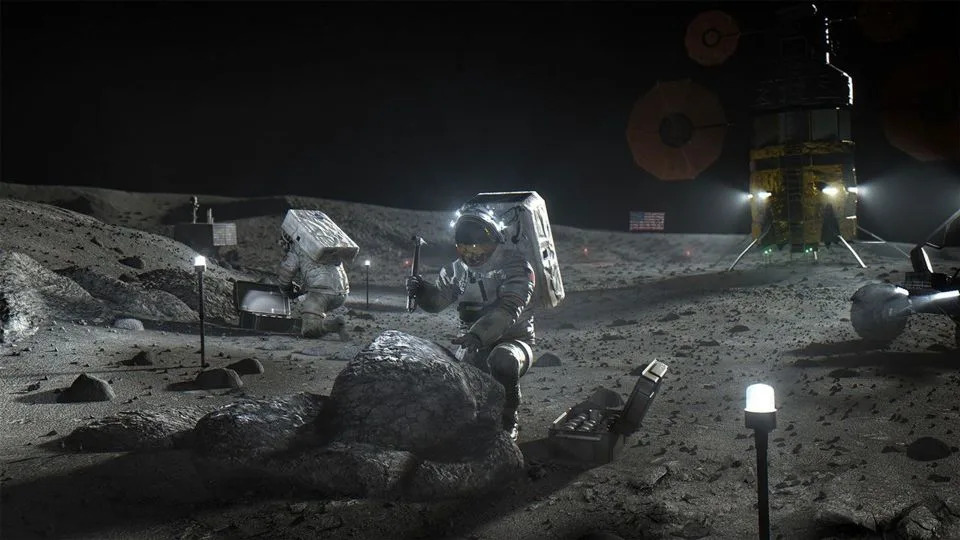
This artist's concept depicts astronauts at work on a lunar base. - NASA
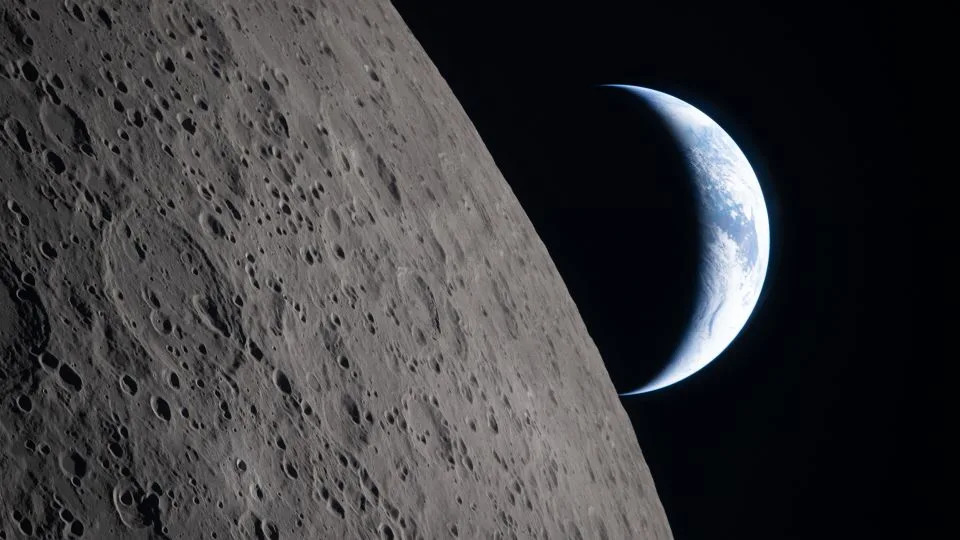
The Artemis II crew photographed the moon and Earth during a lunar flyby mission in April. - NASA
Help us improve.