
LINK, a Katalyst-built rescue spacecraft launched July 3, developed an unexpected multi-axis spin and lost two of three reaction wheels about three weeks into its mission to save NASA’s Swift telescope. Engineers reduced the spin from roughly 9°/s to about 1.47°/s using electric-propulsion burns and will uplink new attitude-control software within days. Swift has no thrusters and could fall below a critical ~186-mile (300 km) altitude by October without a boost. Teams continue urgent work to stabilize LINK and complete the rendezvous.
Race Against Reentry: Engineers Fight to Recover Katalyst’s LINK So It Can Save NASA’s Swift
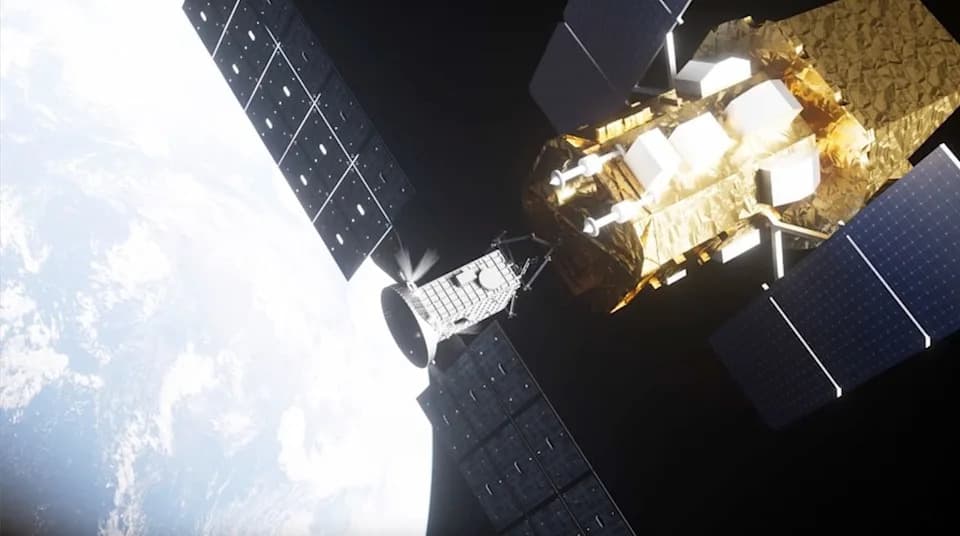
Artist's illustration of Katalyst Space Technologies' LINK spacecraft meeting up with NASA's Swift space telescope in Earth orbit. | Credit: NASA
A privately built rescue spacecraft, LINK, is battling its own technical emergency in Earth orbit while racing to save NASA’s aging Swift space telescope from an accelerating orbital decay.
What Went Wrong
LINK, developed and operated by Arizona-based Katalyst Space Technologies and launched on July 3, began unexpectedly rotating on multiple axes about three weeks into its mission. The multi-axis spin — initially about 9 degrees per second — caused intermittent communications blackouts and forced a platform reset. In addition, two of LINK’s three reaction wheels, normally used to control its orientation, stopped working.
Recovery Efforts Underway
Engineers have made measurable progress. By firing one of LINK’s electric-propulsion thrusters in a series of carefully planned burns, the team reduced the rotation rate to roughly 1.47 degrees per second. According to a mission update, 'Using a series of burns from one of LINK’s electric propulsion thrusters, the Katalyst team now has slowed that spin to about 1.47 degrees per second.' The company plans to hold LINK at that stabilized spin rate while uploading new flight-software updates that include attitude-control algorithms tailored to its current configuration.
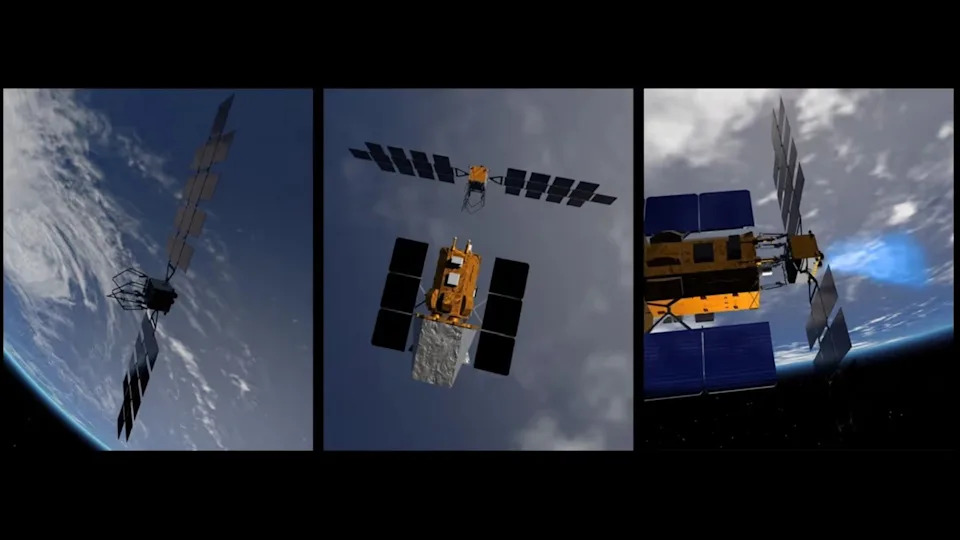
Artist's illustration of Katalyst Space Technologies' Link servicing spacecraft approaching and capturing NASA's Swift space observatory on an orbit-boosting mission. | Credit: Katalyst Space Technologies
The Stakes
The urgency is high because Swift has no onboard thrusters. Launched in 2004 as the Neil Gehrels Swift Observatory to study gamma-ray bursts, the telescope started at about 375 miles (600 km) altitude and has steadily lost height. NASA estimates a critical threshold near 186 miles (300 km); if Swift descends below that altitude, atmospheric drag will likely push the observatory into an unrecoverable decay. Without a timely boost, Swift could reach that danger zone by October.
What Comes Next
Mission teams plan to uplink the updated attitude-control software within days. Once LINK is stable under the new controllers, it will begin the maneuvers necessary to align with Swift’s orbit and attempt the rendezvous and orbit-raising operation. Katalyst — which received a $30 million contract from NASA to build and fly LINK — must restore full operational control quickly to intercept and raise the roughly $250 million telescope before it slips past the point of no return.
Why This Matters: If successful, this mission would be one of the first commercial on-orbit servicing operations to extend the life of a major space observatory, demonstrating capabilities that could protect other valuable satellites in the future.
Help us improve.





















