
Landspace will attempt a second recovery of its Zhuque-3 first stage on Aug. 10 from Jiuquan, following a successful static fire on June 29. The 66-meter methane-LOX Zhuque-3 — roughly comparable to Falcon 9 — can lift about 18,300 kg to LEO. This will be China’s fourth orbital booster recovery attempt after a July Long March 10B mission achieved the country’s first successful landing.
Landspace Sets Aug. 10 Relaunch to Recover Zhuque-3 First Stage — Powered Landing Planned
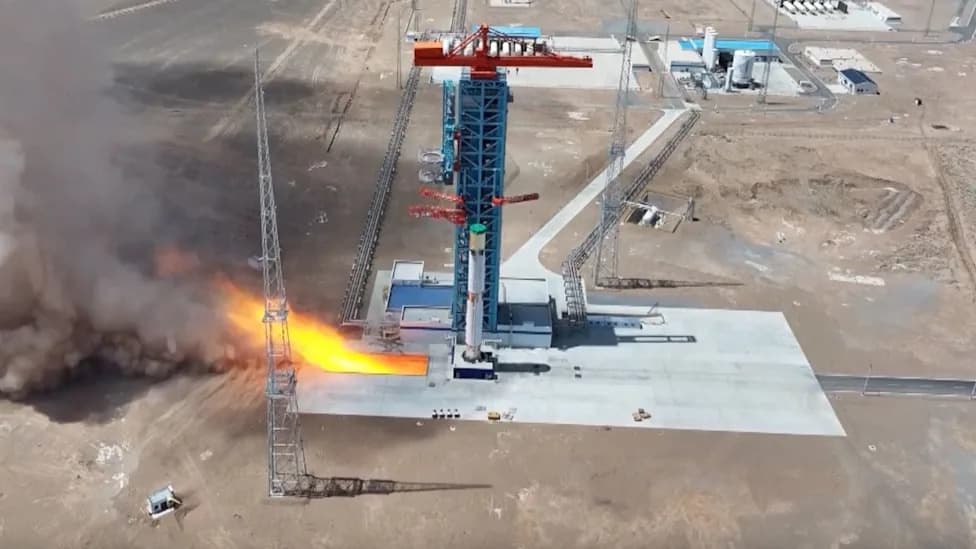
The Chinese company Landspace conducts an engine test with the first stage of its methane-fueled Zhuque-3 rocket in June 2025.
Chinese commercial launcher Landspace is preparing a second attempt to recover the first stage of its Zhuque-3 rocket, targeting an evening launch from Jiuquan on Aug. 10. Airspace notices list a liftoff window at about 7:45 p.m. EDT (23:45 GMT; 7:45 a.m. Beijing time, Aug. 11) from the Dongfeng commercial space innovation pilot zone at the Jiuquan spaceport.
The company completed a full static fire of the Zhuque-3 first stage on June 29. Landspace said the test "operated normally," and that telemetry and test data matched expectations, validating systems ahead of flight.
Rocket and Recovery Plan
Zhuque-3 is a 216-foot (66-meter) stainless-steel launch vehicle powered by methane and liquid-oxygen engines. With a published payload capacity of roughly 40,350 lb (18,300 kg) to low Earth orbit (LEO), it is comparable in class to SpaceX’s Falcon 9.
For this flight Landspace plans a powered descent and touchdown on landing legs — a recovery profile similar to Falcon 9’s booster return. The upcoming attempt will put Zhuque-3 through the full sequence of boostback/entry burns (as required), controlled descent and a legs-first touchdown on the designated landing area.
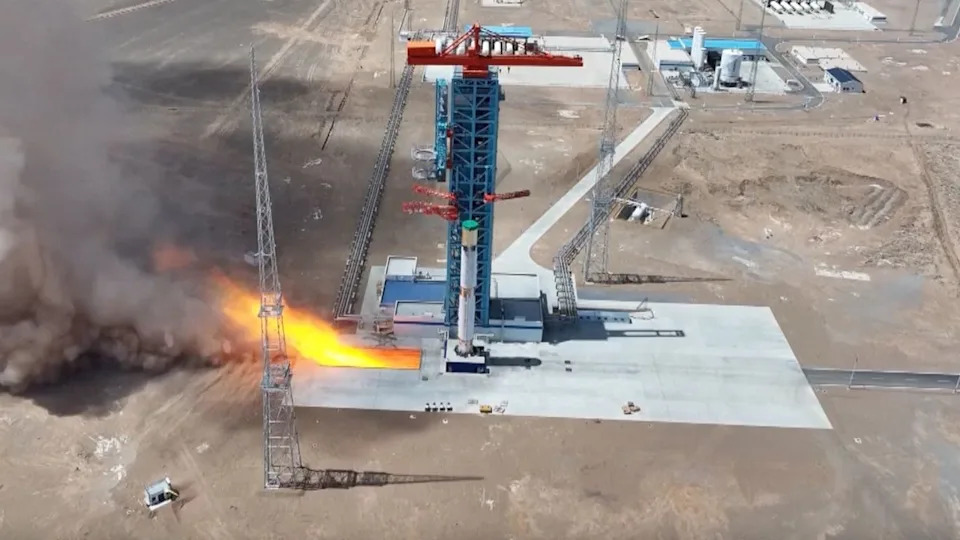
Landspace conducts an engine test with the first stage of its Zhuque-3 rocket in June 2025. | Credit: CCTV
Context: China’s Booster Recovery Efforts
Landspace’s first Zhuque-3 launch in December 2025 was a milestone for China’s commercial reusability efforts: the second stage reached orbit, but the first stage broke apart in a fireball during its final powered descent toward the pad. That mission marked China’s first orbital recovery try.
A second early attempt using a Long March 12A vehicle also reached orbit but ended with a failed first-stage recovery. On July 10, a Long March 10B successfully recovered its first stage using a ship-mounted net-capture system — making China the second country to land an orbital booster.
Landspace’s Aug. 10 effort will be the country’s fourth orbital booster recovery attempt and a key test of Zhuque-3’s reusable systems. Observers will be watching engine performance during reentry burns, guidance and control responses, and the touchdown sequence on landing legs.
What To Watch: Whether the staged-powered descent, thermal protection and landing-leg deployment perform as designed — any one of these phases is critical to a successful booster recovery.
Landspace’s public statements and the successful static-fire test indicate the company feels prepared; the coming launch window will show whether Zhuque-3 can complete a controlled return and add to China’s growing capabilities in orbital booster reuse.
Help us improve.





















