Rangzen, a 52‑year‑old Tibetan activist living in Queens, self‑immolated outside the United Nations in Manhattan on July 2 and later died in hospital. The livestreamed act — the first known Tibetan self‑immolation in the United States — has become a rallying point for exiled Tibetans and prompted a makeshift shrine at the scene. His action echoes roughly 170 similar protests since 2009 and comes amid tightened Chinese controls and a recent "ethnic unity" law. Exiled leaders honored his devotion while urging Tibetans to preserve life for the long‑term struggle.
Tibetan Activist Lobga Rangzen Self‑Immolates Outside UN in New York — A Protest That Echoes Decades of Struggle
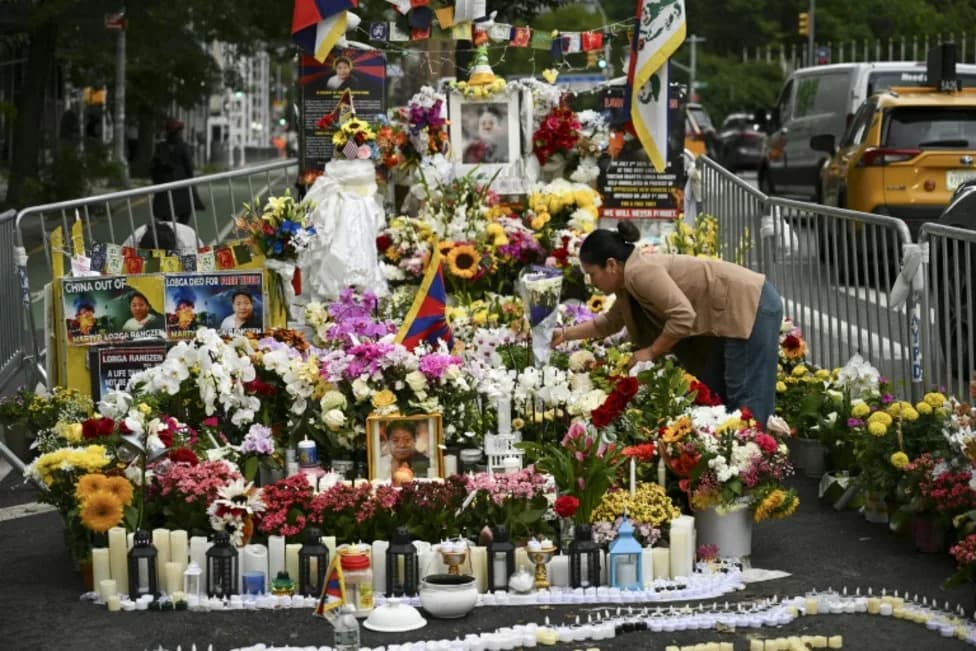
Mourners of Lobga Rangzen erected a makeshift shrine at the scene of his self-immolation outside the United Nations in New York that has become a rallying point for Tibetan activists (ANGELA WEISS)
Lobga Rangzen, a 52‑year‑old Tibetan activist living in Queens, set himself on fire outside the United Nations in Manhattan on July 2 and later died in hospital. The act, captured in a livestream and witnessed by passersby, has become a focal point for exiled Tibetan communities and renewed discussion about protest, sacrifice and the long-running dispute over Tibet's future.
A Private Decision, A Public Act
No one close to Rangzen — not a monk who had known him for decades and not his niece in New York — anticipated his decision. His niece, Tenzin Choekyi, 21, learned the news while watching the World Cup in Queens and initially feared a less serious accident. Details that emerged later left her and others in shock.
The Incident
Video of the incident shows a heavy‑set man wearing a traditional chuba robe place a Tibetan flag near the UN before igniting himself. Dark smoke rose as bystanders and a UN security guard attempted to intervene; a guard used a fire extinguisher but Rangzen was pronounced dead about an hour later in hospital. New York police have said they are still investigating.
Community Reaction
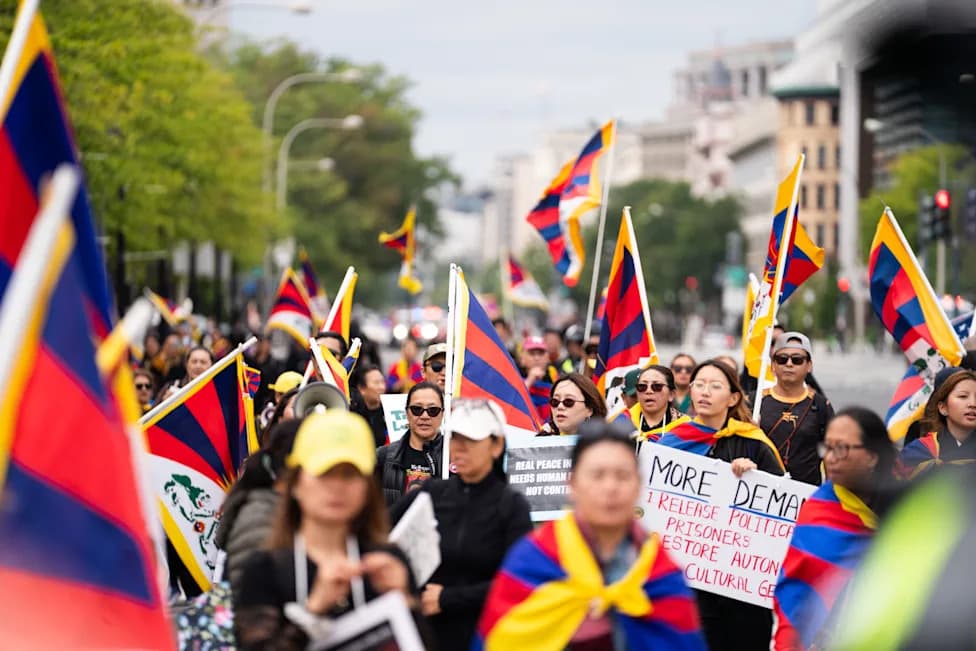
Although the incident received limited coverage in US media that night, it resonated strongly within Tibetan exile communities. Activists quickly created a makeshift shrine at the site beneath the UN facade, placing flowers and white khata scarves. "His passing has left many of us Tibetans with the fervor to act," said Jampa Choedup, a monk who had known Rangzen since 1997.
Background And Motivation
Born Lobsang Palden, Rangzen spent 14 years as a monk in southern India before settling in Queens after moving to the United States in 2006. He adopted the name "Rangzen," which means "independence," and became a visible participant in protests at the UN and the Chinese consulate. Colleagues say he told them he was "married to the movement" and that family stories of resistance helped shape his activism.
Historical Context
Rangzen's self‑immolation is part of a wider pattern: between 2009 and 2022, about 170 Tibetans — mostly inside China but also in India and Nepal — set themselves on fire in acts of political protest following the 2008 crackdown in Tibet. The incident occurred as Beijing recently adopted an "ethnic unity" law that critics say further limits minority rights, deepening frustration among some Tibetans.
Responses From Leaders
Tibetan exile leaders honored Rangzen's devotion while urging restraint. Penpa Tsering, head of the Tibetan government‑in‑exile, called on Tibetans to "cherish" life and emphasized the need to preserve human life for the long‑term struggle. The Dalai Lama has previously expressed sorrow over self‑immolations and questioned their effectiveness, while Beijing has sought to blame exile figures for "glorifying" such acts.
Final Statement
Rangzen recorded a six‑minute farewell video released after his death. In it, he said his actions were not driven by hunger or despair but by devotion to the Tibetan nation and urged exiled Tibetans to work toward a better future. "There is no need to mourn for me," he said, calling instead for continued commitment to the cause.
Note: This report covers an act of self‑harm framed as political protest. The article focuses on events, reactions and context rather than graphic detail.
Help us improve.