The killing of Corey Ruiz in Madison, Wisconsin — captured on multiple bystander videos — has renewed debate over police accountability. While Mayor Satya Rhodes-Conway pledged to seek funding for mandatory body cameras, community leaders warn cameras alone will not prevent police violence and urge investments in mental-health crisis response, homelessness services and stronger civilian oversight. Protests and a memorial encampment were forcibly cleared, prompting arrests and public controversy as the independent police monitor subpoenas the department and alleges obstruction of evidence.
Beyond Bodycams: Madison Shooting Reignites Debate Over Police Accountability and Alternatives
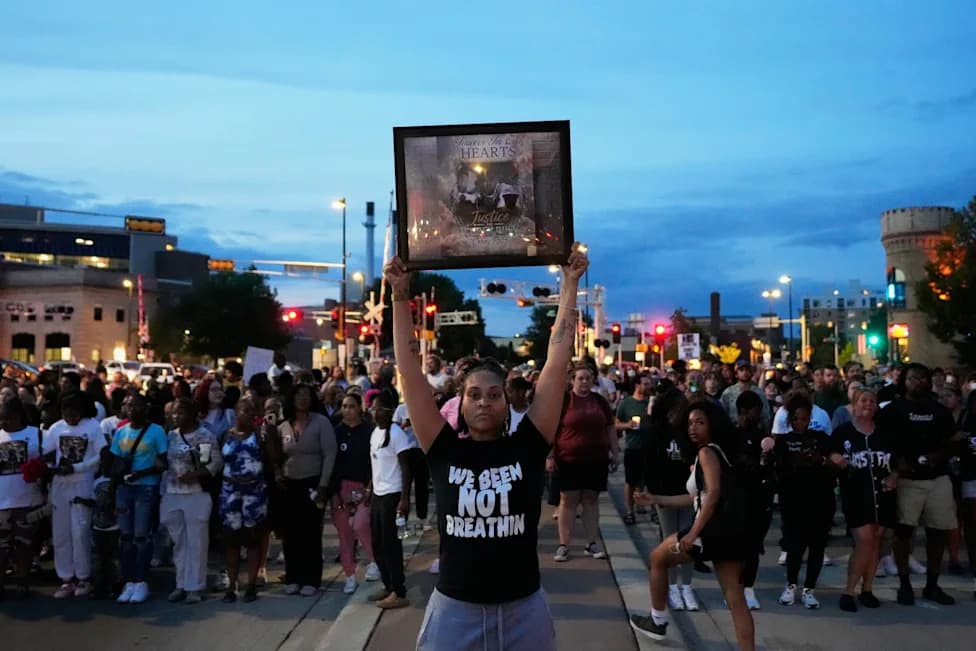
A protester holds a photo of Corey Ruiz at a demonstration on 23 July 2026 in Madison, Wisconsin.Photograph: Kayla Wolf/AP
After bystander videos of the killing of Corey Ruiz — a 38-year-old Black man in Madison, Wisconsin — circulated online, public scrutiny centered on why officers at the scene were not wearing body-worn cameras, a technology used by more than 80% of U.S. police departments. Authorities say Ruiz wielded a knife and injured an officer; multiple witness videos, however, appear to show him being shot while detained and lying on the ground.
Ruiz’s family and supporters immediately demanded mandatory body cameras across Madison and criminal charges for the four officers involved. The demand for cameras drew support from across the political spectrum, including Madison’s police chief; within days Mayor Satya Rhodes-Conway said she would seek funding for department body cameras in the next city budget.
Community Concerns: Cameras Are Not The Whole Answer
Local organizers, however, warned that body cameras are only one piece of a broader accountability puzzle. Many community leaders argue that cameras do not prevent police violence and cannot substitute for systemic reforms that reduce harmful police interactions in the first place. They call instead for stronger community control of policing, increased investment in mental-health response teams, expanded homelessness supports and other services that address root causes of crisis encounters — Ruiz was unhoused at the time he was killed.
“If we want to meaningfully address killings, harms and surveillance of Black and brown communities, we need to ask how power is taken from these institutions and placed into the community,”
— Zon Moua, Senior Director of Organizing, Freedom Inc.
Local Reforms, Pushback And A Fractured Debate
Madison has experimented with alternative responses and civilian oversight since the mass protests after George Floyd’s murder in 2020. The city created a police-civilian oversight board and an Office of the Independent Police Monitor, and piloted a mental-health crisis response program that dispatches a community paramedic and crisis worker to nonviolent behavioral-health 911 calls.
At least three proposals to mandate body cameras reached the common council since 2020 but were delayed, rejected or sent back for additional study — often because of cost concerns or community opposition. A 2021 feasibility review highlighted strong objections among some marginalized residents who feared increased surveillance. A 2024 pilot program in Madison was analyzed and found to have had no measurable effect on police behavior or on community–police relations in the city.
Juliana Bennett, a former council member and organizer who voted twice against adopting mandatory body cams, said she preferred funding be redirected to homelessness services and crisis supports. Bennett’s position reflects a broader local view that investments in social services can reduce police contact and prevent tragedies.
Protests, Encampment Clearance And Allegations Of Obstruction
The July 22 shooting prompted sustained street protests and a memorial encampment at the intersection where Ruiz died. Handmade art, chalked messages and signs reading “Justice for Corey” covered the asphalt. After the mayor ordered the encampment removed, police arrested 16 people, issued 10 citations and used chemical spray during the clearance; protesters later occupied streets, producing additional arrests. The shutdown produced sharp condemnations from local organizers and council members.
Madison’s interim independent police monitor, Aeiramique “Meeka” Glass, said the police department denied her access to evidence in the Ruiz investigation and that she has had to subpoena the department. On August 4 she publicly accused the mayor’s office, the common council, the city attorney and the district attorney of obstructing or enabling obstruction of evidence collection. Glass and the oversight board have requested roughly 1% of the police budget to strengthen the monitor’s office; community group Freedom Inc. has called for 5% of the police budget for civilian oversight.
What Body Cameras Can — And Can’t — Do
National research offers a mixed picture of body-worn cameras. Some studies find cameras help substantiate “use of force” claims and are particularly consequential in cases involving people of color. But investigative reporting has repeatedly shown that departments frequently control public access to footage, apply wide redactions, and often decline to discipline officers despite apparent misconduct on camera. Critics argue cameras are most useful when paired with independent, enforceable accountability systems and programs that limit policing in routine crisis responses.
“We’re under the illusion that body-worn cameras are a good way to stop police violence from happening in the first place,”
— Lauren Bonds, Executive Director, National Police Accountability Project
Broader Context And Racial Disparities
Data cited by advocates note that 2025 was the deadliest year for police killings since 2013, according to Mapping Police Violence. In Madison — where Black residents comprise roughly 7% of the population — more than half of the police department’s documented “use of force” incidents last year involved Black people, underscoring persistent racial disparities that organizers say demand structural remedies.
Local leaders and activists say they will continue to press for investments in housing, mental-health care and community-led alternatives to policing, arguing that cameras alone cannot address the deeper causes of violence and disproportionate enforcement.
What’s Next: The common council must weigh the mayor’s proposed funding for cameras alongside community demands for greater civilian oversight and redirected investment in social services. Meanwhile, the independent monitor’s subpoenas and allegations of obstruction could shape public confidence in the investigation of Ruiz’s death and the city’s accountability mechanisms.
Help us improve.