Key Takeaway: Recent Vantor satellite imagery shows Russia has added anti-drone netting to more than half a dozen submarines at the Rybachiy base on Kamchatka, up from two in May. The base is over 4,500 miles east of Ukraine, signaling Moscow's concern about long-range drone threats. Similar counter-drone cages have been seen at Novorossiysk, reflecting broader defensive steps as Ukraine expands long-range drone operations.
Satellite Images: Russia Adds Anti-Drone Netting To Pacific Fleet Submarines — Thousands Of Miles From Ukraine
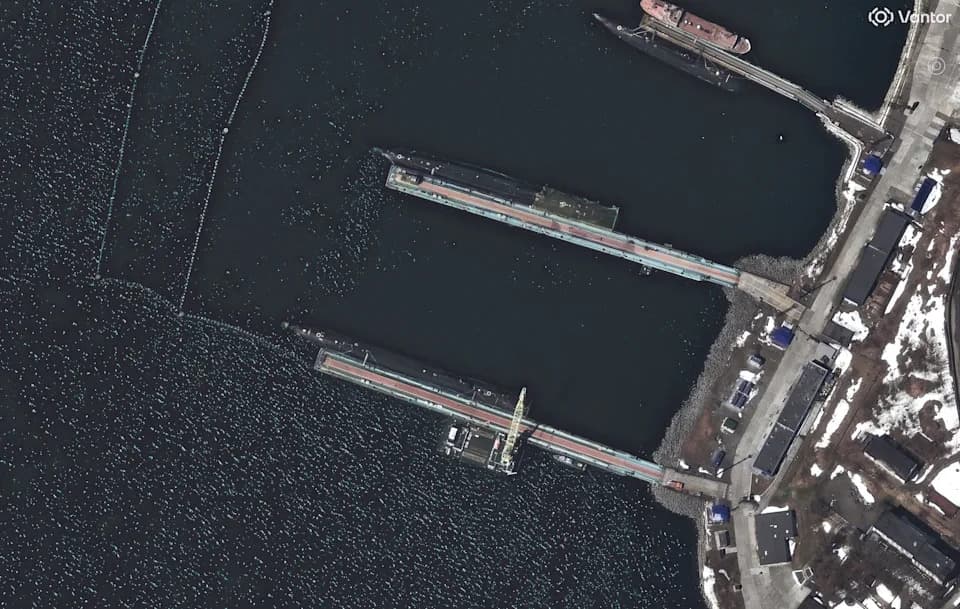
Anti-drone netting covering two submarines at Rybachiy in May.Satellite image ©2026 Vantor.
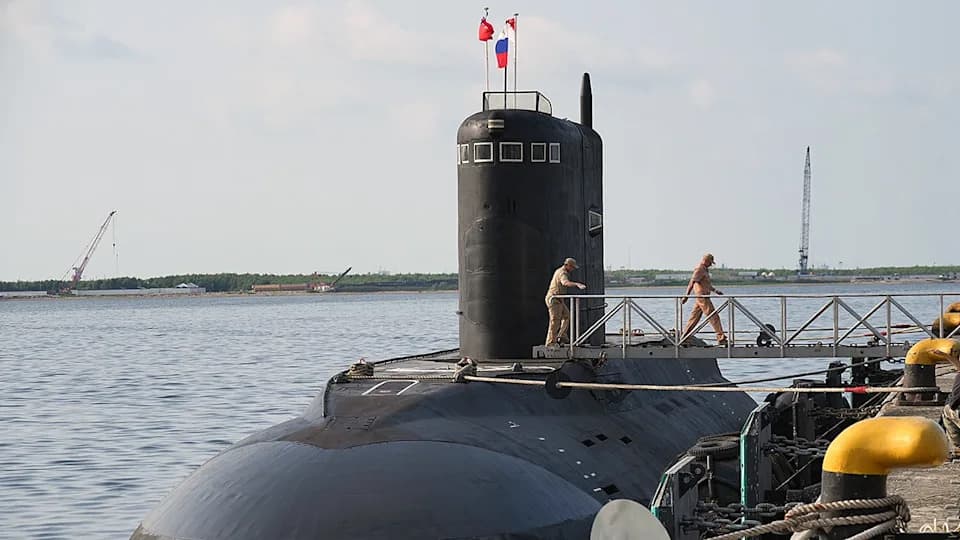
New satellite imagery shows Russia has expanded the use of anti-drone netting on submarines at its Rybachiy naval base on the Kamchatka Peninsula, more than 4,500 miles east of Ukraine.
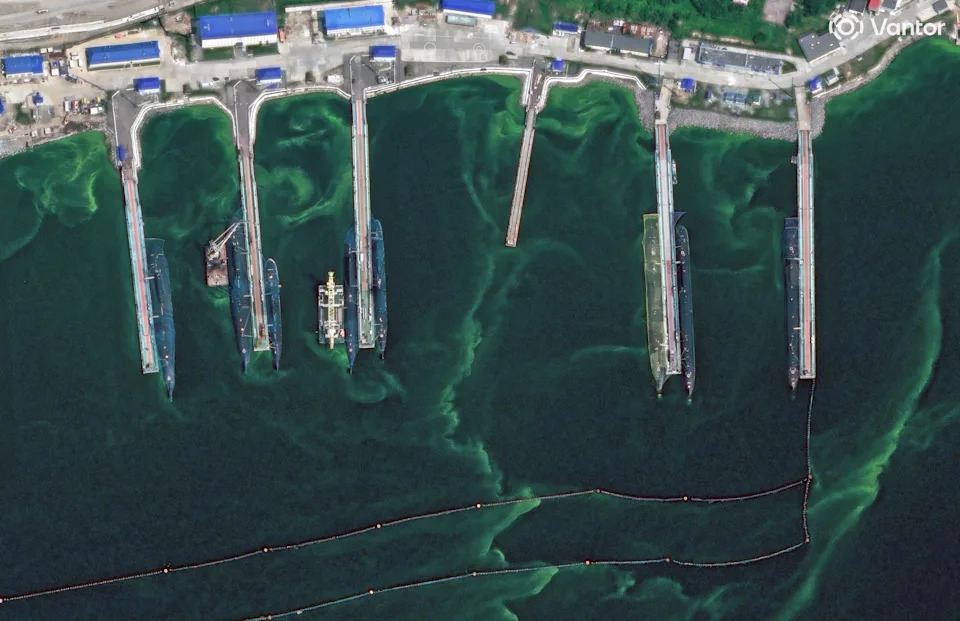
Multiple submarines covered in anti-drone netting in August.Satellite image ©2026 Vantor.
Imagery collected by the U.S. spatial-intelligence firm Vantor on Tuesday shows more than half a dozen submarines at Rybachiy fitted with protective netting. By contrast, satellite photos from May showed only two submarines at the same base with similar coverings. The base is the principal hub for the Russian Navy's Pacific Fleet and hosts nuclear-powered ballistic-missile and attack submarines.
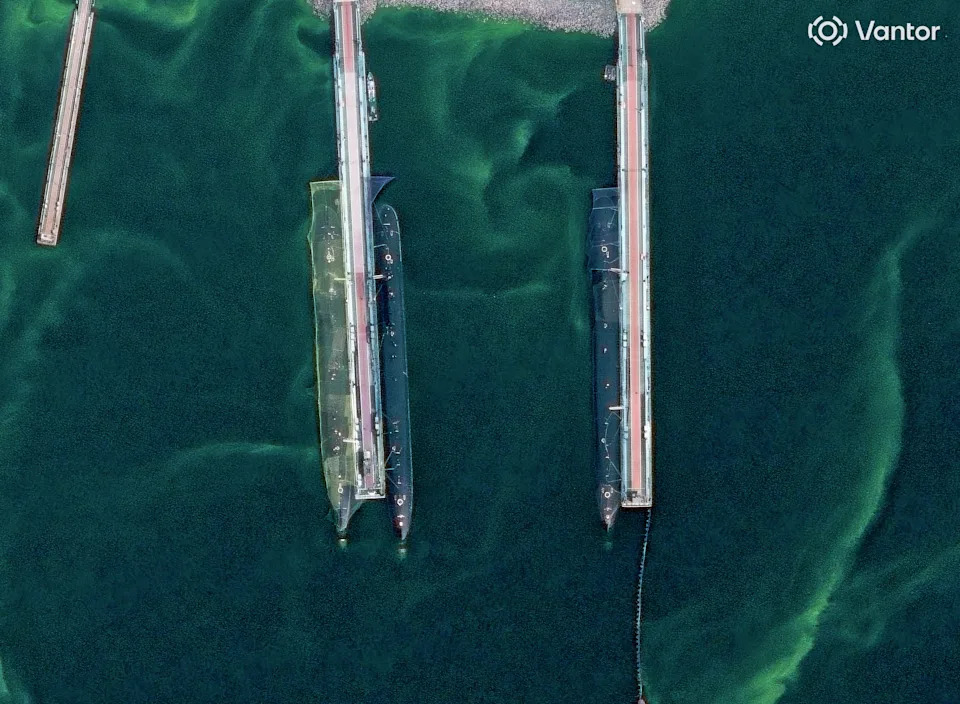
A close-up image of the submarines at Rybachiy.Satellite image ©2026 Vantor.
Expanded Counter-Drone Measures
The netting at Rybachiy mirrors steps Moscow has already taken nearer to the front lines. Vantor imagery from June also shows at least three submarines at the Novorossiysk naval base in Krasnodar Krai fitted with metal counter-drone cages around their conning towers. Novorossiysk is the homeport of Russia's Black Sea Fleet and has been repeatedly targeted in recent drone attacks.
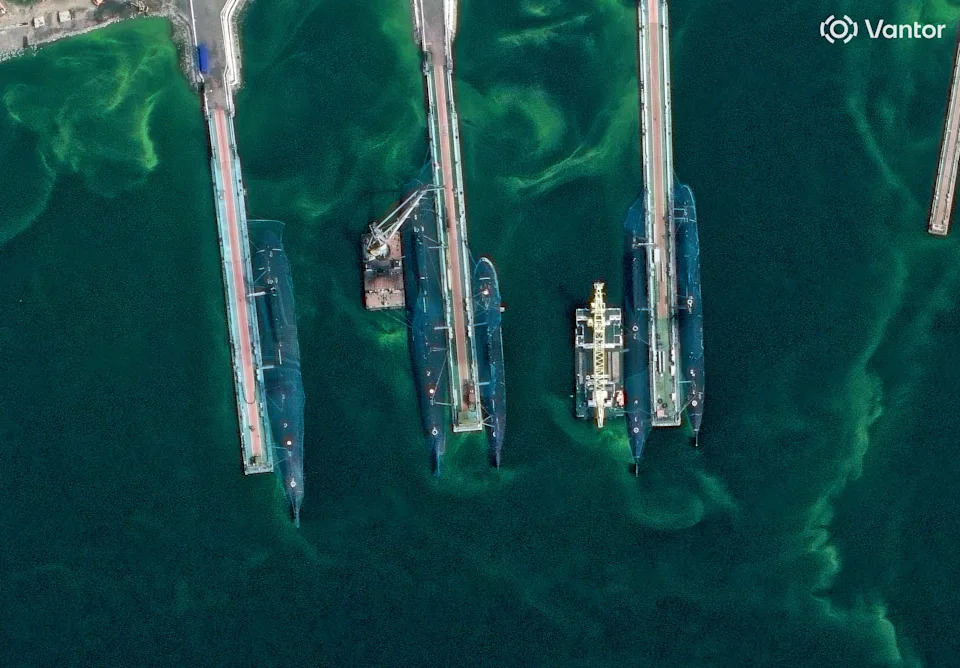
Russia has expanded its use of anti-drone netting at a major naval hub on the Pacific Ocean.Satellite image ©2026 Vantor.
Britain's defense ministry said these cages were "applied as a preventive measure in response to Ukraine's increased ability to strike targets further from the front line."
Why Moscow Is Deploying These Defenses
Analysts say the appearance of anti-drone netting so far from the Ukrainian front suggests Moscow perceives a broad, nationwide vulnerability to drone strikes. Ukrainian forces have demonstrated a long-range capability — striking targets more than 1,000 miles inside Russia — and in June 2025 Operation Spiderweb involved drone swarms that struck air bases across the Arctic, Siberia and Russia's far east.
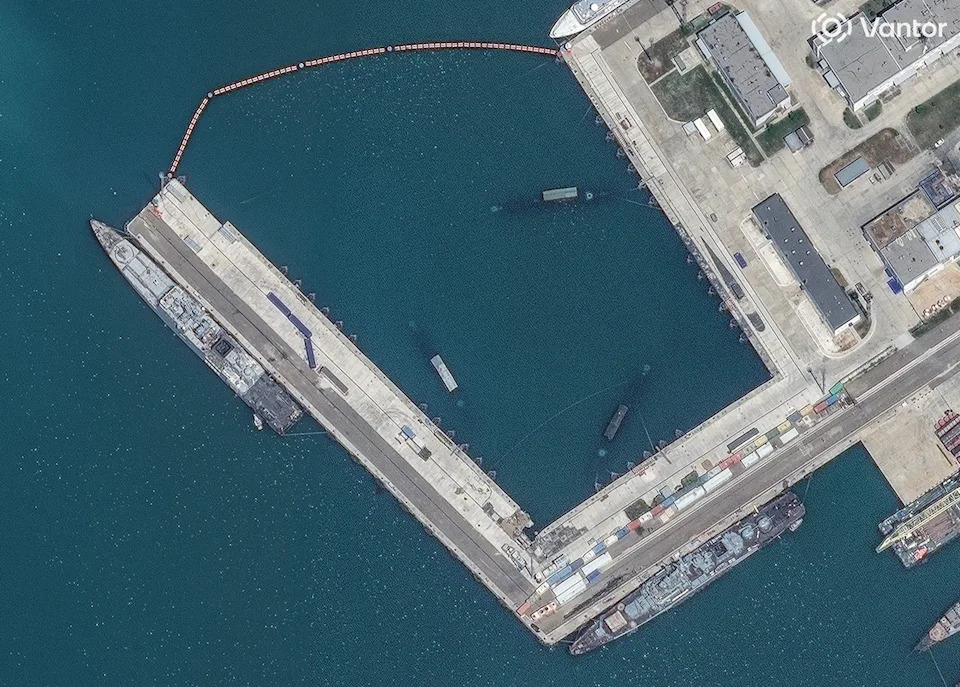
Three submarines with anti-drone cages covering their conning towers at Novorossiysk.Satellite image ©2026 Vantor.
Russia has faced a variety of drone threats, including exploding sea drones used against Novorossiysk. In response, Moscow has deployed floating barriers, added cage armor to vehicles and now appears to be extending such protections to submarines and shore facilities.
Context And Sources
The defensive measures echo tactics seen on land in Ukraine, where netting and improvised cage armor have been used to protect logistics routes, vehicles and fixed infrastructure from aerial attacks. Vantor's imagery is credited in published photos and captions (Satellite image ©2026 Vantor).
Requests for comment were not immediately answered by Russia's defense ministry or by the Russian embassy in the United States.
Details: Vantor imagery dates referenced — May (fewer nets), June (Novorossiysk cages), and the most recent collection on Tuesday showing expanded netting at Rybachiy.
Help us improve.