The Freedom 250 IndyCar race will run Aug. 22–23 on a 1.66-mile, seven-turn circuit for 147 laps (250 miles), with cars able to approach 200 mph on the long straight. Roger Penske is funding most costs; about one-third of the track needs under $3 million in repairs. Organizers will weld 220+ manhole covers, install 1,800 heavy barriers and use Secret Service-manned metal detectors. Nearly 288,000 free tickets were requested for an event planning to host about 130,000 spectators per day.
Freedom 250: IndyCars Could Top Nearly 200 mph Down Pennsylvania Avenue — Race Set for Aug. 22–23
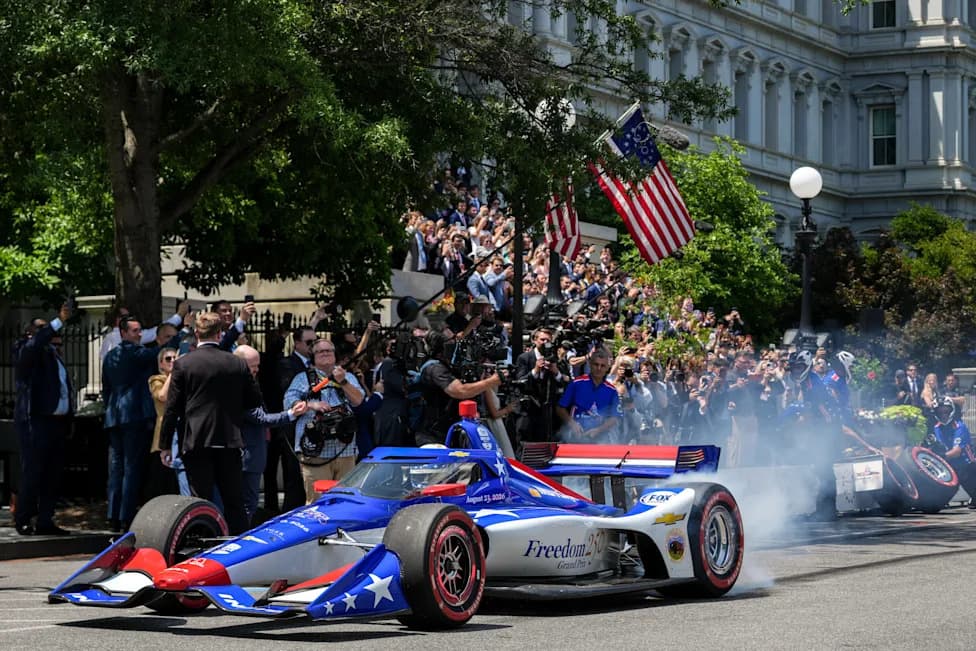
IndyCar Series driver David Malukas drives a race car down West Executive Drive during an event with President Donald Trump to promote the upcoming Freedom 250 Grand Prix auto race, Monday, July 13, 2026, at the White House in Washington. (AP Photo/Julia Demaree Nikhinson)(AP Photo/Julia Demaree Nikhinson)
The speed limit on Pennsylvania Avenue is 25 mph — but organizers say open-wheel IndyCars competing in the Washington "Freedom 250" could approach speeds near 200 mph along the course's longest straightaway. The race is scheduled for Aug. 22–23 and has drawn national attention for its scale, security planning and logistical challenges.
Race Details and Route
The event will cover 250 miles (400 kilometers) over 147 laps on a 1.66-mile (2.67-kilometer) circuit with seven turns. The proposed layout runs down Pennsylvania Avenue from 3rd Street to 9th Street NW, doubles back to 7th Street, proceeds south to Independence Avenue alongside the National Mall, and loops back to 3rd Street. Turn 1 faces the U.S. Capitol's west façade, and the pit lane sits on the straight between Turns 1 and 2.
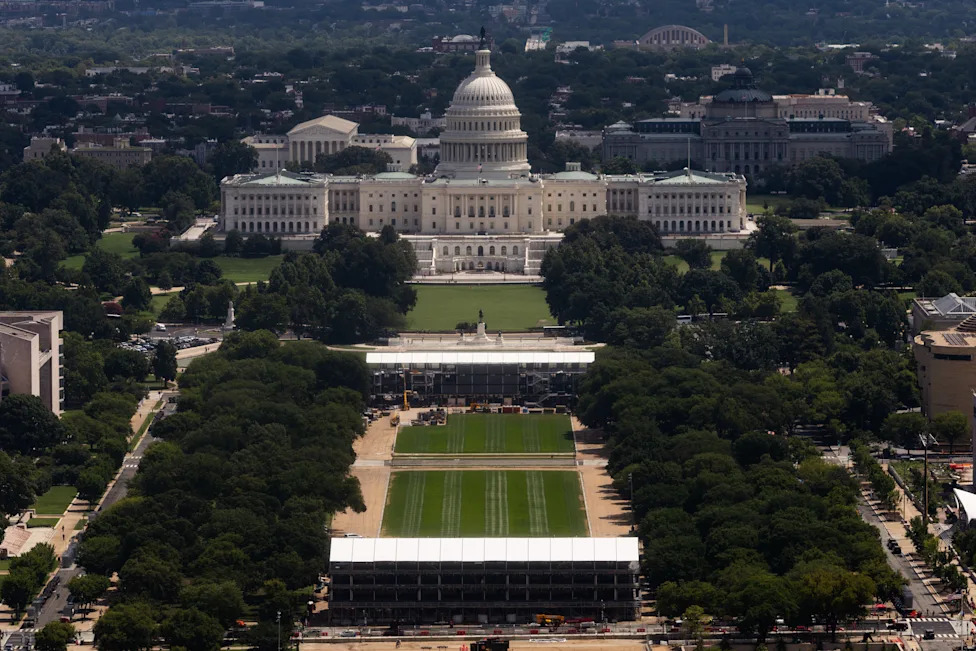
Construction for the Freedom 250 Grand Prix on the National Mall is seen from the Washington Monument, Wednesday, Aug. 5, 2026, in Washington. (AP Photo/Tierney L. Cross)(AP Photo/Tierney L. Cross)
Organizers, Costs and Logistics
Roger Penske, owner of the IndyCar series and a 2019 Presidential Medal of Freedom recipient, led efforts to bring the race to Washington. Penske Corporation president Bud Denker said Penske is covering the majority of event costs, including track work. Denker estimated that about one-third of the circuit requires improvements, with road work expected to cost under $3 million — considerably less than some other recent street races.
Organizers must address more than 220 manhole covers on the route. Most will be welded to prevent cars from dislodging them; about 50 covers set too deep will be fitted with silicone to remove bumps. The race footprint also requires construction of 1,800 concrete barriers (roughly 10,000 pounds / 4,536 kilograms each) and the deployment of metal detectors staffed by the U.S. Secret Service.
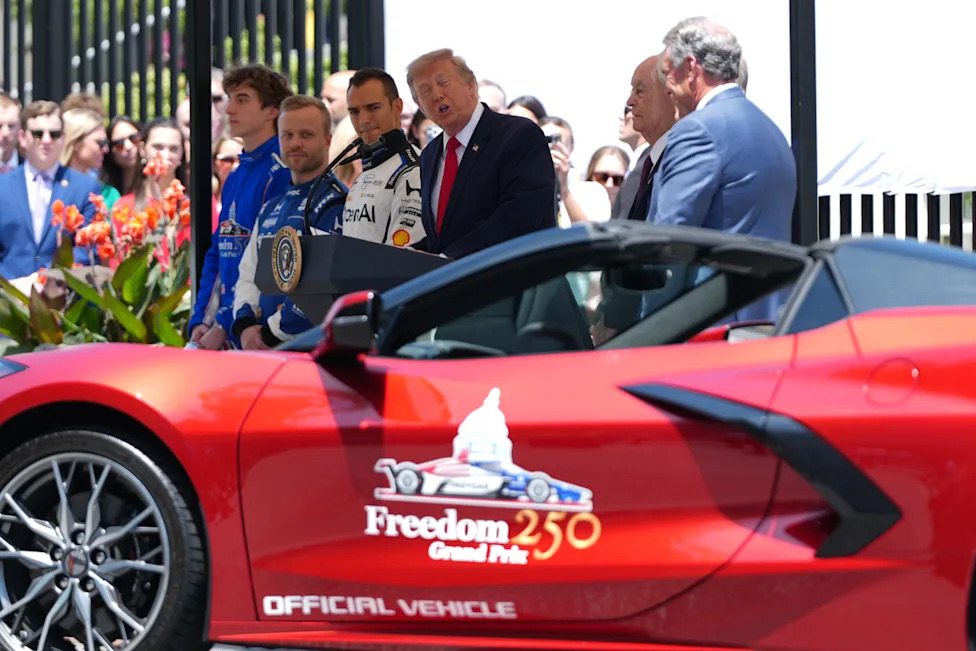
President Donald Trump speaks at an event to promote the Freedom 250 Grand Prix IndyCar race in August, Monday, July 13, 2026, on West Executive Drive at the White House in Washington. (AP Photo/Julia Demaree Nikhinson)(AP Photo/Julia Demaree Nikhinson)
Penske is coordinating with the federal Departments of the Interior and Transportation to obtain permits and allow special activities on the National Mall — including a Chevrolet display and licensed vendors selling merchandise and beer — that normally would not be permitted on Mall grounds.
Attendance, Weather and Safety
Organizers plan to host about 130,000 spectators each day; a lottery drew roughly 288,000 free-ticket requests. The race will proceed in wet weather unless lightning or unsafe standing water makes the surface dangerous. Denker also said organizers will stage substantial pre-race entertainment, including a 90-minute prerace show and military flyovers.
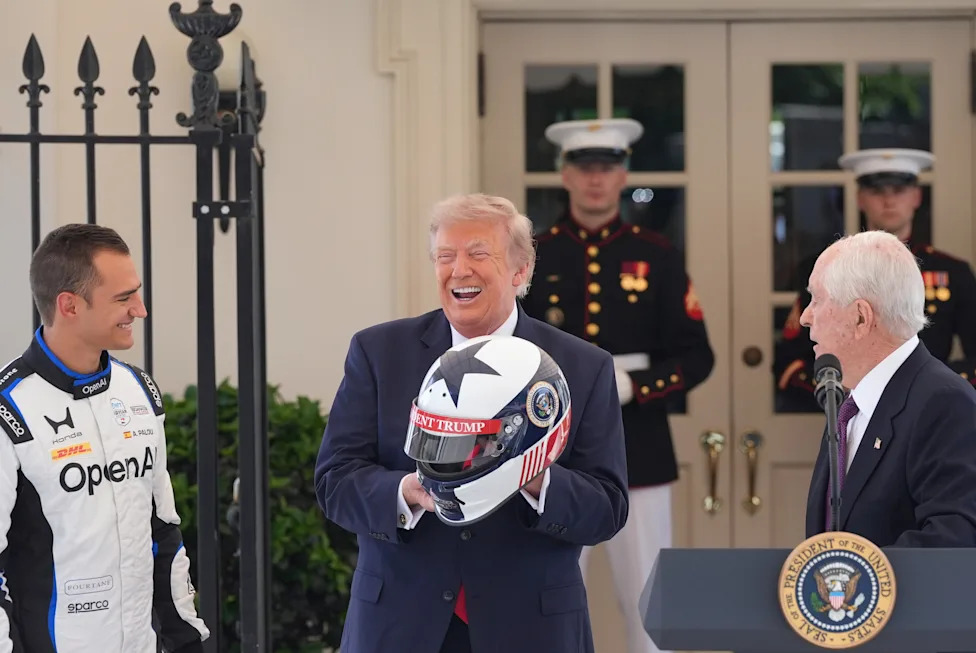
President Donald Trump reacts after receiving a helmet as Alex Palou, the reigning IndyCar champion, left, and Roger Penske, chairperson and founder of Penske Corp., right, watch on West Executive Drive at the White House during a showcase for the upcoming Freedom 250 Grand Prix auto race, Monday, July 13, 2026, in Washington. (AP Photo/Alex Brandon)(AP Photo/Alex Brandon)
Track Characteristics and Competition
Veteran broadcaster Bob Varsha noted that a 1.66-mile street circuit is shorter than many street tracks and likely will include tight, near-90-degree turns. That layout suggests frequent heavy braking and acceleration rather than long sustained top speeds: "It's going to be a lot of speed up, slow down," Varsha said.
Political and Historical Context
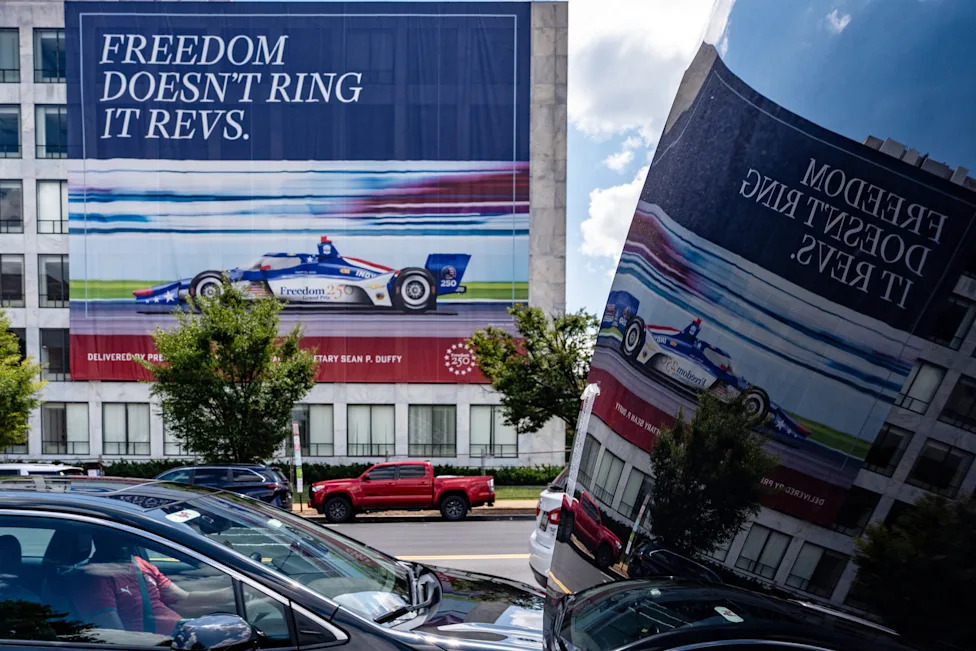
A sign on a building along the route for the upcoming Freedom 250 Grand Prix promotes the event, Friday, July 31, 2026, in Washington. (AP Photo/Alex Brandon)(AP Photo/Alex Brandon)
The race is one of several high-profile events tied to America’s 250th anniversary that President Donald Trump has helped promote. Trump hosted an IndyCar pit crew at the White House while publicizing the Freedom 250 and has appeared at other headline spectacles this year, including a Fourth of July celebration on the National Mall.
Historian Michael D. Hattem criticized the presidential events for placing limited focus on the founding-era history of the country or the semiquincentennial itself. White House spokesman Davis Ingle defended the program as fostering "renewal of patriotism and national pride." Transportation Secretary Sean Duffy compared the spectacle to early 19th-century public celebrations in the capital tied to Thomas Jefferson, while Hattem cautioned that historical accounts differ on the scale and nature of those earlier festivities.
Bottom Line
Organizers say the Washington Freedom 250 will be one of the largest and most logistically complex street races staged in the nation's capital, combining high speeds, extensive safety work and tight coordination with federal and local authorities.
Help us improve.