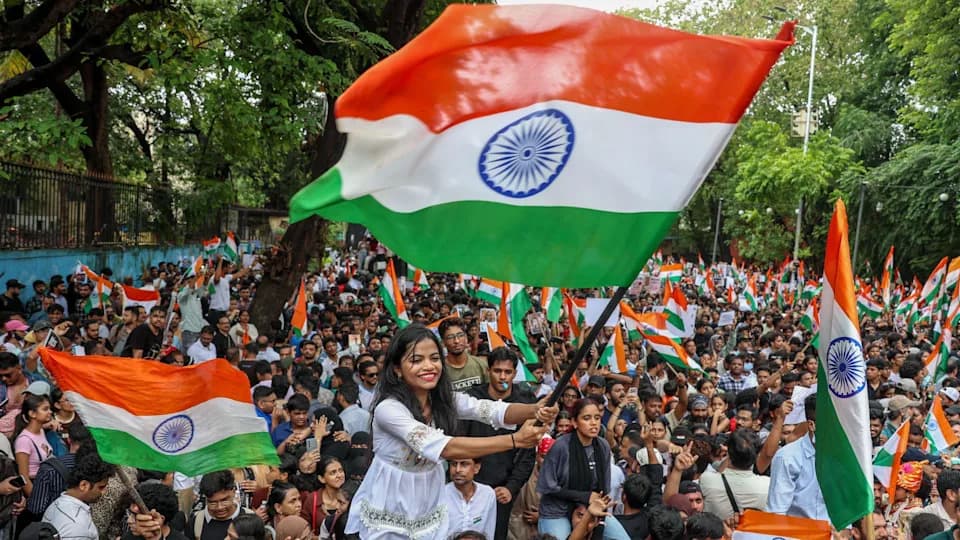
Youth-led protests in India have become a flashpoint for public anger against mainstream TV channels accused of pro-government bias. Several television reporters were heckled, chased and in some cases physically assaulted during demonstrations in New Delhi, Mumbai and Patna. Critics point to declining credibility, government influence via advertising and pressure on independent outlets as drivers of deep distrust in legacy broadcasters. Reporters Without Borders currently ranks India 157th out of 180 for press freedom.
Youth Protests in India Expose Deep Distrust of 'Godi' (Lapdog) TV Media
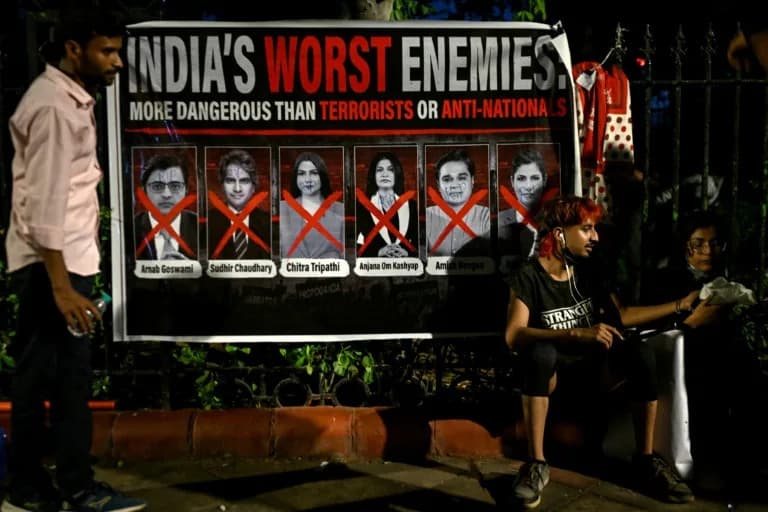
Journalists and TV channels have been targeted by India's youth protesters, who say new outlets are aligned with Prime Minister Narendra Modi's administration (Arun SANKAR)
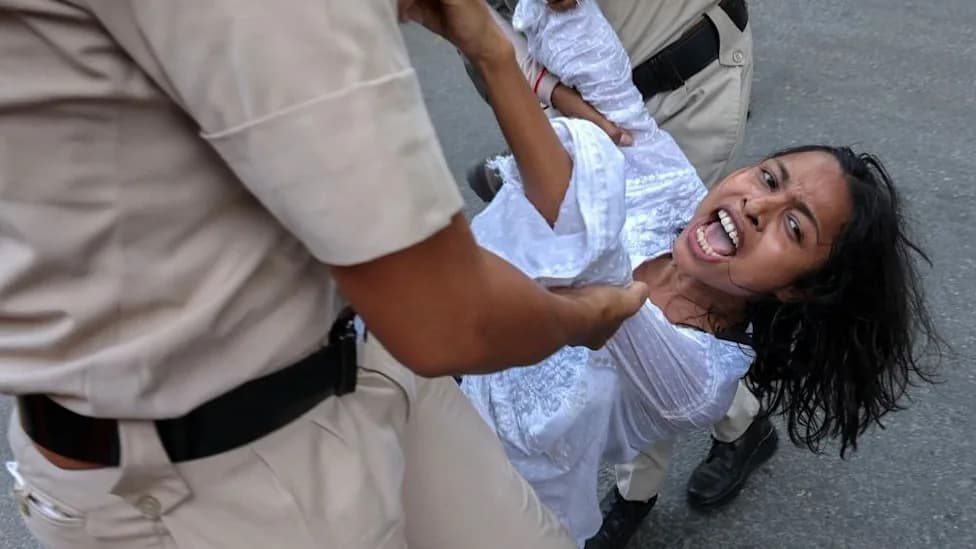
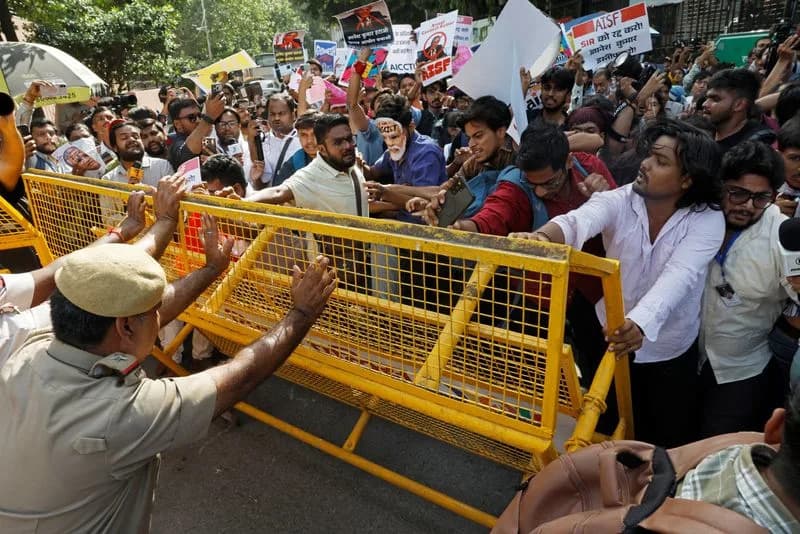
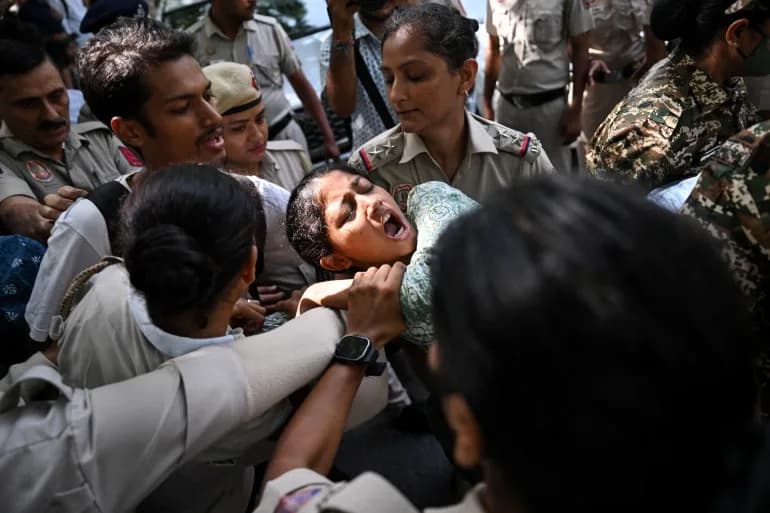
Journalists who covered last month's youth-led demonstrations in India faced public hostility and physical attacks after protesters accused many television outlets of siding with the government, exposing a widening crisis of confidence in legacy broadcasters.
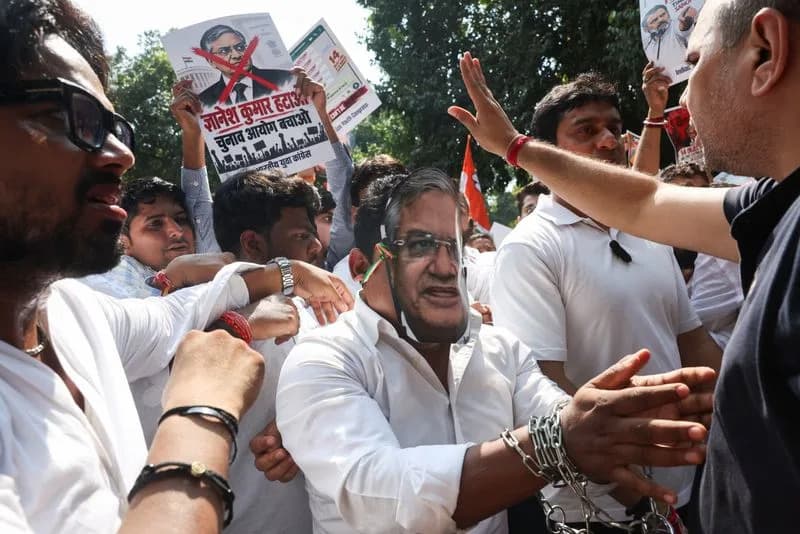
Across rallies organized by the online Cockroach Janta Party movement, placards labeled TV channels "India's worst enemies" and denounced so-called "godi" ("lapdog") media as sympathetic to Prime Minister Narendra Modi's administration. The confrontations highlighted a growing divide between traditional networks and a rising ecosystem of independent digital platforms that many young Indians increasingly prefer for news.
At New Delhi's Jantar Mantar, several students said they mainly rely on social media and independent outlets for information. "It is disheartening to see news channels," said Sukhjeet Narula, 28, a software professional. "They brand every protest anti-national."
The backlash turned physical in several cities. Dev Kotak, a reporter for the English-language Times Now network, said a crowd first threw water at him in New Delhi and then attacks escalated into slaps and kicks. "There was anger simmering around me and I was scared for my life," the 36-year-old told AFP. Video clips showing a winded Kotak running behind security staff as demonstrators chased him circulated widely on social media. Three of his colleagues were also harassed.
AFP verified other footage of a Zee TV reporter being heckled during a live broadcast in Mumbai and a separate clip of a journalist chased by a crowd in Patna.
'Conspiracies' And Eroding Trust
The Times Network defended its coverage as "entirely neutral" but condemned the assaults and warned that differences of opinion should not lead people to take the law into their own hands. Media analysts say the public anger reflects years of eroding trust.
"Godi media are considered anti-people and anti-opposition," journalist Ravish Kumar told AFP. The Hindi term "godi"—literally "lap"—is used by critics to describe outlets they say have abandoned independent scrutiny. "They have destroyed their own credibility. Genuine public demands are being termed as conspiracies in order to demonise them," he added.
Rights groups have raised concerns about press freedom since the Bharatiya Janata Party (BJP) came to power in 2014, pointing to a growing climate of hostility toward journalists perceived as critical of the government. Reporters Without Borders currently ranks India 157th out of 180 countries on its World Press Freedom Index, a fall of 17 places since 2013. Critics say journalists who challenge official narratives face criminal cases, arrests, and sustained online abuse from ruling-party supporters.
'Sold Out' Media And Financial Pressures
Tensions became so intense that some TV reporters began hiding their employers' names and logos while covering protests. "They stopped coming with logos on their mics because the youth were targeting them," said attendee Shailendra Singh, 30. "The mainstream media has completely sold out to the government," said another private-sector employee.
Atul Chaurasia, managing editor of the Newslaundry digital platform, argued many traditional newsrooms depend on a flawed business model that relies heavily on government advertising. "The government weaponises advertising, effectively destroying the environment that allows media organisations to operate freely," he told AFP.
Kumar cautioned that it is important to distinguish between large TV networks and independent outlets. "It is the alternative media and independent journalists who face hostility from the government," he said. "They are subjected to raids, branded anti-national, or even imprisoned." He added that the recent public outburst reflects a broader perception that some TV networks have become "a threat to democracy."
As protests and media mistrust continue, the episode underscores broader questions about the future of news in India: who young people trust for information, how commercial and political pressures shape coverage, and what protections journalists need to report freely and safely.
Help us improve.