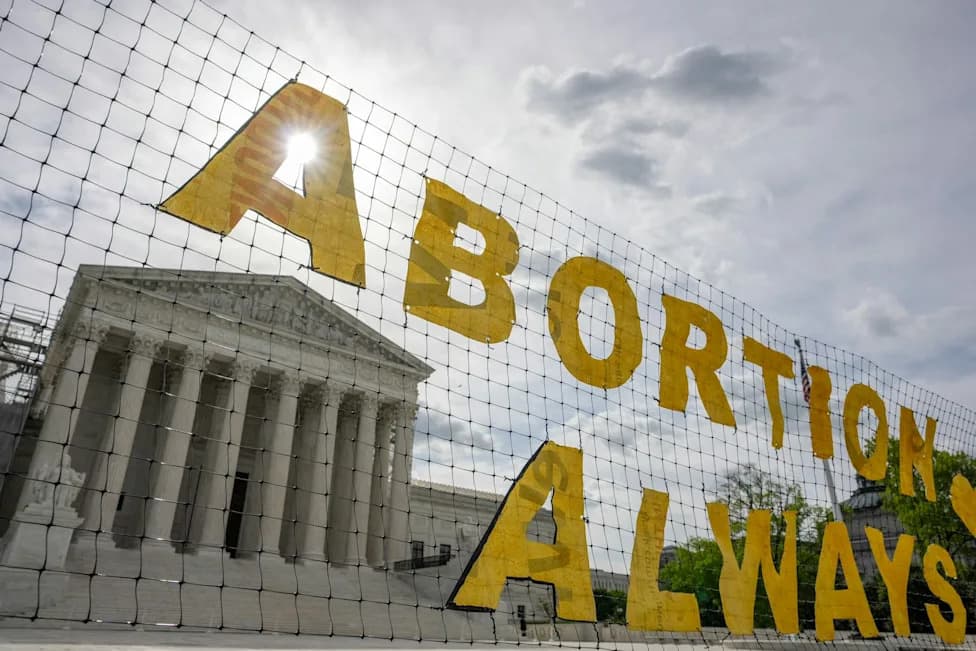
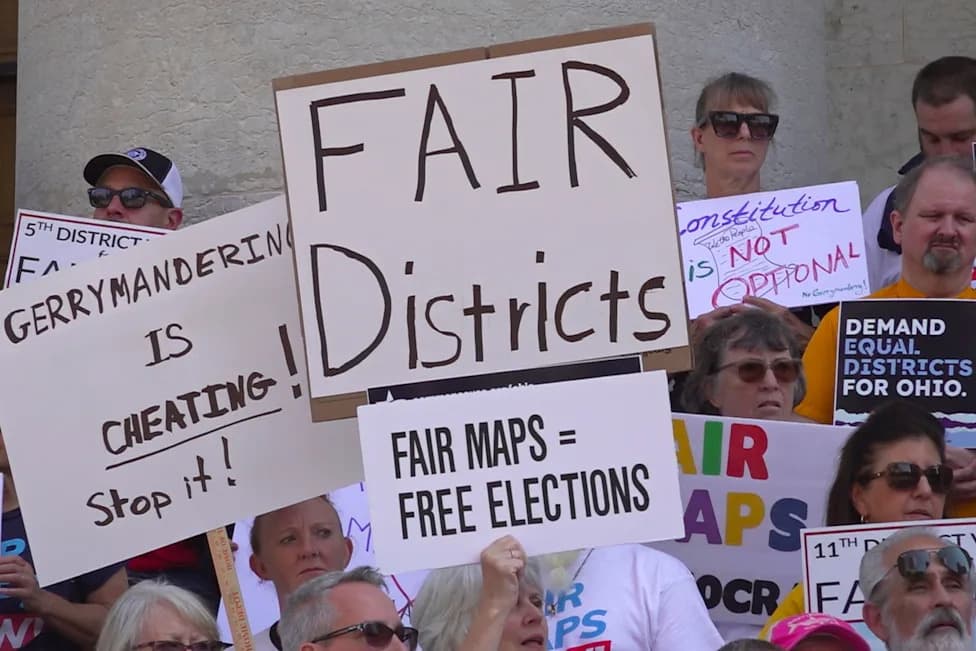
Overview: Primary results showed a split: progressive wins in some races and voter rejections of legislature-driven ballot changes in several red states. Kansas voters voted down a plan to change how Supreme Court justices are chosen — a move critics said targeted abortion-rights protections — while Missouri rejected a proposal that would have required citizen initiatives to win in every congressional district. Across states, lawmakers are erecting new hurdles to initiatives, but voters have often sided with measures on abortion access, Medicaid expansion and wages.
Red-State Voters Reject Legislature-Led Ballot Changes, Resisting Moves To Curb Direct Democracy
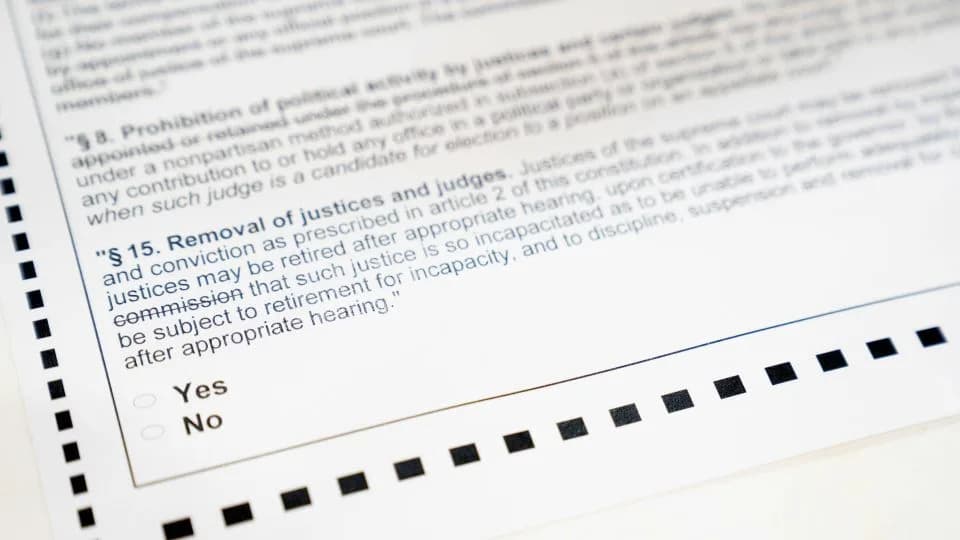
The back of a ballot shows the Kansas constitutional amendment question regarding supreme court justices on Tuesday. - Evert Nelson/The Capital-Journal/USA Today Network via Imagn Images
Tuesday’s primary results revealed a split political moment: progressive energy in some races and a clear voter rebuke of several legislature-driven efforts to limit citizen-led ballot measures in red states. While Michigan’s Democratic Senate primary produced a narrow progressive victory, voters in Kansas and Missouri rejected high-profile constitutional changes pushed by Republican-controlled legislatures.
Kansas: Voters Say No To Changing How Justices Are Selected
In Kansas, voters defeated a proposed amendment that would have removed the current merit-based process and the governor’s role in selecting state Supreme Court justices and instead allowed judges to be elected. Supporters framed the change as expanding voter choice; critics argued the real goal was to enable the election of judges hostile to abortion rights and ultimately overturn the 2022 voter-approved constitutional protection for abortion. Voters appeared to understand that link and rejected the amendment.
Missouri: Protecting Citizen Initiatives From A Two-Tier System
Missouri voters turned down a proposal that would have required citizen-initiated constitutional amendments to carry a majority in every congressional district to pass, while legislative proposals would still have needed only a statewide majority. Because Missouri’s congressional map has been redrawn to favor Republicans, the change would have given conservative lawmakers effective veto power over broadly popular citizen measures. Recent Missouri ballot results show voters have supported policies that frustrated the legislature, including Medicaid expansion and minimum-wage increases.
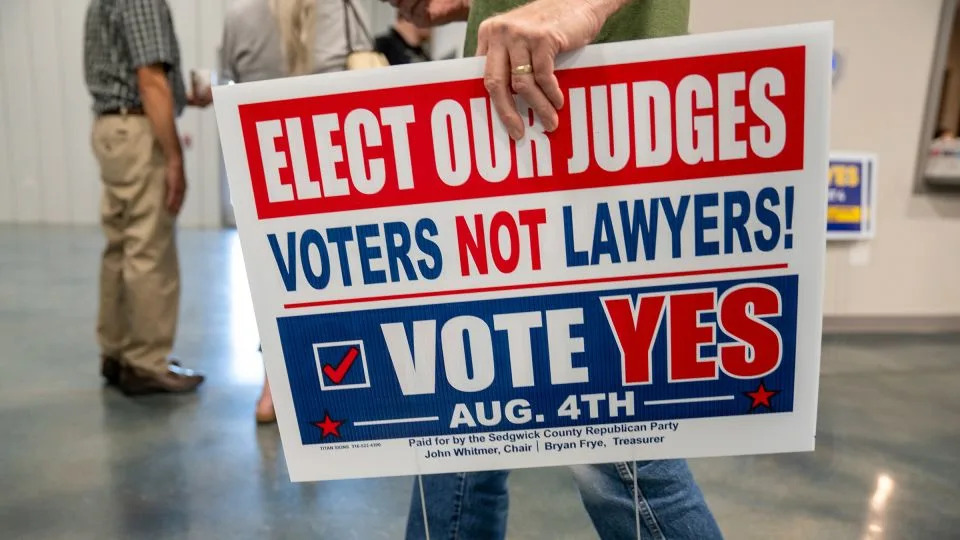
A voter carries a yard sign out of an event that encouraged voters to approve SCR 1611 in Newton, Kansas, on July 16. - Nick Oxford for The Washington Post/Getty Images
Florida And Other States: Raising The Bar For Initiatives
Florida already requires a 60% supermajority for citizen-led amendments. That threshold prevented two 2024 ballot measures — restoring some abortion protections (57.2%) and legalizing cannabis (55.9%) — from becoming law despite majority support. Earlier this year, Florida’s legislature enacted additional restrictions on petition circulation, including felony penalties for collecting signatures without formal registration as a circulator.
National Context: Gerrymandering, Mid-Decade Redistricting, And The Initiative Fight
Since the Supreme Court’s decision to overturn Roe v. Wade, KFF counted 17 states where voters faced abortion-related measures at the state level — and in all but three cases voters supported abortion rights (exceptions: Nebraska, South Dakota, and Florida, where the supermajority rule applied). Five more abortion-related initiatives are expected on statewide ballots this November.
About half of U.S. states allow citizens to place initiatives on the ballot, according to the National Conference of State Legislatures. In multiple states, Republican-controlled legislatures have pushed new rules or structural changes — often following mid-decade redistricting — that insulate policy-making from voter initiatives. Gerrymandering and procedural hurdles can mute voter power and make it harder to hold lawmakers accountable at the ballot box.
Bottom line: Voters in several red states pushed back against legislature-led efforts to limit direct democracy, preserving the initiative pathway on core issues such as abortion, Medicaid expansion and worker protections. But gerrymandering and new procedural barriers mean the battle over who controls state policy — legislators or voters — is far from over.
Headline updated. Reporting contributions: CNN’s Ethan Cohen. For more news and newsletters, create an account at CNN.com.
Help us improve.