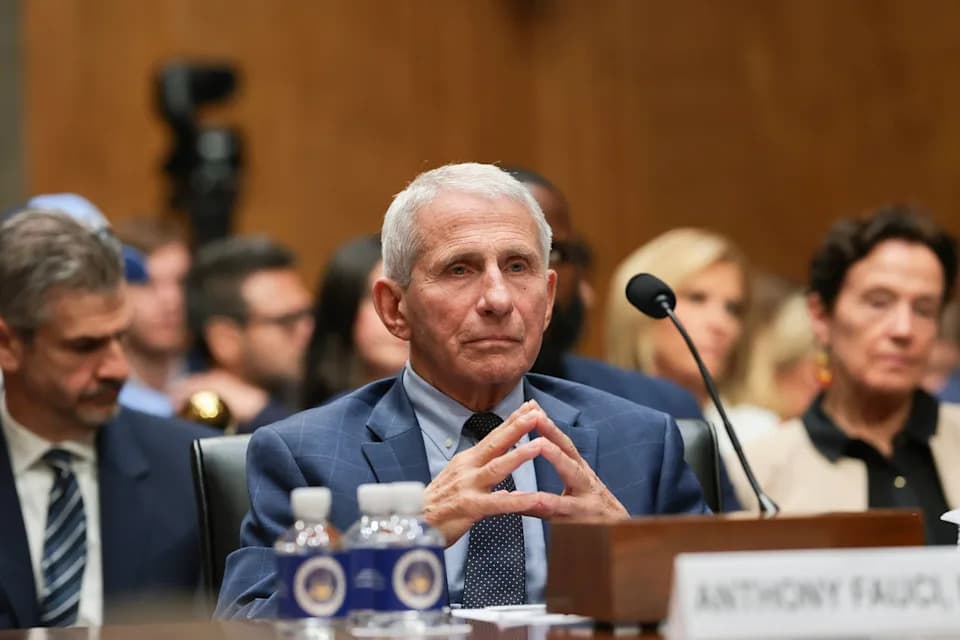
Dr. Anthony Fauci will face a contempt-of-Congress vote Thursday before the Senate Homeland Security and Governmental Affairs Committee after repeatedly invoking the Fifth Amendment at last week’s hearing. Committee chair Sen. Rand Paul argues President Biden’s pardon removes Fauci’s right to the privilege, while many legal experts say the risk of state or local prosecution can preserve it. The committee vote could produce a criminal referral to the Justice Department, which would decide whether to pursue charges.
Fauci Faces Contempt Vote Thursday — What To Expect and What Could Happen Next
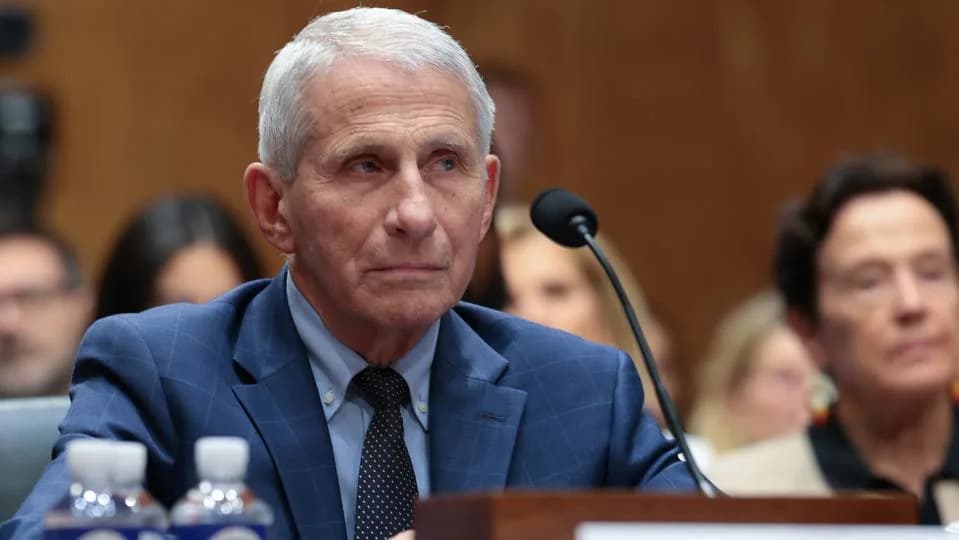
Dr. Anthony Fauci faces a contempt vote before the Senate's Homeland Security and Governmental Affairs committee Thursday. (Photo by Anna Moneymaker/Getty Images)
One week after Dr. Anthony Fauci repeatedly invoked the Fifth Amendment during an hours-long Senate interrogation, the former top U.S. infectious-disease adviser is set to face a contempt-of-Congress vote Thursday before the Senate Homeland Security and Governmental Affairs Committee. The committee’s chair, Sen. Rand Paul (R-Ky.), filed the resolution seeking to refer Fauci to the Justice Department for possible criminal charges.
When and Where
The committee vote is scheduled for 8:30 a.m. Thursday. The Homeland Security and Governmental Affairs Committee has 15 members and an eight-member Republican majority, meaning the measure is expected to pass at the committee level if party-line votes hold.
What the Resolution Says
Paul’s contempt resolution argues that President Biden’s pardon of Fauci removes any legitimate basis to invoke the Fifth Amendment for federal offenses and therefore contends Fauci’s repeated refusals to answer are "unsupported." The resolution instructs the committee to certify the finding and refer a report to the U.S. Attorney for the District of Columbia, which would leave the Department of Justice to decide whether to bring charges.
The Legal Debate
The central legal dispute is whether Fauci permissibly invoked the Fifth Amendment after receiving a presidential pardon covering federal conduct between Jan. 1, 2014, and Jan. 19, 2025. Critics argue the pardon eliminates the risk of federal prosecution and thus precludes the privilege. Many legal experts, however, note that the Fifth Amendment protects against any legitimate fear of criminal prosecution — including potential state or local charges not covered by the presidential pardon — and therefore can still apply even after a federal pardon.
Legal view: Some scholars say a reasonable threat of state or local prosecution can preserve a witness’s right to remain silent. Others say the pardon greatly weakens that argument for federal exposure.
What Happened At The Hearing
Fauci opened last week’s hearing with prepared remarks in which he said he would invoke the Fifth Amendment on questions he believed could expose him to criminal liability. He invoked the privilege more than 100 times as Republican committee members pressed him about his role during the COVID-19 pandemic. Fauci’s attorney, David Schertler, said he was "completely confident" Fauci was "on solid legal ground" in asserting the Fifth.
Republican senators, including Sen. Rand Paul and others on the panel, criticized Fauci’s public and private statements; Democratic members defended his record and legal choices. The hearing escalated after Paul released more than 1,000 pages of Fauci’s personal diaries spanning 2019–2022, excerpts of which drew criticism and media attention.
Possible Outcomes
- If the committee approves the contempt resolution and certifies it, the report would be forwarded to the U.S. Attorney for the District of Columbia for the Justice Department to evaluate.
- The DOJ could decline to prosecute, pursue misdemeanor contempt charges, or seek other remedies; DOJ decisions often consider both legal merits and resource/practicality factors.
- Sen. Paul has suggested he may refer the matter directly to prosecutors rather than pursue a full Senate floor vote, which typically requires a higher threshold for broader action.
Why It Matters
The vote is a procedural pivot point that could reignite legal and political battles over the reach of congressional oversight, the scope of presidential pardons, and the limits of testimonial privilege. Regardless of the Justice Department’s decision, the dispute will likely continue to shape public debate about pandemic-era policymaking, transparency, and accountability.
Note on accuracy: Earlier drafts of the story misidentified the vice president referenced in committee text; the vice president is the president of the Senate (currently Kamala Harris), who would be the official to whom the committee’s certification would be addressed if required by procedure.
Help us improve.