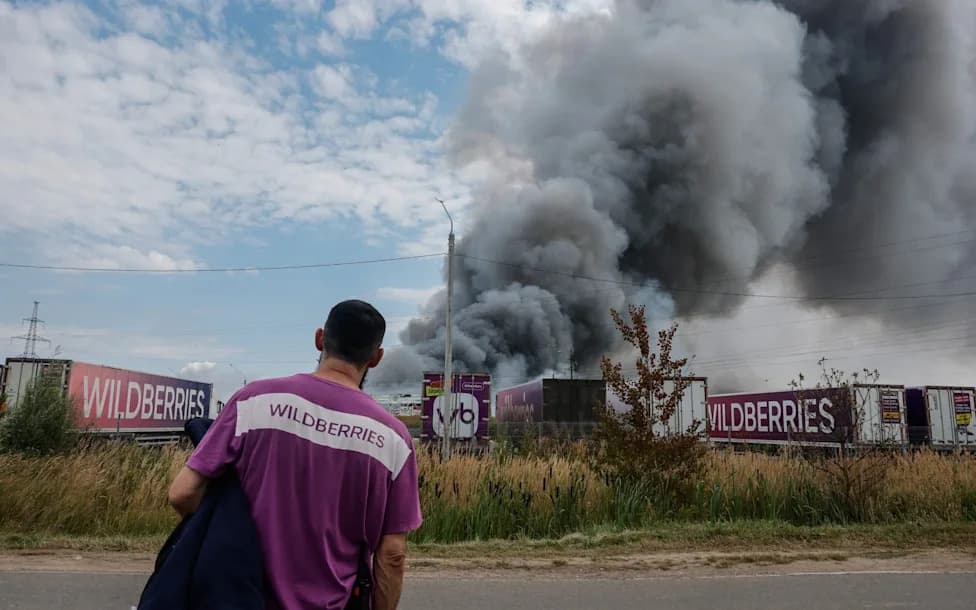
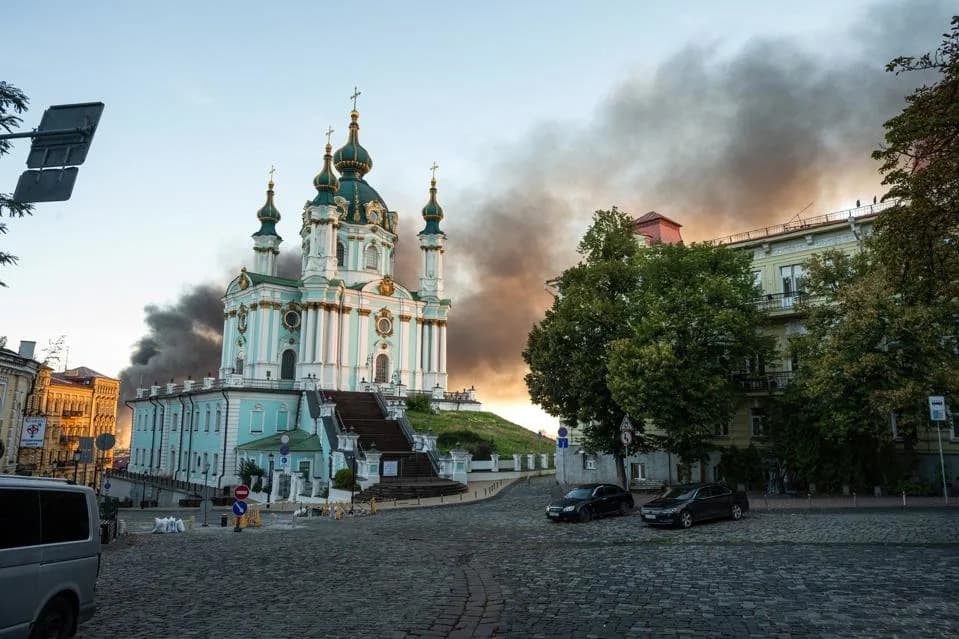
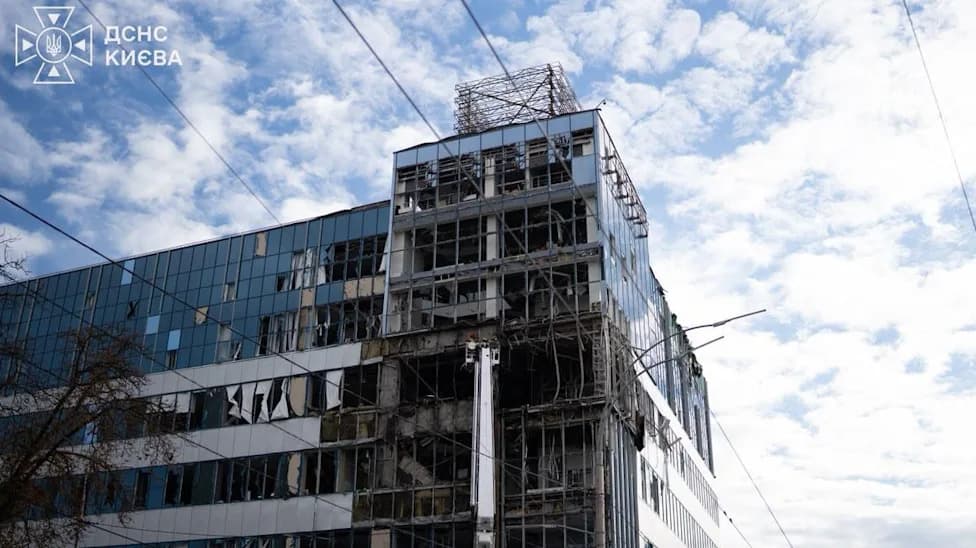
Ukrainian forces have repeatedly targeted warehouses belonging to Wildberries — often called Russia’s “Amazon” — claiming the logistics hubs move military and dual‑use components. Since July 18, nearly 20 Wildberries sites have been struck, while Moscow and the company deny the allegations. Wildberries’ links to WB Bank and a May partnership with state‑linked VTB have raised economic and political stakes, prompting the EU to sanction WB Bank. Experts say the campaign aims to disrupt supply chains and is already affecting ordinary consumers amid inflation and fuel shortages.
What Is Russia’s ‘Amazon’ Wildberries — And Why Is Ukraine Striking Its Warehouses?
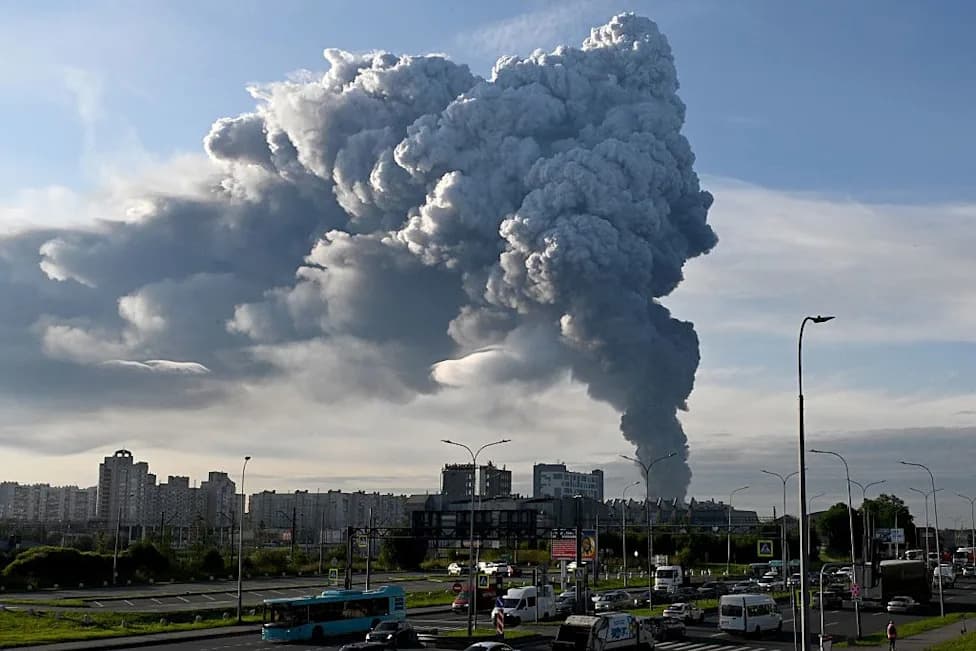
Smoke rises after Ukrainian strikes on a Wildberries warehouse in St. Petersburg, Russia, on July 24, 2026. —AFP—Getty Images
Ukrainian forces struck at least two warehouses belonging to Wildberries — often described as Russia’s “Amazon” — in overnight operations on Monday, continuing a series of drone attacks on the e‑commerce giant’s logistics sites.
Kyiv has repeatedly targeted Wildberries locations as part of a broader campaign to hit logistics hubs that it says support Moscow’s military effort. Wildberries operates dozens of warehouses across Russia and plays a central role in the country’s consumer economy.
Since July 18, Ukrainian strikes have been reported at nearly 20 Wildberries sites, which Kyiv has labelled military‑linked “logistic centers.” The Russian government and Wildberries have denied the facilities supply the armed forces.
What Kyiv Says
Ukraine’s military has argued that some logistics hubs are used to move sanctioned components and dual‑use goods — items that can serve civilian as well as military purposes — such as parts for drones and navigation equipment. An official social media update from the Ukrainian Defense said:
“Ukraine's Defense Forces struck the Wildberries logistics center in Krasny Bor near St. Petersburg. Burning again. Russian logistics, dismantled one hub at a time.”
Kyiv has shifted tactics as the war enters its fifth year, increasingly employing long‑range drones to strike infrastructure and supply networks deep inside Russia. In a late July government reshuffle, President Volodymyr Zelensky appointed Mykhailo Drapatyi as the new military chief, tasking him with directing precise defensive operations.
Wildberries, Its Founder and Banking Ties
Founded in 2004 by Tatyana Kim (formerly Tatyana Bakalchuk), Wildberries began as a small online shop and grew into one of Russia’s two major marketplaces alongside Ozon. Kim, a former English teacher who launched the company while on maternity leave, is estimated by Forbes to have a net worth of about $8.1 billion.
Wildberries hosts third‑party sellers, sells a wide range of consumer goods, and operates a financial arm, WB Bank. In May the company announced a strategic partnership with VTB Bank, a lender in which the Russian state holds a majority stake — a tie that raised market concerns after the strikes. VTB’s shares fell about 2.5% on July 28 amid the disruption, according to Reuters.
Shortly after the July 18 strikes, the European Commission included WB Bank in the EU’s 21st package of sanctions, with the Council of the European Union stating that Wildberries Bank LLC ‘‘is involved in an economic sector providing a substantial source of revenue to the Government of the Russian Federation.’’
Denials and Civilian Impact
The Kremlin and Wildberries have rejected claims that the retailer’s warehouses supply the Russian military. Tatyana Kim called the drone strikes “acts of terrorism” against civilians and said Wildberries sells items also available on global marketplaces such as Amazon or Alibaba. Wildberries has issued statements offering financial support to sellers whose inventory was damaged in earlier attacks.
Experts note the strikes’ broader significance because of Wildberries’ economic reach and the possible impact on ordinary consumers. Targeting logistics hubs can disrupt supply chains and access to goods at a time when Russians are facing higher inflation and fuel shortages after attacks on oil infrastructure.
“Attacking Wildberries impacts the Russian consumer, and this comes on top of inflation, on top of periodic mobile internet outages,” said Charles Hecker, an associate fellow at the Royal United Services Institute.
Analysts say Kyiv’s campaign is intended to degrade logistical support and increase the political and economic cost of the war for Moscow by striking infrastructure that connects commercial and, allegedly, military supply lines.
While both sides present competing narratives, the strikes illustrate how the conflict increasingly targets economic and logistical networks far from front lines — with consequences for companies, consumers and financial markets.
Help us improve.