A child in Braunau am Inn, Austria — famous as Adolf Hitler’s birthplace — found a human bone that triggered an archaeological excavation. Teams have uncovered nine mass graves with at least 120 mostly young male remains across roughly 1,600 square feet. Radiocarbon dating on one skeleton yields a calibrated range of about 1723–1813, pointing to the French Revolutionary and Napoleonic Wars as the likely historical context. Investigators plan DNA and isotope tests to determine origins and causes of death and may uncover more burials with further digging.
Child's Discovery in Hitler’s Hometown Uncovers Nine Mass Graves Dating to Napoleonic Era
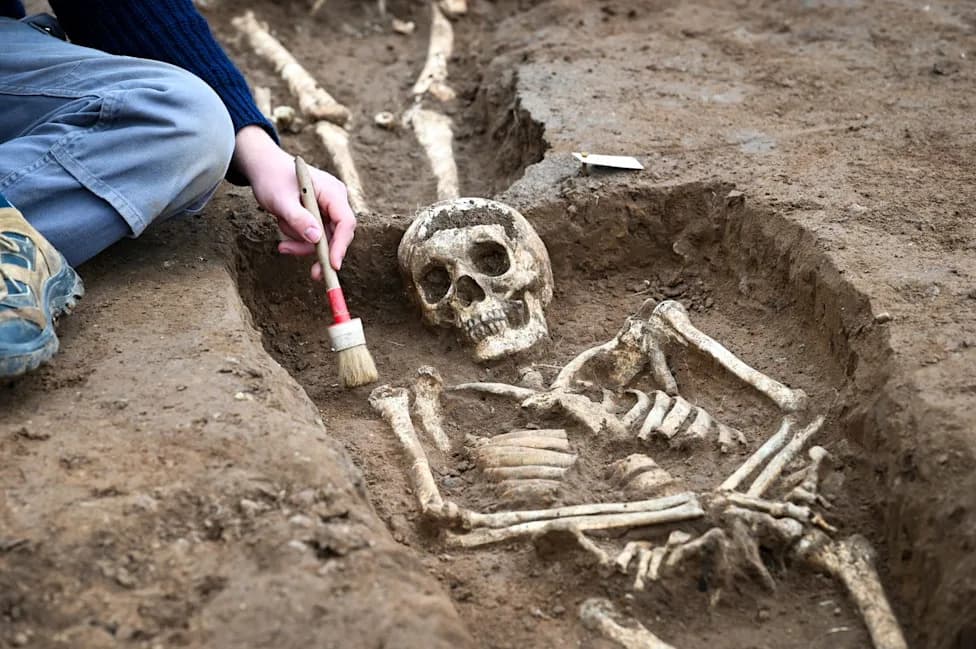
9 Mass Graves Found in Hitler's Hometownpicture alliance - Getty Images
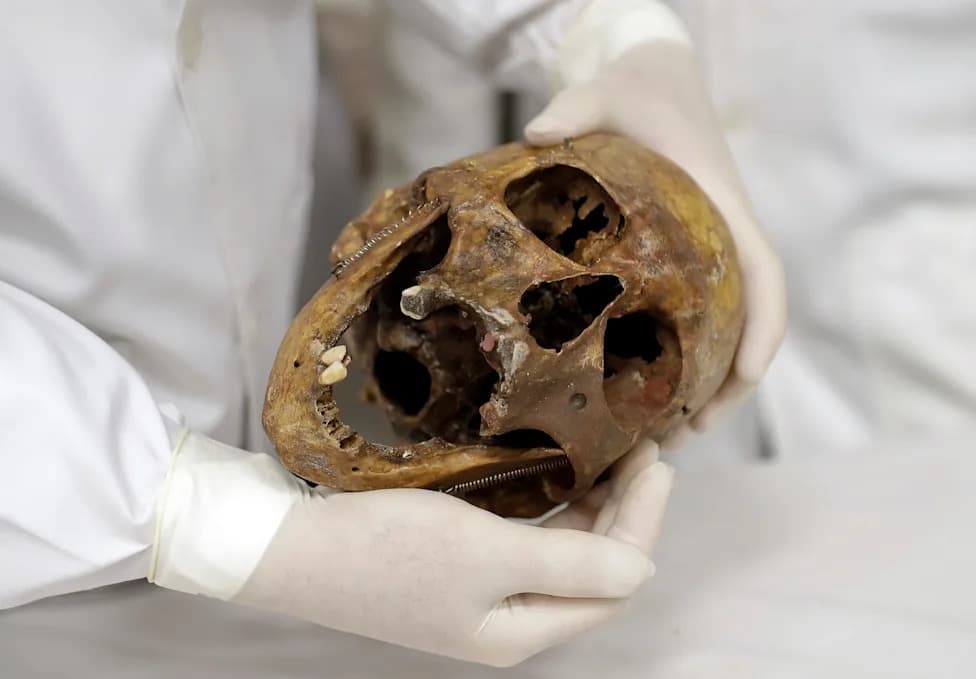
A child playing in Braunau am Inn — the Austrian town best known as Adolf Hitler’s birthplace — found a human bone that prompted archaeologists to investigate. After the girl's mother reported the find, excavation teams uncovered nine mass graves so far, containing the remains of at least 120 people across roughly 1,600 square feet.
What Researchers Found
Project leader Michaela Binder of the excavation firm Novetus described the discovery as "unique in the whole of Central Europe," according to the Kronen Zeitung. Although Braunau is often associated with World War II history, initial evidence shows these burials predate that period.
Preliminary anthropological analysis indicates most of the remains are males aged about 15–25. The bodies were interred in a disorderly way — face-down, on their sides and sometimes head-to-foot — and no personal effects have been recovered, suggesting the dead may have been stripped before burial. Investigators have not identified gunshot wounds. However, one skeleton shows a lower-leg amputation shortly before death and several display broken ankle bones that anthropologist Sheridan Strang believes could result from long marches.
Dating and Historical Context
Radiocarbon dating on one skeleton produced a calibrated range of approximately 1723–1813. That span encompasses the French Revolutionary and Napoleonic Wars (roughly 1792–1815), a period of extensive military activity in Central Europe. Braunau am Inn was occupied by French troops at times and is reported to have been visited by Napoleon Bonaparte in 1805. While no major battle is recorded inside the town, local accounts describe a skirmish with French forces in 1805 near the burial site.
Leading Hypotheses and Next Steps
Given the predominance of young men, the hasty and crowded burials, and medical evidence such as a recent amputation, the excavation team’s leading hypothesis links the graves to a military hospital or field medical facility active during the late 18th or early 19th century. Archaeologists plan additional DNA and isotope testing to learn more about the individuals' geographic origins, diets, mobility and possible causes of death. Further excavations may reveal additional burials and contextual artifacts.
Broader Significance
The find adds a new, unexpected layer to Braunau am Inn’s complex history. The town is internationally known as Adolf Hitler’s birthplace; in 2026 Austrian authorities converted the 17th-century house where he was born into a police station, remodeling the interior and altering the façade to discourage neo‑Nazi pilgrimage. As Austrian Interior Minister Gerhard Karner said at the time, "This house will now become a place of democracy, rule of law, security, freedom, and human dignity." The single bone discovered by a child has thus led researchers to an important archaeological revelation about earlier conflict in the region.
What to Watch: Results of DNA and isotope analyses, and the outcome of any further excavations, which could clarify whether the graves relate to wartime medical care, battle casualties or another event from the Napoleonic era.
Help us improve.