Archaeologists in Vilnius have fully exposed the sunken main hall and bimah of the 17th‑century Great Synagogue for the first time since 1940, revealing colorful tilework and ritual objects. The discovery has intensified a bitter debate within Lithuania's small Jewish community over whether to build a community center above the site, rebuild a synagogue, or preserve the remains as a purely archaeological and religious site. The dispute involves restitution funding, competing leaders and differing visions for how to integrate Jewish history into Lithuania's national memory.
Vilnius Reveals 17th‑Century Great Synagogue Floor — Uncovered Treasures Ignite Rift Over Its Future
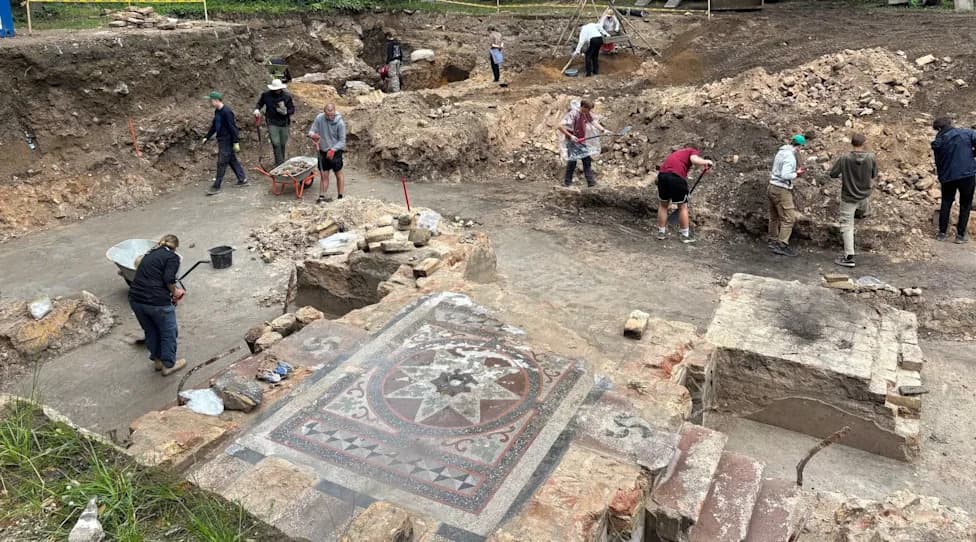
Workers excavate the central floor and bimah of the Great Synagogue in Vilnius, Lithuania, July 22, 2026. (Shira Li Bartov) (photo credit: Shira Li Bartov/JTA)
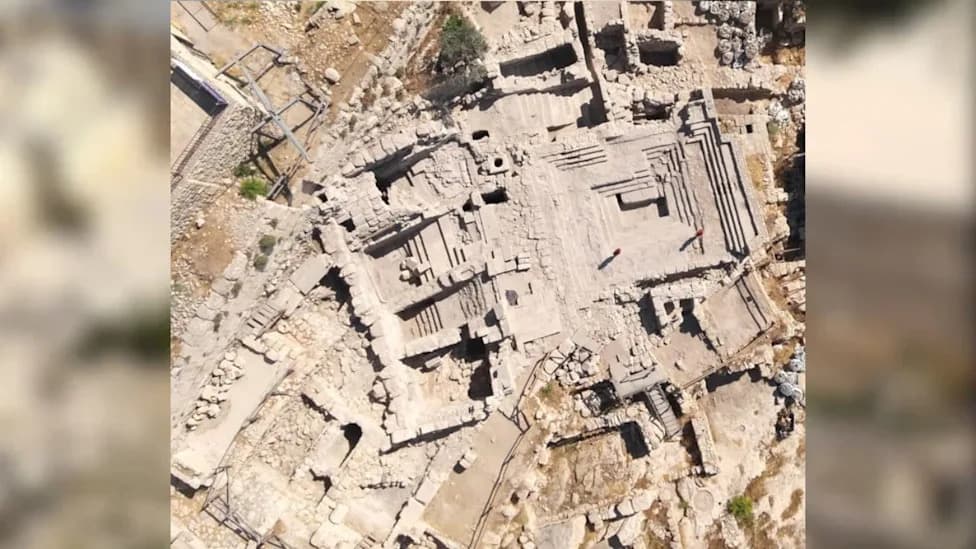
Archaeologists working in central Vilnius have fully exposed the sunken main hall and bimah of the city's 17th‑century Great Synagogue for the first time since 1940, uncovering colorful geometric tiles, ritual objects and donor plaques that reconnect the capital to a nearly erased Jewish past.
A Sunken Room Preserved by History
The synagogue's main floor was originally built below street level in the 17th century — a response to restrictions that forbade Jewish houses of worship from rising above nearby churches. That recessed construction spared the hall from complete destruction when the Great Synagogue was burned by the Nazis and later demolished under Soviet rule to make way for a school.
The Excavation
Led by archaeologist Jon Seligman, whose grandparents came from Lithuania, the project was proposed in 2013 and worked on since 2015. After the Soviet‑era school above the site was removed, the team completed a major stage of work in July, fully exposing the main hall and prayer platform (bimah). Excavators recovered a Passover plate, a dish for gefilte fish, a plaque engraved with the Ten Commandments and several donor seating plaques that reveal names and vanished families.
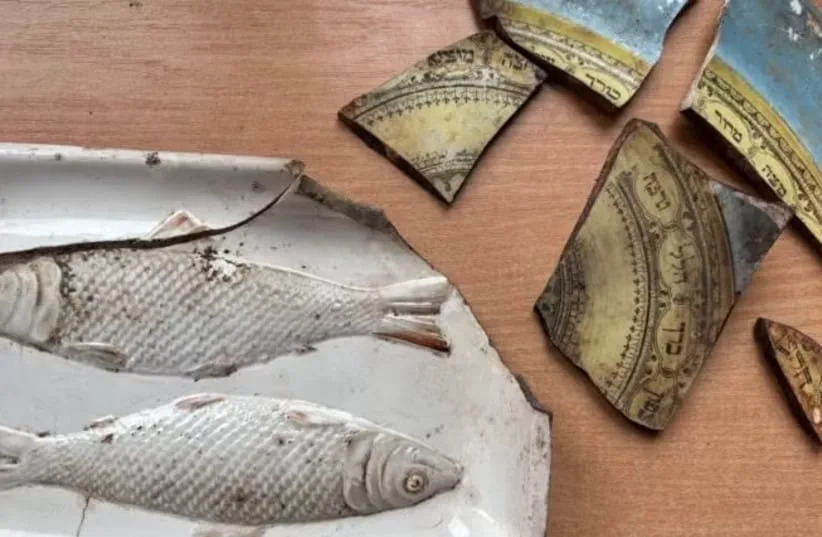
Fragments of a gefilte fish dish and a Passover plate that were found at the Great Synagogue excavation site. (Shira Li Bartov) (credit: Shira Li Bartov/JTA)
What Was Lost—and What Was Found
Before World War II, Vilnius was home to more than 100 synagogues and a Jewish population that made up roughly 40% of the city. That vibrant life — religious, cultural and intellectual — was devastated in the Holocaust, in which more than 90% of Lithuanian Jews were murdered. The excavation and artifacts help restore layers of everyday and ritual life that were nearly erased by Nazi and Soviet occupations.
Contested Futures
While Lithuania's Jewish community — now numbering fewer than 3,000 people — broadly agrees the site should be preserved, there is fierce disagreement about how to do that. The Lithuanian Jewish Community, chaired by Faina Kukliansky since 2013, proposes building a new Jewish community center on the site with either a glass floor or a basement exhibition that allows visitors to view the remains while hosting cultural, social and educational programming above.
"It's very meaningful that in the place where the synagogue rose, Jewish life will be intensive," Kukliansky has said, framing the center as a way to honor both past and present.
Orthodox leaders, notably Rabbi Sholom Ber Krinsky of Chabad‑Lubavitch, argue the location retains religious sanctity and should be rebuilt as a house of worship or preserved strictly as an archaeological religious site. Scholar Dovid Katz also favors reconstruction or a religious preservation that could attract pilgrims.
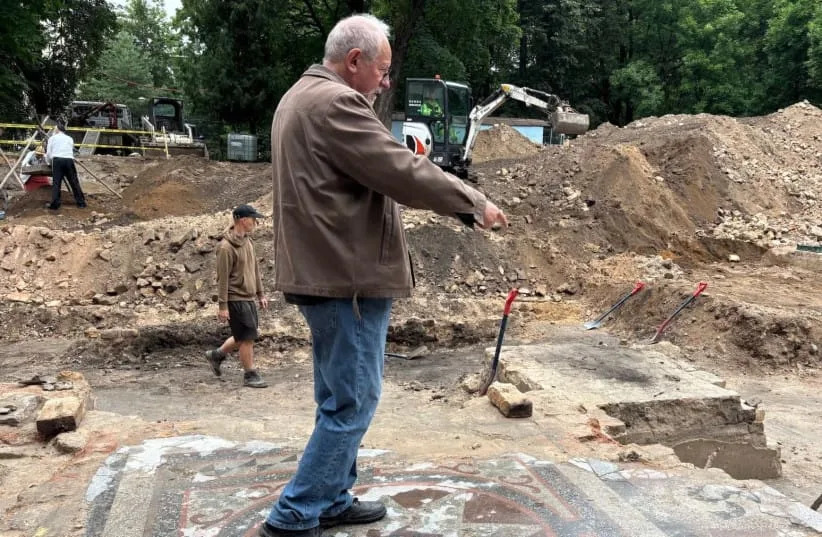
Jon Seligman, the archaeologist leading the excavation of the Great Synagogue, stands on the bimah of what had been, before its destruction by the Nazis and Soviets, one of the most important religious, cultural and intellectual hubs for Lithuanian Jews. (Shira Li Bartov) (credit: Shira Li Bartov/JTA)
Other voices, including Anna Avidan of the Jerusalem of the North nonprofit, have urged a broader, public‑facing cultural center focused on tolerance and education to integrate Jewish history into Lithuanian public memory and draw international visitors. Avidan says limiting the site to an inward‑facing community center would miss an opportunity to build wider understanding.
Funding And Politics
The dispute over the site's future is entangled with arguments about restitution money and organizational control. Since 2022, the Good Will Foundation — created by the World Jewish Restitution Organization and the Lithuanian Jewish Community — has distributed roughly $9 million to survivors and heirs with private property claims, while about $40 million has been earmarked for communal projects, including the proposed center. Critics accuse community leaders of monopolizing funds or failing to prioritize religious life; leaders counter they already support existing institutions such as the Choral Synagogue.
Why This Matters
The uncovered floor, donor plaques and ritual objects are more than archaeological finds: they are tangible threads to a multi‑faced Jewish city that included ultra‑Orthodox groups, secular Yiddish and Hebrew schools, the Strashun Library, YIVO, and the Jewish Labour Bund. The debate over what to build above the site echoes historical divisions in Vilnius's Jewish life and raises broader questions about memory, heritage and how nations reckon with difficult pasts.
As excavations continue, decisions about preservation, interpretation and use will determine whether the Great Synagogue site becomes a place of religious revival, a museum of memory, a community hub, or some combination of those roles.
Help us improve.