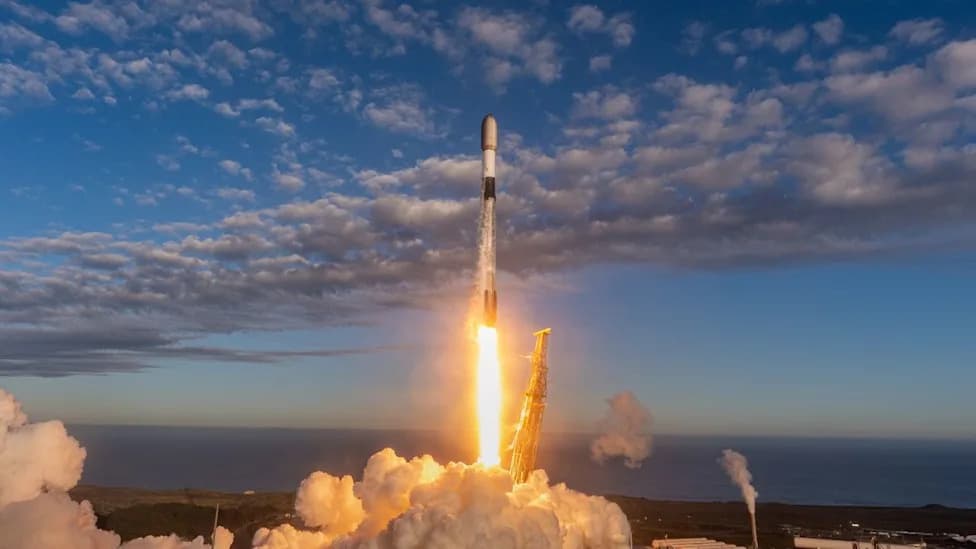
SpaceX told investors it aims to fly Starship again by the end of this month to deploy the first V3 Starlink satellites and attempt the first onshore catch of the rocket's upper stage. The 14th test would follow July's flight, which showed improved upper‑stage performance, and depends on regulatory approval. If successful, the tower's mechanical arms at the Texas site would catch the ship, while the Super Heavy booster would touch down in the Gulf of Mexico. V3 satellites are expected to offer roughly ten times current broadband capacity.
SpaceX Aims For End‑of‑Month Starship Launch To Deploy V3 Starlink, Attempt First Onshore Upper‑Stage Catch
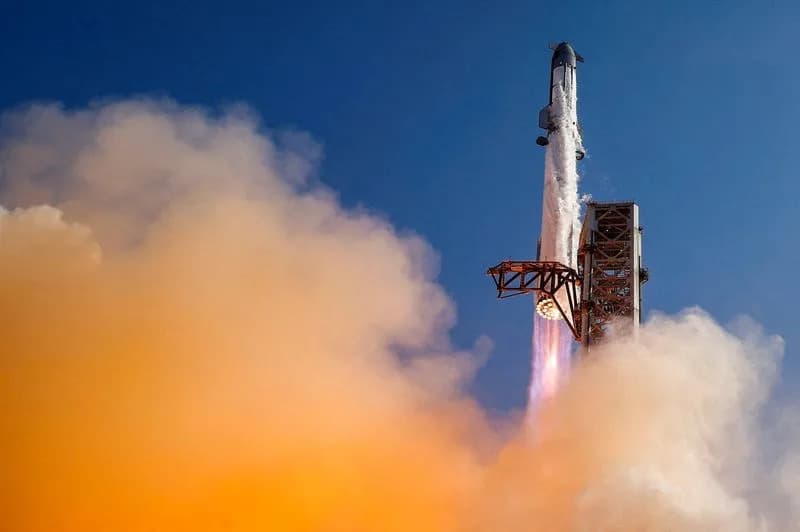
FILE PHOTO: The SpaceX Starship and Super Heavy Booster lift off on its 13th test flight
WASHINGTON, Aug 4 (Reuters) - SpaceX said on its first‑quarter earnings call that it is targeting a Starship test flight as soon as the end of this month, aiming to place the first upgraded V3 Starlink satellites into orbit and to attempt, for the first time, to return the rocket system's massive upper stage to land, CEO Elon Musk said Tuesday.
The objectives for Starship's 14th test flight represent a notable advance from July's mission, when the vehicle's upper stage showed improved descent behavior over the Indian Ocean. If regulators sign off, the company plans to use the launch site's tower and its large mechanical arms to catch the upper stage as it descends back to Texas.
SpaceX is already retrieving the 13th flight's upper stage from the ocean for inspection, according to satellite imagery from Vantor. Musk said the exact timing of the next flight and whether the onshore catch will be attempted depend on regulatory approval.
How the Land Recovery Would Work
A successful land recovery would see the tower's giant arms seize the Starship upper stage at the Texas launch facility. SpaceX has used those arms to catch the Super Heavy booster three times — most recently in March 2025 — while in recent tests the Super Heavy has touched down in the Gulf of Mexico.
In the longer term, Musk envisions a sequence in which the tower first captures the Super Heavy booster, moves it aside, and then repositions to catch the Starship upper stage roughly 90 minutes later after it completes a full orbital insertion and re‑entry.
"Assuming we receive regulatory approval to do so, we'll attempt to catch the ship with the tower on the next flight, which is tentatively scheduled for the end of this month," Musk said, adding he expects Starship launch cadence to "increase rapidly."
Payload And Commercial Context
The 14th test aims to carry the first batch of V3 Starlink satellites. According to Musk, V3 satellites are expected to deliver roughly 10 times the broadband capacity and data density of current generations. SpaceX's IPO prospectus states that a single Starship could eventually carry up to 60 V3 satellites, and the company envisions launching dozens of Starship missions to build out the constellation.
Launches carrying SpaceX's own Starlink payloads have become an increasing share of the company's manifest as Starlink revenue outpaces other units. That trend is tightening U.S. launch availability amid rising global demand for access to space.
The landing test will also be closely watched by NASA, which is evaluating Starship as a potential lunar lander for future missions.
Help us improve.