
Summary: Homeland Security Secretary Markwayne Mullin drew criticism from parts of Donald Trump's base after advocating more work visas for agriculture and outlining a narrower ICE enforcement strategy. He said some industries need foreign labor to fill shortages but insisted there will be "no amnesty" for people in the U.S. illegally. Hard-line figures including Steve Bannon and others said Mullin is too soft, while DHS defended his coordination with senior White House advisers and repeated the administration's commitment to deport criminal illegal aliens.
DHS Secretary Mullin Draws Backlash From Trump Supporters Over Work-Visa Pitch and Narrowed ICE Tactics
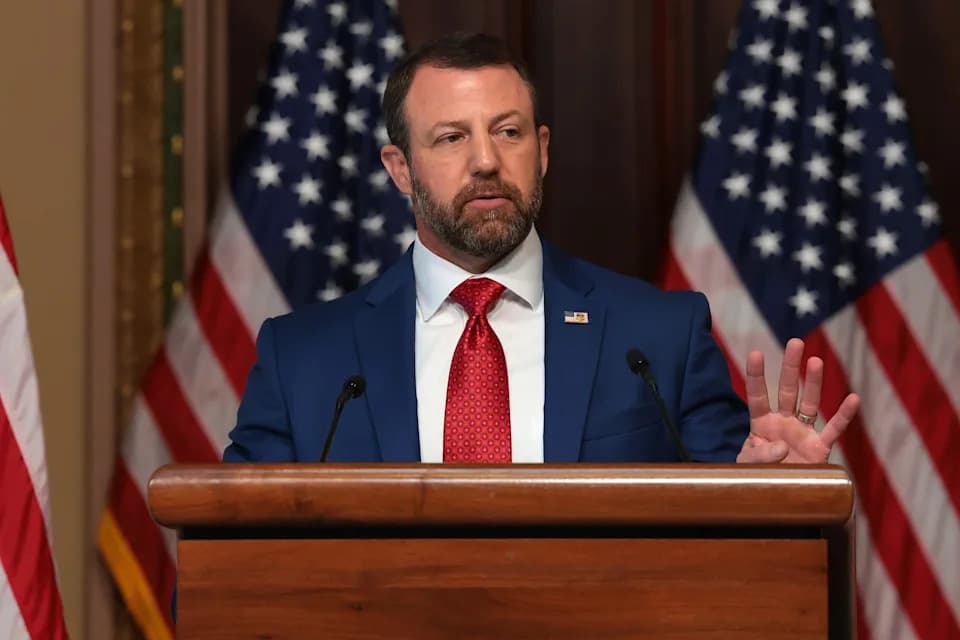
Anna Moneymaker/Getty Images - PHOTO: Markwayne Mullin speaks during a news conference in the Eisenhower Executive Office Building on July 17, 2026 in Washington, DC.
Homeland Security Secretary Markwayne Mullin drew criticism from segments of former President Donald Trump's base after advocating for more employment visas in agriculture and describing a narrower approach to Immigration and Customs Enforcement (ICE) operations.
Work Visas, Labor Shortages and Clarification
Speaking at the National Governors Association Summer Meeting during a fireside conversation moderated by NGA chair Oklahoma Gov. Kevin Stitt, Mullin said expanding work visas for farm and agricultural labor is necessary to help grow the economy and fill gaps where domestic participation is insufficient. He acknowledged concerns that guest-worker programs can displace American workers but argued, "Because this narrative that it steals American jobs is true in some industries, it's not true for all industries. We want to take care of Americans first... but there's a way to utilize labor where we're not having the participation rate we need, and we can plug those holes."
ICE Enforcement: Approach and Rationale
Mullin said the department intends to avoid the large-scale workplace raids and parking-lot sweeps seen in past enforcement efforts. Instead, he said DHS aims to target the "worst of the worst," apprehending individuals as they leave locations rather than conducting door‑kicking raids or traffic stops. "ICE isn't doing any raids. We're not kicking the door. We're not doing traffic stops," he said, framing the approach as preferable to releasing people into states and as part of efforts to provide "safety for our streets." The comments came as ICE arrests reached a reported high in July amid stepped-up deportation activity.
Pushback From Hard-Line Voices
Hard-line Trump supporters reacted sharply. Greg Bovino, a former national commander for Border Patrol, said on X that Mullin "delivered a masterclass in how to give terrible answers." Fox commentator Tomi Lahren wrote on X that the work-visa stance was "not what we voted for." Steve Bannon told Politico that "Mullin is the wrong guy at the wrong time for the wrong job -- a time when we need focus on 'mass deportations,' we get an amnesty advocate." Mike Howell of the Oversight Project criticized the remarks as "drama" and urged a stronger focus on deportation numbers.
Mullin on X (clarifying): "NO amnesty for illegal aliens. Ever. We are a nation of laws. If you are illegally present in the United States of America -- you will be detained and deported. Period."
DHS Response and Call For Cooperation
The Department of Homeland Security pushed back on the criticism, saying Mullin works closely with senior White House advisers, including Stephen Miller and border czar Tom Homan, "to deliver on the American people's mandate to remove criminal illegal aliens from this country." DHS reiterated that "if you come to the United States illegally, you will be detained and deported," calling enforcement a priority under President Trump's leadership.
Mullin urged governors to partner with DHS to identify and remove dangerous criminals, suggesting such cooperation would reduce the department's visible enforcement footprint in local communities. He also took a veiled swipe at his predecessor, noting that a more targeted approach would mean "you probably won't even see us at all."
Context
Observers say the episode highlights tension within the broader immigration debate on the right: some prioritize strict, highly visible enforcement and mass deportations, while others emphasize targeted removal of dangerous offenders combined with limited legal pathways to address labor shortages in specific industries.
Help us improve.





















