The strike by Argentina's maritime pilots has halted traffic at key Parana River grain ports after President Javier Milei approved a decree to deregulate pilotage services. At least 45 vessels are affected and industry groups warn the backlog could grow rapidly. The coastguard ordered pilots back to work via the official gazette and threatened sanctions, but unions say the decree threatens specialist jobs. The dispute carries global implications because Argentina supplies large volumes of soy, corn and wheat.
Maritime Pilots' Strike Paralyzes Argentina's Grain Exports After Milei Decree
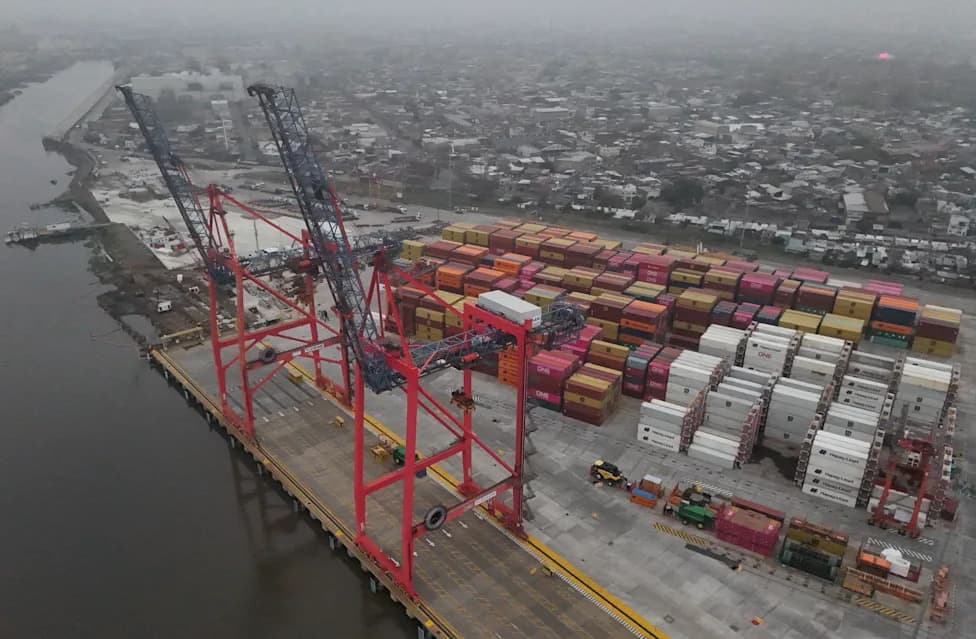
A drone view shows containers at the Dock Sud Port during a maritime workers strike, in Avellaneda, Buenos Aires province, August 4, 2026 [Agustin Marcarian/Reuters]
A strike by maritime pilots has effectively stopped ships from entering and leaving Argentina's grain ports, disrupting exports from one of the world's largest agricultural suppliers.
What Happened
Maritime pilots — the specialists who guide vessels through the Parana River and along Argentina's coast into major commercial ports — walked off the job on Monday after President Javier Milei signed a decree on Friday that deregulates river navigation and pilotage services. The stoppage has stalled operations at key river ports that handle the bulk of Argentina's soya, corn and wheat exports.
Decree Details And Reactions
The decree, titled a new "Regulation for Pilotage Services for the Rivers, Ports, Waterways, and Canals of the Argentine Republic," describes its aim as promoting "the streamlining of procedures, the modernisation of regulatory requirements, and the elimination of obsolete or disproportionate regulations." Unions representing pilots warn that the changes could cut demand for their services and threaten specialized jobs.
Scale And Immediate Impact
Business chamber CIARA-CEC said on X that at least 45 vessels were affected by the protest, and warned the backlog could expand quickly. CIARA-CEC president Gustavo Idigoras wrote: "If this is not resolved today [Tuesday], we will be adding about 30 more ships, and so on." The stoppage therefore risks creating a growing logjam of vessels waiting to load or discharge grain.
Government Response
Argentina's coastguard published a notice in the official gazette ordering pilots to return to work and warning of possible disciplinary sanctions if they did not comply. The order has not immediately resolved the standoff, leaving the situation uncertain as industry groups and unions continue to negotiate their positions.
Broader Significance
The disruption has global implications because Argentina is the world's largest exporter of soybean products and a major supplier of corn and wheat. Much of that trade transits the Parana River ports, so any extended blockage can affect global food markets and supply chains.
Policy Context
The dispute comes weeks after Argentina ratified the EU-Mercosur trade deal in February 2026, a pact that eliminates tariffs on more than 90% of trade between the European Union and the Mercosur countries (Argentina, Brazil, Paraguay and Uruguay). Argentinian senators approved the agreement by 69-3, a move that is expected to increase agricultural exports to Europe.
Bottom line: A technical dispute over who controls pilotage services has escalated into an economic bottleneck with potential ripple effects for global commodity markets.
Help us improve.