Key points: Iran says it used a June MoU and the ceasefire to repair, import and domestically produce missiles and drones, claiming drone output is now three times pre-war levels. IRGC and military officials report improved missile accuracy and several successful shootdowns, while independent estimates suggest Iran still retains a significant portion of its pre-war missile and drone stocks. Regional incidents — from attacks on ships to strikes near Saudi and Kuwaiti borders — keep tensions high around the Strait of Hormuz.
Iran Says It Used Ceasefire To Rebuild Missile And Drone Forces — Ready To Resume Fighting
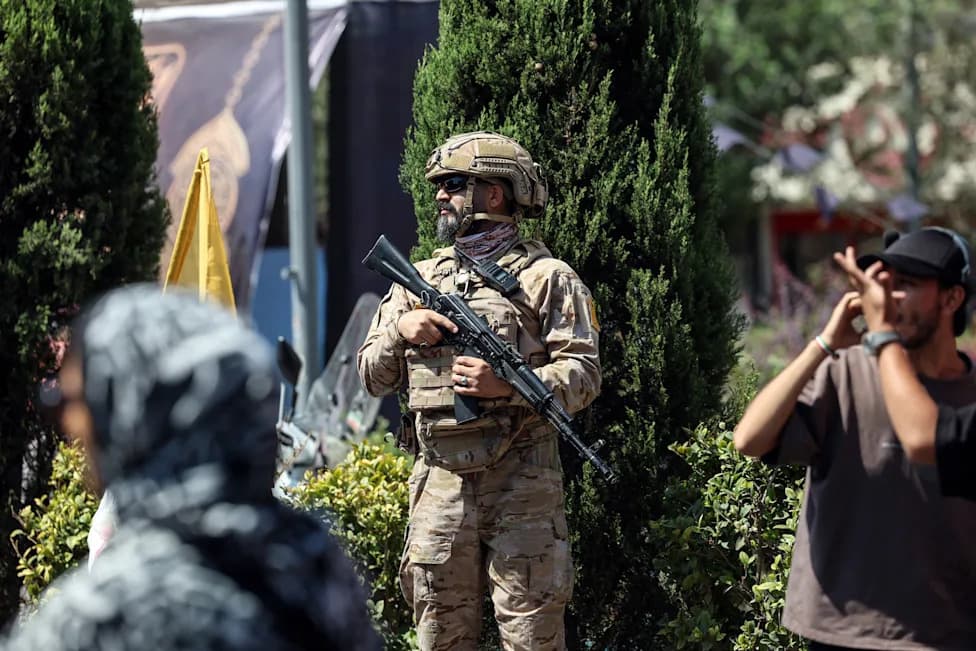
A member of the Iranian security forces stands guard as Shia Muslim devotees take part in a mourning procession marking Arbaeen in Tehran, Iran [AFP]
Tehran — Iran's military leadership says it used a June memorandum of understanding and the subsequent ceasefire with the United States to repair, replenish and expand its missile and drone capabilities, and that it is prepared to return to hostilities if diplomacy collapses.
Ceasefire Used To Rebuild And Innovate
Army spokesman Mohammad Akraminia told state television that Tehran "made maximum use of the opportunity of the memorandum of understanding and every moment of the ceasefire," referring to the now-suspended MoU signed with the US in June. He said the armed forces focused on integrating existing equipment, importing where possible, repairing damaged systems and producing replacements domestically.
"We have made maximum use of the opportunity of the memorandum of understanding and every moment of the ceasefire," — Mohammad Akraminia, army spokesman.
Acting Defence Minister Majid Ebn-e Reza has similarly said missile and drone production "has not stopped for a single day," claiming drone output has risen to three times pre-war levels, though officials provided no detailed figures.
IRGC Claims And External Estimates
The Islamic Revolutionary Guard Corps (IRGC) — a principal political and military force in Iran and a main operator of missile and drone strikes — made parallel claims about improved production and battlefield-led accuracy gains. IRGC spokesman Hossein Mohebbi said missile accuracy improved using lessons learned in combat.
Independent US media reporting in June estimated Tehran retained roughly 70% of its pre-war missile stockpile and about 40% of its drone inventory, suggesting Iran could sustain asymmetric operations for months. These estimates are unconfirmed by Iranian authorities.
Air Defences, Shootdowns And Equipment Transfers
Since the conflict began on February 28, manned and unmanned aircraft from the US, Israel and some regional states have flown thousands of sorties over Iranian airspace; some aircraft have been intercepted or shot down. Iranian air-defence systems have been degraded in places, but both the IRGC and the regular army have reported shooting down cruise missiles, MQ-9 and MQ-1 drones and some one-way US Army drones over southern Iran in recent weeks.
Reuters, citing unnamed sources, reported last week that Iran could soon receive up to 400 Chinese-made shoulder-fired air-defence launchers transiting via Pakistan. China and Pakistan denied the report; Iran declined to comment.
Regional Incidents And Strategic Impact
Tensions in the Gulf and Red Sea remain high. The Iran-aligned Houthi movement in Yemen said it launched a drone attack on Najran Airport in Saudi Arabia. An India-flagged cargo vessel was struck by an explosives-rigged boat north of Hodeidah in the Red Sea; all 14 crew members were rescued. Explosions and a fire were reported near Kuwait's border with Iraq amid unconfirmed reports of Iranian drone activity near a US base there. A Liberian-flagged bulker also suffered engine-room damage after an attack northeast of Khasab, Oman.
The IRGC says it has successfully intercepted or turned back more vessels in the Strait of Hormuz since the June MoU faltered, though some ships continue to transit. Iran has allowed some tankers to use a northern coastal route in its territorial waters, while other vessels have sought the southern Omani corridor — which Tehran warns may be unsafe during wartime.
Resilience And Deterrence Claims
Former senior IRGC commander Hossein Kanani Moghaddam told Al Jazeera that Tehran has distributed missile capabilities across the country and stored equipment in "underground missile and drone cities" that are gradually entering operational service. He argued such measures made larger US strikes less attractive and warned that even a temporary US ground assault on southern islands would be costly and ultimately reversed.
Washington has alternated between threatening strikes on Iranian civilian infrastructure — including power plants and petrochemical facilities — and pausing or canceling such actions while pursuing negotiations. US President Donald Trump this week reiterated demands for a deal or "total surrender," language that Tehran rejects.
What Remains Unclear
Independent verification of Iran's production rates, precise stockpile sizes and the true condition of its domestic arms-production capacities and air-defences remains limited. Many claims come from Iranian officials or unnamed foreign sources and should be viewed with appropriate caution.
Bottom line: Iran presents the ceasefire interval as a period of rebuilding and adaptation, asserting increased production, improved weapon accuracy and distributed infrastructure that it says would sustain operations and complicate foreign military campaigns.
Help us improve.