
The Vox analysis by Ian Millhiser contends that the Supreme Court’s embrace of a "colorblind" constitutional theory has become a key driver of rulings that weaken the Voting Rights Act and raise the burden on Black voters challenging discriminatory maps. Millhiser traces the idea from 1970s debates through Chief Justice John Roberts’ influence, noting pivotal rulings such as Shelby County v. Holder, the 2023 limits on race-conscious admissions, Louisiana v. Callais (April), and the June application in Allen v. Milligan. The piece warns that because the doctrine is now woven into constitutional precedent, reversing its effects may require a change in the Court as well as new legislation.
How the Supreme Court’s 'Colorblind' Doctrine Has Undermined the Voting Rights Act
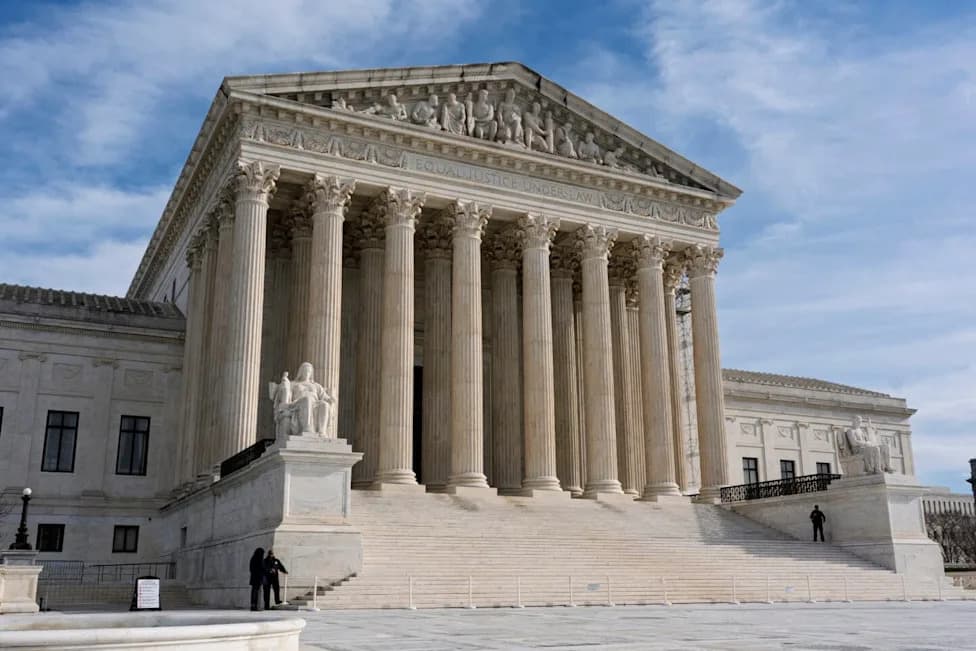
FILE - The Supreme Court is seen on Capitol Hill in Washington, Dec. 17, 2024. (AP Photo/J. Scott Applewhite, File)
An in-depth Vox analysis by senior Supreme Court correspondent Ian Millhiser argues that the Court’s embrace of a "colorblind" constitutional approach has shifted from a marginal theory into a central rationale for rulings that have weakened the Voting Rights Act and made it harder for Black voters to challenge discriminatory electoral maps.
What the analysis finds
Millhiser traces the doctrine’s rise from legal debates in the 1970s to recent decisions that treat race-conscious government actions with heightened skepticism — even when those actions are intended to remedy past discrimination. Under this approach, any government classification by race is viewed warily, which can equate remedial efforts with the very exclusion they seek to correct.
"The way to stop discrimination on the basis of race is to stop discriminating on the basis of race," Chief Justice John Roberts said in 2007 — a line Millhiser highlights as emblematic of the colorblind doctrine.
Key legal turning points
The analysis revisits Roberts’ work in the Reagan administration, where he opposed a 1982 amendment that strengthened results-based claims under Section 2 of the Voting Rights Act. That philosophy gained new force after Roberts became chief justice.
Notable cases Millhiser cites include:
- Shelby County v. Holder (2013): The Court invalidated the formula that determined which jurisdictions needed federal preclearance before changing election rules.
- 2023 Admissions Rulings: The Court significantly limited race-conscious college admissions, demonstrating the doctrine’s reach beyond voting law.
- Louisiana v. Callais (April): In a 6–3 decision, the Court struck down Louisiana’s second majority-Black congressional district and required Section 2 plaintiffs to show evidence giving a strong inference of intentional discrimination while separating race from partisan politics.
- Allen v. Milligan (June): The Court applied the Callais standard and stayed a lower-court order that would have blocked Alabama’s 2023 congressional map, a plan that retains only one majority-Black district instead of an additional Black-opportunity district ordered in earlier litigation.
Why this matters
Millhiser warns that when judges treat the colorblind theory as a constitutional command, it empowers courts to invalidate race-conscious programs across education, hiring, contracting, and other policy areas. Because the doctrine is now embedded in constitutional precedent, restoring the scope of protections under the Voting Rights Act may require more than new legislation — it could also demand a future shift in the Supreme Court’s composition or legal approach.
Bottom line
The Vox piece frames the Court’s colorblind turn as a foundational change in constitutional law with real consequences for voting rights and remedies aimed at addressing historic racial exclusion. Whether Congress can fully blunt those consequences remains uncertain unless the Court’s doctrine itself changes.
Help us improve.





















