
Captain Mohammad Shafiqul Islam says he and 31 crew members were stranded for 115 days near the Strait of Hormuz after missile strikes and an effective blockade disrupted shipping. The Banglar Joyjatra loaded 39,000 tonnes of steel coils in Qatar and was repeatedly denied passage by the IRGC about 25 nautical miles from Hormuz. With navigation systems down, Islam navigated manually, rationed dwindling supplies, and kept morale up until permission to cross was granted on June 23.
115 Days at Sea: Bangladeshi Captain Recalls Ordeal Near Strait of Hormuz
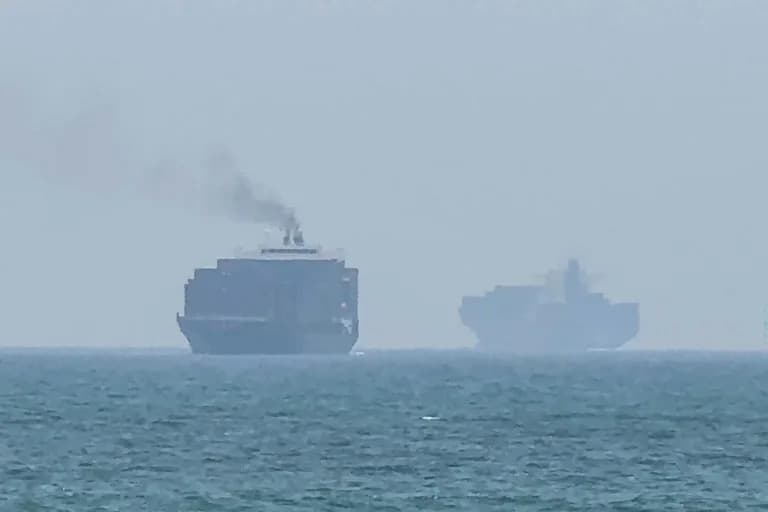
Cargo ships anchoring near the Strait of Hormuz off the eastern coast of the United Arab Emirates at Khor Fakkan (-)
Captain Mohammad Shafiqul Islam, a 51-year-old Bangladeshi mariner, says he and his crew spent 115 days stranded off the Gulf as missile strikes and a blockade around the Strait of Hormuz disrupted commercial shipping.
Ordeal Begins
Islam was commanding the bulk carrier Banglar Joyjatra, chartered by a Singapore-based company, which had loaded 39,000 tonnes of steel coils at Mesaieed Port in Qatar and reached the outer limits of Jebel Ali in the United Arab Emirates on February 26. About a month earlier, the United States and Israel launched strikes on Iran, and the ensuing conflict paralysed the strategically vital Strait of Hormuz.
'I tried to stay calm because I was responsible for 31 lives, a ship worth $40 million, and cargo valued at $8.2 million,' Islam told AFP after returning home.
Under Fire and Cut Off
In the early hours of February 28 the crew witnessed a missile strike about 200 metres from the vessel that ignited an oil storage facility. Explosions followed and the ship's electronic navigation system failed, forcing Islam to navigate manually by sighting lighthouses and coastal marks. With the waterway effectively blockaded, the Islamic Revolutionary Guard Corps repeatedly denied the Joyjatra permission to transit, turning the ship back roughly 25 nautical miles from Hormuz on several attempts.
Survival and Morale
Fresh water and food became scarce at times, and Islam introduced rationing to stretch supplies for the 31 crew members. He said some younger sailors were traumatised; to keep morale up, crew members turned to the Quran, while others used TikTok and small distractions. Islam regularly reassured his crew and communicated with worried family members back home in Cumilla, Bangladesh.
Release and Aftermath
After a ceasefire was announced in April, attempts to cross the strait continued to be denied until the Joyjatra finally received clearance to transit on June 23. Only after clearing the Strait of Hormuz were the crew able to relax and breathe a collective sigh of relief, Islam said. Despite his family's pleas that he leave seafaring, he told AFP he plans to continue sailing for many more years.
Facts: The ship was carrying cargo valued at about $8.2 million; the vessel's estimated value was $40 million. The incident highlights the disruption to commercial shipping caused by the Gulf hostilities and the human toll on crews caught in contested waters.
Help us improve.





















