
The U.S.-led campaign against Iran has entered its sixth month without a settlement, eroding support for President Trump. Military operations damaged Iran’s forces early on, but Tehran’s pattern of bad‑faith negotiation and apparent indifference to civilian suffering have stalled diplomacy. The conflict has driven up energy prices, pushed inflation above 4%, and slowed growth to about 1.5% in Q2. The author argues a strategic shift toward measures that compel Iran’s unconditional surrender is the only path to a swift resolution and to limit political fallout before the midterms.
Six Months Into the Iran Conflict, Author Urges Trump to Demand Unconditional Surrender
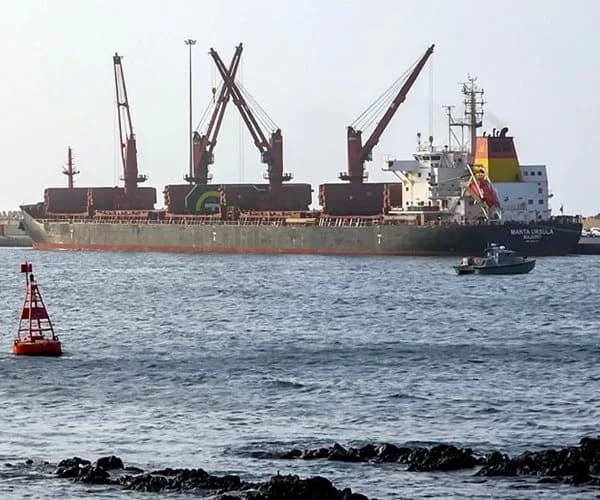
The Marshall Islands-flagged bulk carrier vessel Manta Ursula in Muscat on July 25, 2026. An incident involving a tanker and unspecified military forces was reported on July 25 near the Strait of Hormuz waterway, according to the United Kingdom Maritime Trade Operations monitor. (Getty Images)
The conflict with Iran has now entered its sixth month, and even many longtime supporters of President Trump are increasingly uneasy about the campaign’s direction and mounting costs. While Mr. Trump has produced notable economic results in the past, his role as Commander‑in‑Chief in the Middle East is under intense scrutiny. Instead of leaning on repeated diplomacy with a regime that has often acted in bad faith, the author argues the administration should adopt a strategy aimed at securing Iran’s unconditional surrender.
The Failure of Strategic Diplomacy
The initial objectives that accompanied U.S. and Israeli military action were explicit: prevent Iran from developing a nuclear weapon, eliminate its long‑range missile threat, and sever funding for proxy groups such as Hamas, Hezbollah, and the Houthis. In parallel operations—Operation Epic Fury by the United States and Operation Roaring Lion by Israel—coalition forces quickly degraded Iran’s air defenses, naval assets, and military infrastructure. Within weeks the administration declared major combat operations a success.
The plan assumed a heavily damaged Iran would be compelled to negotiate, allowing President Trump to leverage his negotiating skills for a lasting settlement. Months into the campaign, however, no durable agreement has emerged. Tehran’s pattern of stalling, signing agreements it later undermines, or reopening negotiations shortly after concessions suggests the regime has frequently used diplomacy to gain time rather than to reach a sincere settlement.
Indifferent to Human Suffering
In many conflicts, leaders weigh the domestic human toll and, when costs become unsustainable, seek terms to limit further destruction. The author invokes Imperial Japan’s acceptance of unconditional surrender following catastrophic civilian losses as a historical example. By contrast, Iran’s ruling clerics appear to subordinate civilian welfare to regime survival, treating domestic suffering largely as acceptable collateral damage. When an adversary is willing to endure—or impose—high civilian costs to remain in power, conventional diplomatic levers and sanctions may not be enough to secure voluntary concessions.
The Staggering Cost at Home
The strategic stalemate has significant domestic consequences. Repeated assurances that the conflict would end “shortly”—issued in successive months—have not materialized, eroding political credibility. The prolonged fighting has disrupted global energy markets, pushed energy prices higher, driven inflation back above 4%, and slowed U.S. economic growth to roughly 1.5% in the second quarter. Analysts had projected that, without the war’s economic drag, recent legislation could have supported growth nearer to 4% while keeping inflation below about 2.5%.
The Political Stakes
With midterm elections approaching, the political risks are acute. Voters are increasingly sensitive to rising prices, slower growth, and a costly, drawn‑out foreign engagement. If the administration allows the conflict to persist through fruitless diplomatic exchanges, the electoral consequences could be severe for the broader conservative agenda. The author contends that decisive military and strategic measures aimed at compelling an unconditional Iranian surrender are the only reliable path to a swift end—failure to act, he warns, risks long‑term damage to the nation and the Republican Party.
Conclusion
The author makes a stark argument: diplomacy and incremental pressure have not produced a settlement with Tehran, and the human and economic costs of continued stalemate are rising. He urges a strategic shift toward measures intended to force unconditional surrender, contending that anything less will prolong the conflict and deepen consequences at home and abroad.
About the author: Michael Busler is a public policy analyst and a professor of finance at Stockton University in Galloway, New Jersey, where he teaches undergraduate and graduate courses in finance and economics. He has written opinion columns for major newspapers for more than 35 years.
Help us improve.





















