Kansas voters will choose nominees in competitive primaries for governor and U.S. Senate and decide whether to allow direct election of state Supreme Court justices. The open governor's seat is a top Republican pickup opportunity, and Trump-backed endorsements are shaping the GOP primary. Incumbent Sen. Roger Marshall seeks renomination while Democrats run a crowded Senate primary. Turnout patterns, early ballots and county reporting will be closely watched as results come in.
Kansas Primary Preview: Governor, Senate And A Vote On How Justices Are Chosen

FILE - The bronze sculpture titled "Ad Astra," depicting a Kansa warrior, perched atop the Kansas State Capitol dome, is silhouetted against the nearly full moon, Nov. 14, 2024, on the eve of the final supermoon of the year in Topeka, Kan. (AP Photo/Charlie Riedel, File)
Kansas voters head to the polls Tuesday for a high-stakes primary that will shape the contest for governor, the U.S. Senate and a proposed change to how the state Supreme Court selects justices. Republicans see a prime opportunity to reclaim the governor's office after eight years of Democratic control, while competitive Democratic primaries will determine nominees for both governor and the Senate.
Gubernatorial Races
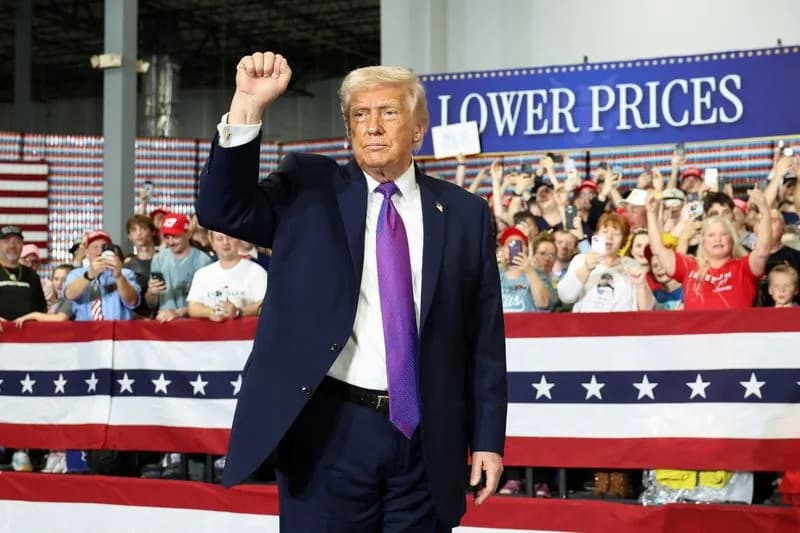
Democratic Gov. Laura Kelly is term-limited, creating an open-seat contest that Republicans are eager to flip. The GOP primary is a test of former President Donald Trump's influence: he has endorsed state Senate President Ty Masterson. Other leading Republican contenders include former state Rep. Charlotte O'Hara, financial-services executive Philip Sarnecki, state Insurance Commissioner Vicki Schmidt and Kansas Secretary of State Scott Schwab.
Sarnecki has self-funded aggressively, loaning his campaign about $2.5 million. Schwab also loaned his campaign more than $2.1 million. Joy Eakins, who initially loaned her own bid $1 million before joining Sarnecki as his running mate, later contributed $50,000 to the ticket.
On the Democratic side, state Sens. Ethan Corson and Cindy Holscher and Overland Park Mayor Curt Skoog are competing for the nomination. Corson has raised and spent roughly twice the combined totals of Holscher and Skoog and holds an endorsement from Gov. Kelly.
U.S. Senate Primary
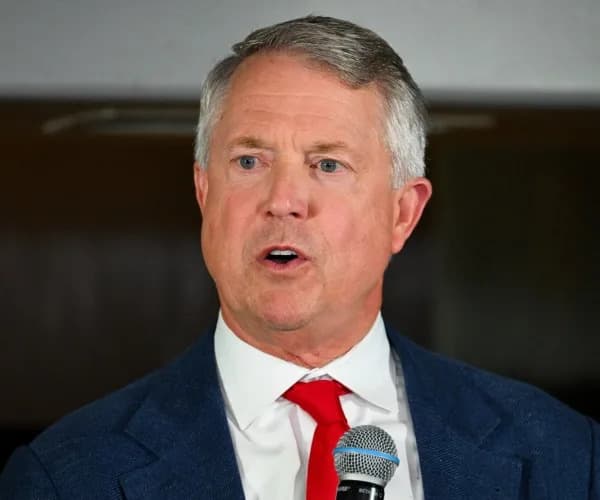
Incumbent Republican Sen. Roger Marshall is running for a second term and has President Trump's endorsement. Marshall won a crowded 2020 GOP primary with about 40% of the vote. He faces a long-shot primary challenge from Arch "Pond" Naramore, who previously ran in 2004.
The Democratic Senate primary is crowded, with 11 candidates including former Agriculture Department official Christy Davis; Methodist megachurch pastor Adam Hamilton; real estate developer Erik Murray; state Sen. Patrick Schmidt; retired financial-services executive Sandy Spidel Neumann; and Afghanistan War veteran Noah Taylor. Hamilton has outraised the rest of the Democratic field combined. Republicans have carried every U.S. Senate race in Kansas since 1932, and no Democrat has held this seat since the start of direct Senate elections in 1914.
Ballot Measure: State Supreme Court Selection
Voters will decide whether to amend the state constitution to allow the direct election of state Supreme Court justices and remove the governor from the selection process. Under the current system, a nominating commission, composed mainly of attorneys, submits a list of three finalists from which the governor chooses.
Turnout, Timing And What The AP Will Watch
As of May 1, Kansas had about 2 million registered voters: roughly 894,000 Republicans, 495,000 Democrats and 588,000 unaffiliated voters. By the Friday before the primary, roughly 133,000 ballots had already been cast — about 62,000 Republican and 60,000 Democratic ballots.
Polls in most of the state are in the Central time zone and close at 8 p.m. ET (7 p.m. local). Some precincts in the Mountain time zone close at 9 p.m. ET (7 p.m. local). The Associated Press will post results and declare winners in contested primaries for governor, U.S. Senate, U.S. House, secretary of state, state Board of Education and state House races, as well as for the statewide ballot measure.
The AP declares winners only when there is no plausible mathematical scenario for a trailing candidate to prevail. Kansas has no automatic recounts; candidates may request and pay for a recount regardless of margin. If the requester is later declared the winner, counties absorb the recount costs.
Counties And Reporting
Johnson County (Kansas City suburbs), Sedgwick County (Wichita) and Shawnee County (Topeka) are pivotal in statewide primaries for both parties. Douglas and Wyandotte counties are the most Democratic and play an outsized role in Democratic contests. Counties vary on reporting practices; about half release mail ballots along with Election Day tallies during the evening.
For context, about 463,000 Republican primary votes and 289,000 Democratic primary votes were cast in the 2022 governor primaries. In 2024 primaries, roughly 45% of Democratic primary votes and about 28% of Republican primary votes were cast early in person or by mail.
As of this election day, there will be 91 days until the 2026 midterm elections.
Takeaway: Expect close attention on fundraising and endorsements, the role of Trump’s backing in GOP contests, the crowded Democratic Senate primary and the outcome of the statewide measure on Supreme Court elections.
Help us improve.