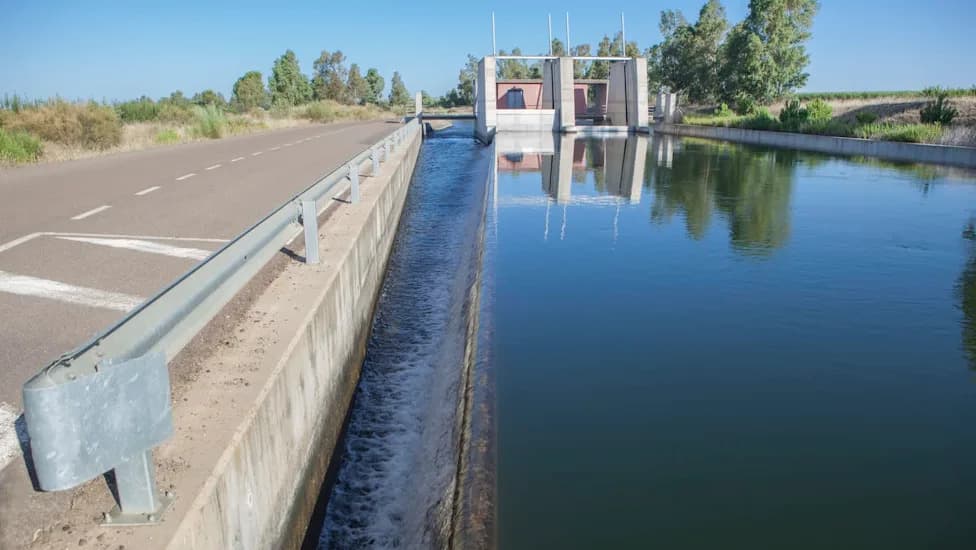
The article examines recent cyberintrusions first disclosed in Minnesota that have since appeared to affect at least seven states, with U.S. officials saying Iranian-linked hackers are the likely suspects. President Trump publicly rejected that attribution and blamed Minnesota officials, prompting sharp criticism from Democrats and security experts. Critics point to staffing and budget cuts at CISA, the removal of senior cyber leaders, and prior warnings about threats to water infrastructure. Investigations and heightened protections at affected utilities are ongoing.
As Cyberattacks Spread to U.S. Water Systems, Questions Mount Over Trump Administration’s Cybersecurity Record
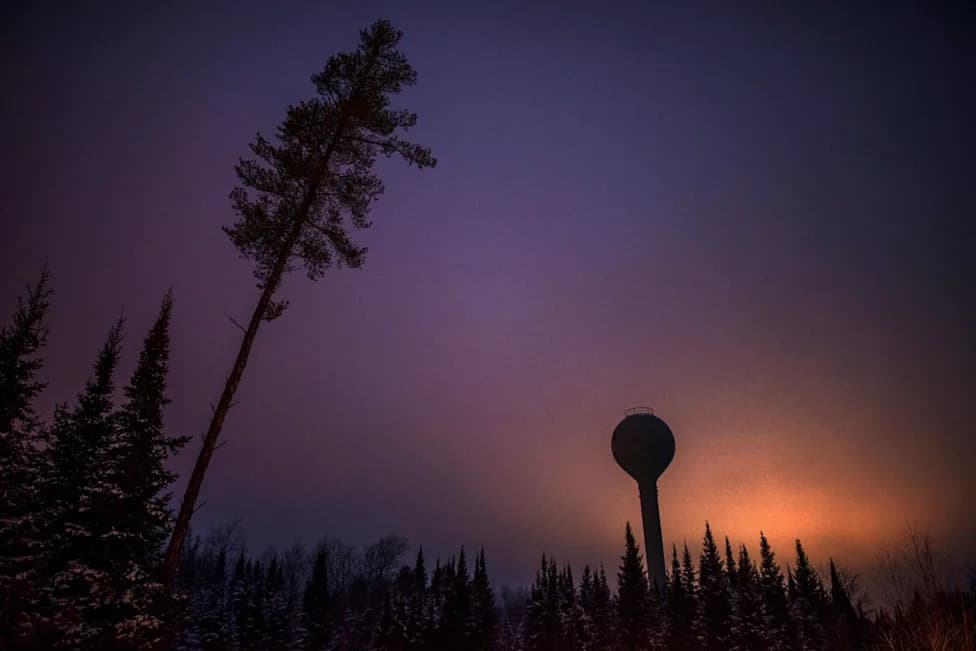
A water tower is seen on the Lac Vieux Desert reservation in Watersmeet, Michigan, on Dec. 20, 2014.
Last week Minnesota disclosed a cyberattack affecting roughly three dozen municipal water systems, and a U.S. official familiar with the investigation told MS NOW that Iranian-linked hackers were the likely culprits. Within days, officials warned the campaign of intrusions had expanded beyond Minnesota.
President Rejects Foreign Attribution, Blames State Leaders
At a Cabinet meeting at Camp David, President Donald Trump rejected intelligence linking the intrusions to Iran and publicly blamed Minnesota and its governor. "We heard in Minnesota there was a cyberattack, and they blame it on Iran — I don't think so," he said. "I blame it on Minnesota because they're grossly incompetent." When pressed by a reporter on whether Iran could be responsible, the president reiterated, "I think that Minnesota is behind it."
"There was a cyberattack of 30 water plants, and I would blame it on Minnesota and the governor, the corrupt governor of Minnesota." — President Donald Trump
Scope, Attribution and Response
The New York Times and other outlets reported that the intrusions have reached at least seven states and could be broader. Authorities said there were no indications that potable water had been altered or made unsafe, but officials remained on high alert because the targeted industrial-control systems are used to monitor and adjust water-treatment chemicals and pressure.
U.S. officials have not issued a definitive public attribution, but analysts cited a rise in Iranian-linked cyberactivity following recent U.S. and Israeli actions, prior Iranian targeting of similar infrastructure, and the absence of an obvious criminal financial motive as reasons to suspect Tehran.
Political Fallout: Critics Point to Policy Changes and Cuts
Democratic elected officials and security experts seized on the incident to criticize the administration's cybersecurity decisions. Minnesota Gov. Tim Walz responded to the president by highlighting cuts to federal cybersecurity programs and warning about national preparedness: "Trump knows exactly who is responsible for this attack, and knows that other states were hit, too. This is what modern warfare looks like, and it further illustrates there's no plan to win a war with Iran." Walz added that the administration's reductions had weakened the federal response.
Senate Minority Leader Chuck Schumer also pushed back, calling the president's blame of state officials "a bald-faced lie" and asserting that the administration had undercut the agencies meant to defend against such threats: "Trump cut the agency that protects cybersecurity by $700 million and still hasn't nominated a permanent director for it. Trump is grossly incompetent. He is responsible," Schumer wrote online.
Those criticisms cite a series of personnel and budgetary changes. Early in his second term the president removed several senior national security officials, including Air Force Gen. Timothy Haugh, who led U.S. Cyber Command and served as director of the National Security Agency. Reporting by Politico and others documented that the Cybersecurity and Infrastructure Security Agency (CISA) experienced staff reductions of more than a third, elimination of funding for election-security programs, and scaled-back support to state and local governments during the period in question.
Notably, CISA had issued a public warning roughly a year earlier about "Iranian-affiliated cyber actors" targeting U.S. water systems—an advisory that now appears prescient amid the current incidents.
Experts Warn of Growing Threats
The New York Times and security analysts have noted that foreign adversaries are increasingly targeting broad swaths of U.S. communications and public infrastructure. Independent Sen. Angus King of Maine warned the nation was retreating from recent gains in defensive posture: "I would call it almost an across-the-board retreat from the national security defenses that we built up over the past five years, at the same time that the threat is only increasing and accelerating."
As investigators continue to analyze the intrusions, officials and lawmakers face two parallel questions: who is responsible for the attacks, and whether policy choices over personnel, funding and agency support left U.S. infrastructure more exposed.
Update: Federal and state agencies are continuing forensic work and communications with critical-service operators; as of this report there were no confirmed changes to water quality.
Help us improve.