The death toll from the magnitude 7.1 quake that struck south‑western Japan on 28 July has risen to 38. A woman in her 70s found in a car that had run out of petrol later died of suspected heatstroke and may be the first death linked to the quake's aftermath rather than direct injury. More than 8,000 people are in temporary accommodation, hundreds have been hospitalised with heatstroke amid temperatures above 35°C, and Prime Minister Sanae Takaichi planned a visit to assess needs and coordinate support.
Woman Dies Of Suspected Heatstroke After Kumamoto Quake; Death Toll Rises To 38
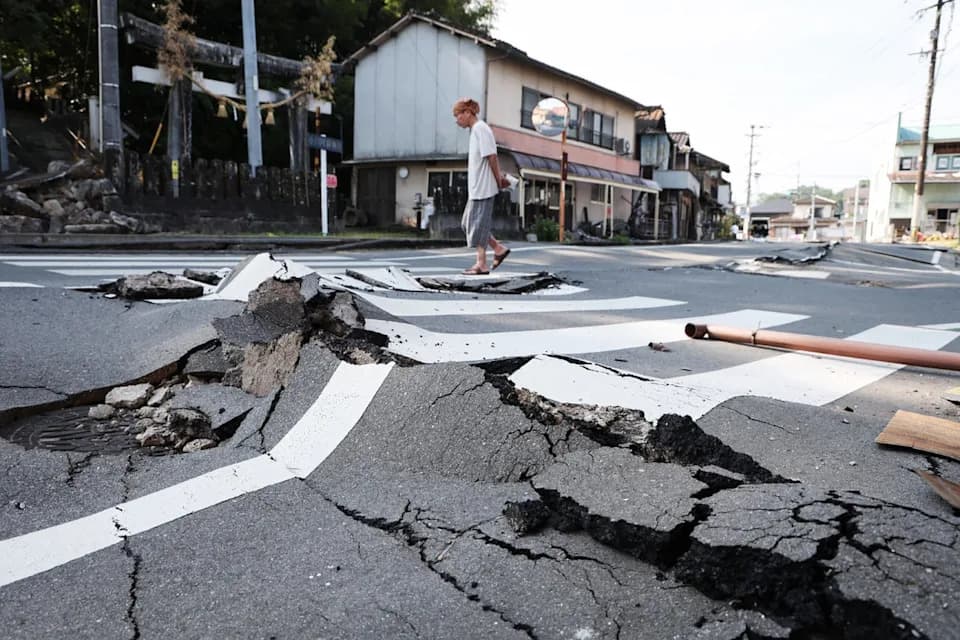
A man walks along a destroyed road in Uki, Kumamoto prefecture (AFP/Getty)
A woman in her 70s who had been sleeping in her car was found on 30 July in a vehicle that had run out of petrol in Kumamoto Prefecture and later died of suspected heatstroke, prefectural officials said. Authorities believe her death may be the first fatality linked to the earthquake's aftermath rather than to injuries sustained during the tremor itself.
Quake Toll And Immediate Impact
The magnitude 7.1 earthquake struck south-western Japan on 28 July. The prefecture has reported a revised death toll of 38, which includes the woman found in the car and two other deaths that are still under investigation to determine whether they were caused by the quake. Thirteen people are in a serious condition, up from 11 the previous day.
Where Losses Were Heaviest
The deadliest single sites were a Nippon Paper Industries mill in Yatsushiro, where nine people died after a chimney collapsed, and an Aeon shopping mall in Kashima, where an explosion shortly after the quake killed seven people. Aeon also confirmed that a male customer found unconscious after a ceiling collapse at a separate mall in Uki on 31 July subsequently died in hospital.
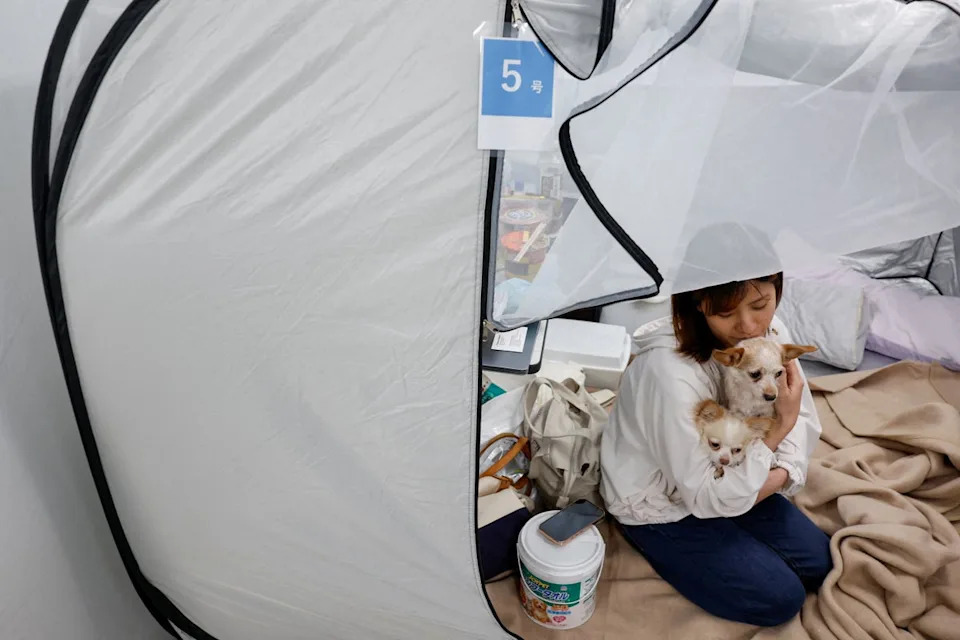
Tomoko Takaoka, 31, who evacuated from Uki with her pet dogs Chihuahua Ku (7) and Chihuahua mixed with poodle Sheri (8) (Reuters)
Heat, Evacuations And Health Risks
Power and water were cut in parts of the region after the quake, prompting many survivors, especially elderly residents, to shelter in their cars to use air conditioning. Temperatures have been extreme — daytime highs exceeded 35°C across the area, and last month three cities recorded temperatures above 40°C on the same day, prompting the weather agency to issue its first "cruelly hot day" warning.
Hundreds of people have been hospitalised with heatstroke nationwide, and several heat-related deaths have been recorded this season. Health officials warned evacuees to drink water before feeling thirsty, to take frequent cooling measures, and to avoid sitting for long periods in parked cars because prolonged immobility can raise the risk of blood clots.
Response And Context
More than 8,000 people remain in evacuation centres or other temporary accommodation as emergency services and volunteers work to restore utilities and support displaced residents. Prime Minister Sanae Takaichi was due to visit Kumamoto to assess needs on the ground and outline government support measures.
The quake registered the highest intensity on Japan's seismic scale in the towns of Uki and Hikawa, where the Japan Meteorological Agency says people cannot remain standing or move without crawling and may be thrown through the air at that level. The prefecture was previously struck by powerful earthquakes in 2016 that killed more than 270 people and damaged the historic Kumamoto Castle; officials said the latest tremor brought down more stones from the castle's walls.
Key advice: Evacuees should prioritise hydration, seek cool sheltered spaces when possible, check on elderly neighbours, and avoid long, stationary periods inside vehicles.
Help us improve.