Overview: The Popular Mobilisation Forces (PMF) — a coalition of mainly Shia militias cultivated over decades and tied in part to the late Qassem Soleimani — have re-emerged as a strategic tool for Iran to expand regional confrontation without direct Iranian strikes. After Iran fired ballistic missiles at US positions in Jordan, the US and Saudi Arabia struck PMF sites in Iraq; the PMF reported at least 20 dead. Deeply embedded in Iraqi politics and society and split among state-oriented, pro-Iran, and Sadr-linked factions, the PMF is difficult to dismantle without risking wider instability and further escalation.
How Tiny Shia Militias Threaten to Expand the Middle East War
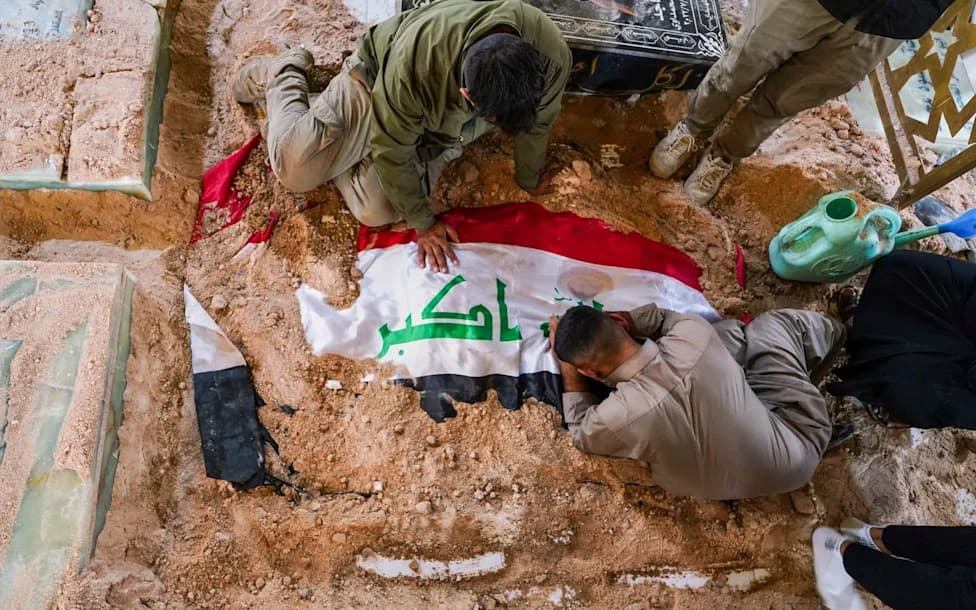
Mourners grieve at the grave of a Popular Mobilisation Forces fighter - Anmar Khalil/AP
Six years after the death of Qassem Soleimani, the militias he helped build are again reshaping the region. A loose network of Shia paramilitary groups in Iraq — the Hashd al-Shaabi or Popular Mobilisation Forces (PMF) — has become one of Tehran's most effective means of pressuring the United States and regional rivals while keeping direct Iranian involvement at arm's length.
After Iran launched a surprise volley of ballistic missiles at US positions in Jordan this week, Washington blamed PMF-linked factions. In retaliation, the United States and Saudi Arabia struck sites inside Iraq they identified as PMF bases. The PMF said the strikes hit several locations, killing at least 20 fighters and wounding dozens more; officials warned casualties may rise.
From battlefield innovators to political actors
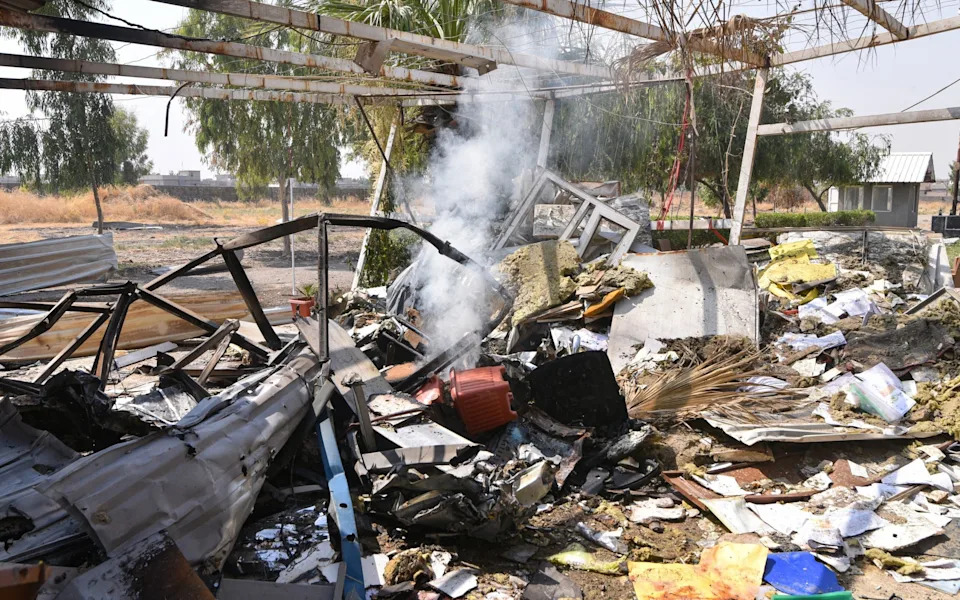
The aftermath of a US-Saudi strike in the northern Iraqi Nineveh province on Wednesday - Zaid al-Obeidi/AFP via Getty Images
The PMF traces its formal origin to June 2014, when Grand Ayatollah Ali Sistani issued a fatwa calling on Iraqis to take up arms against Islamic State. Tens of thousands of volunteers — many young and many Shia — mobilised; a state-recognised force was later created and funded by Baghdad. But beneath the single label lies roughly 110,000–130,000 fighters divided among about 68 distinct groups with widely differing loyalties and agendas.
Three broad camps: the Sistani-linked "atabat" units that generally present themselves as loyal to the Iraqi state; the pro-Iran "waliyi" factions fostered by Iran's Islamic Revolutionary Guard Corps and Quds Force; and groups rooted in the movement of Muqtada al-Sadr. It is the waliyi factions — including Kataib Hezbollah, Asaib Ahl al-Haq and Harakat al-Nujaba — that constitute Tehran's most direct leverage inside Iraq and that Washington has designated as terrorist organisations.
"They are good assets but very difficult to control, and Iran needs them to project power," a Tehran analyst told reporters. "Their strength is that they are people-based and embedded in Iraqi society — which also makes them hard to eliminate cleanly."
Embedded and hard to dislodge
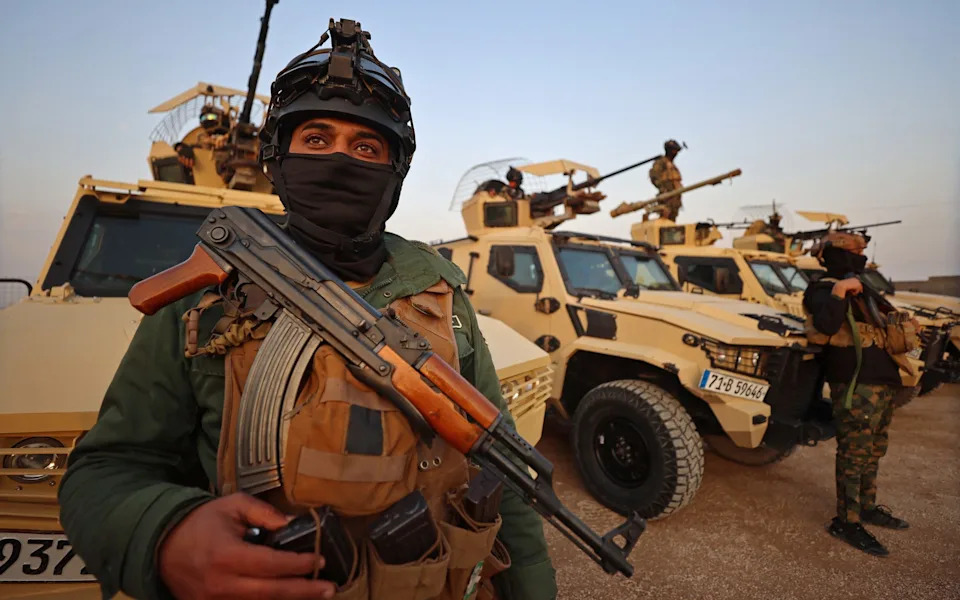
Members of the PMF stand guard at a military base near the Iraqi-Syrian border in Al-Qaim - Ahmad al-Rubaye/AFP via Getty Images
Over time the militias have accumulated heavy weaponry, including long-range rockets and anti-aircraft systems, and have woven themselves into Iraq's political and economic fabric by taking positions in government, forming political parties and developing business networks. That integration gives them influence in parliament and complicates any effort to dissolve the PMF without triggering political collapse or widespread violence.
Analysts warn that dismantling or defeating the pro-Iran elements by force would likely escalate the conflict, turning Iraq into a full theatre of war — an outcome Iran may welcome because it broadens the front and raises the political and economic costs for the United States and its partners.
What this means now
The recent strikes — and the PMF's role in the tit-for-tat dynamic — demonstrate how militias can be used strategically to pressure opponents indirectly. Even with Soleimani gone, the networks he helped cultivate remain flexible tools in Iran's regional strategy: potent enough to provoke international responses, yet distributed across Iraqi society and institutions to complicate decisive countermeasures.
As long as these groups remain embedded in the Iraqi state and backed by external patrons, they will continue to pose a risk of widening local skirmishes into broader, prolonged conflicts.
Help us improve.