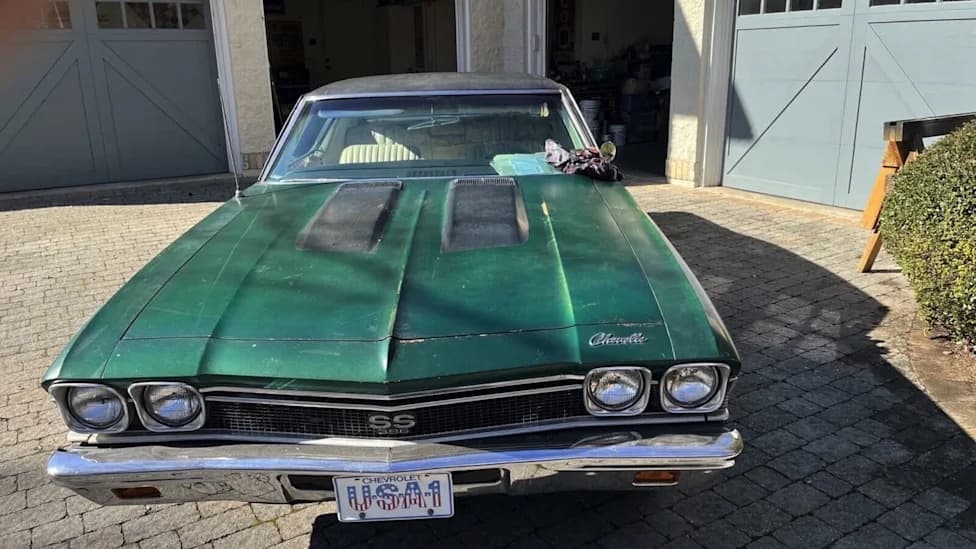
What Happened: A 1970 Chevrolet Chevelle valued at $80,000–$100,000 disappeared from a Centereach driveway between 11:47 and 11:49 p.m. on July 1, and the Ring footage that should have shown the theft is missing. Investigation: Suffolk County Police’s Sixth Precinct says the case is open, with no usable video and no arrests. Takeaway: Cloud-dependent cameras can lose brief clips due to router, ISP, battery issues, or illegal jammers; classic cars without modern immobilizers can be lifted quickly, so recovery often depends on documentation, VIN checks, and insurance type.
A $100K 1970 Chevelle Vanishes From Centereach Driveway — And Two Minutes Of Ring Footage Disappear Too
A $100K Chevelle Vanished From a Centereach Driveway, and So Did Two Minutes of Ring Footage
Shortly before midnight on July 1, a Ring camera mounted above a garage in Centereach, New York, showed a 1970 Chevrolet Chevelle parked in a driveway. According to the owners, Owen and Leah Fitzpatrick, the clip clearly shows the car at 11:47 p.m.; two minutes later, at 11:49 p.m., the Chevelle is gone and the footage that should have captured the theft is missing. That two-minute blackout is what makes this more than an ordinary theft—somebody made a six-figure classic disappear inside a gap investigators are still trying to explain.
What Happened
The Chevelle, valued by the couple at between $80,000 and $100,000, was parked outside their West Court Drive home while Leah was in the hospital preparing for quadruple bypass surgery. Owen discovered the empty driveway and immediately noticed the missing segment of Ring video. No arrests have been reported; Suffolk County Police’s Sixth Precinct says the case remains open and the vehicle has not been recovered.
Why the Missing Footage Matters
Most consumer security cameras rely on a constant internet connection and cloud storage rather than continuous, local recording. Any interruption—a router glitch, an ISP outage, a wireless camera battery failure—can create a gap precisely when footage is most needed. In theory a deliberate Wi‑Fi jammer could produce a similar blackout, but jammers are illegal under federal law (47 U.S.C. § 333) and would typically affect more than a single home.
Owen and Leah’s account: “At 11:47 the car is there. At 11:49 the car is not there.”
How the Theft Likely Occurred
A 1970 Chevelle predates transponder keys, immobilizers, and rolling-code ignitions, so it can be started or simply loaded onto a flatbed without complex electronic bypasses. A small, practiced crew with a flatbed or tow dolly can lift, strap, and leave with a driveway car in just a few minutes, which fits the Fitzpatricks’ narrow two-minute window.
Why Classic Cars Are Attractive Targets
Auction values for well-documented, numbers-matching muscle cars have risen dramatically, making them attractive to thieves and fences. Stolen classics may be parted out, repainted and re-identified with cloned VINs, quietly resold to buyers who don’t verify provenance, or hidden in storage until someone eventually checks its history. Recovery often depends less on catching the thieves in the act than on spotting the car when it resurfaces.
Recovery Odds: Paperwork and Insurance
Recovery efforts hinge on documentation: high-resolution photos, engine and casting numbers, original build sheets, and the VIN. These can be checked against the National Insurance Crime Bureau’s VINCheck database and circulated among Chevelle registries and enthusiast clubs. Insurance type matters too: an agreed-value classic policy typically pays the contract amount, while an actual-cash-value policy can leave owners disputing what a 55-year-old Chevelle is worth.
Practical Lessons For Classic Owners
For owners of valuable classics, relying solely on a consumer cloud camera can leave critical gaps. Recommended precautions include:
- Hardwired camera systems with local onboard storage to record even if the internet fails.
- A discreet, wired GPS tracker powered from the vehicle’s electrical system rather than a removable battery.
- Physical deterrents such as steering-wheel or pedal locks to slow a quick theft crew.
None of these measures guarantee prevention, but layered protections raise the time, risk and skill required to remove a vehicle quickly—improving the odds that a theft will be interrupted or traced.
Where Things Stand
The Fitzpatricks continue to wait on an active investigation with no suspects and a two-minute hole where evidence should be. If the Chevelle is recovered, it will likely be because someone recognized it, ran its VIN, or spotted suspect paperwork—not because the home camera captured the vanishing act.
Help us improve.