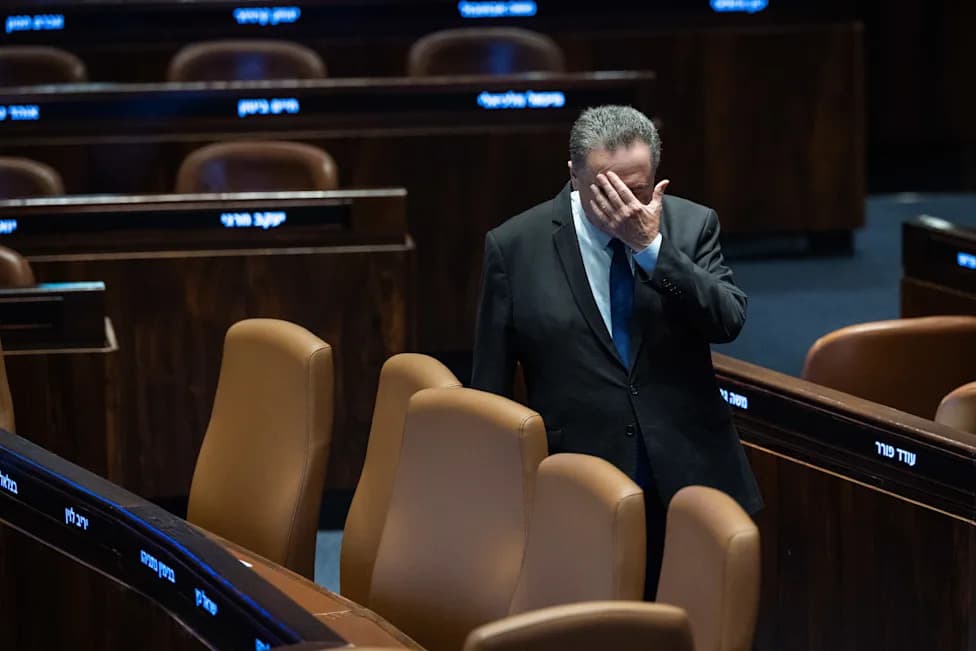
Israel has told the White House it has "serious security concerns" about a U.S.-brokered plan for Hamas to disarm, saying intelligence shows Hamas is rearming and that Israeli forces will not withdraw until weapons are physically surrendered. The 20-point U.S. proposal links disarmament, destruction of tunnels, a phased Israeli pullback, a technocratic Palestinian committee and international forces, but implementation remains conditional and complex. Political pressures in Israel and continued strikes in Gaza complicate the path forward, with recent attacks causing additional civilian casualties.
Israel Raises Security Alarm Over Proposed Hamas Disarmament Deal
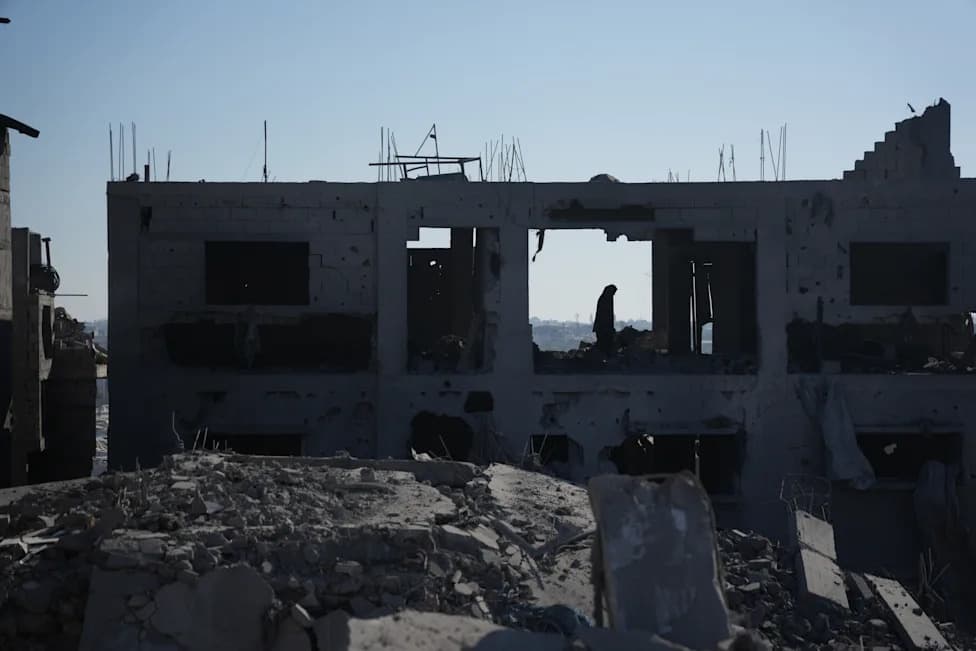
A Palestinian woman inspects a destroyed building following an Israeli airstrike in Deir al-Balah, central Gaza Strip, Sunday, July 19, 2026. (AP Photo/Abdel Kareem Hana)(AP Photo/Abdel Kareem Hana)
TEL AVIV — Israel has told the White House it has "serious security concerns" about a U.S.-announced plan for Hamas to disarm, an Israeli official said Sunday, offering one of the first public reactions since President Donald Trump unveiled the agreement.
Doron Spielman, a spokesperson for the Israeli prime minister's office, told The Associated Press that Israel's intelligence assessment indicates Hamas remains intent on rebuilding its military capabilities rather than truly demilitarizing. Spielman said Israeli forces would not withdraw from Gaza — where Israel currently controls more than 60% of the territory — until Hamas has physically surrendered its weapons.
"Our assessment is that if we redeploy before Hamas is truly disarmed, it will quickly expand its presence throughout Gaza, rebuild its terrorist infrastructure, once again threaten Israeli communities, and seek to carry out another Oct. 7‑style attack," he said, referring to the Hamas assault on Israel in October 2023.
"Disarming means physically giving up the weapons. Nothing less," Spielman added.
The comments follow Hamas statements saying it would begin disarming under the U.S.-brokered ceasefire signed last October. While that step could be a breakthrough toward ending nearly three years of intermittent fighting, officials warn many conditions, obstacles and long timetables remain.
Trump's 20-point ceasefire plan calls for Hamas to surrender arms, destroy its tunnel network, a phased Israeli withdrawal, installation of a technocratic Palestinian committee and deployment of international security forces to help restore order and begin reconstruction.
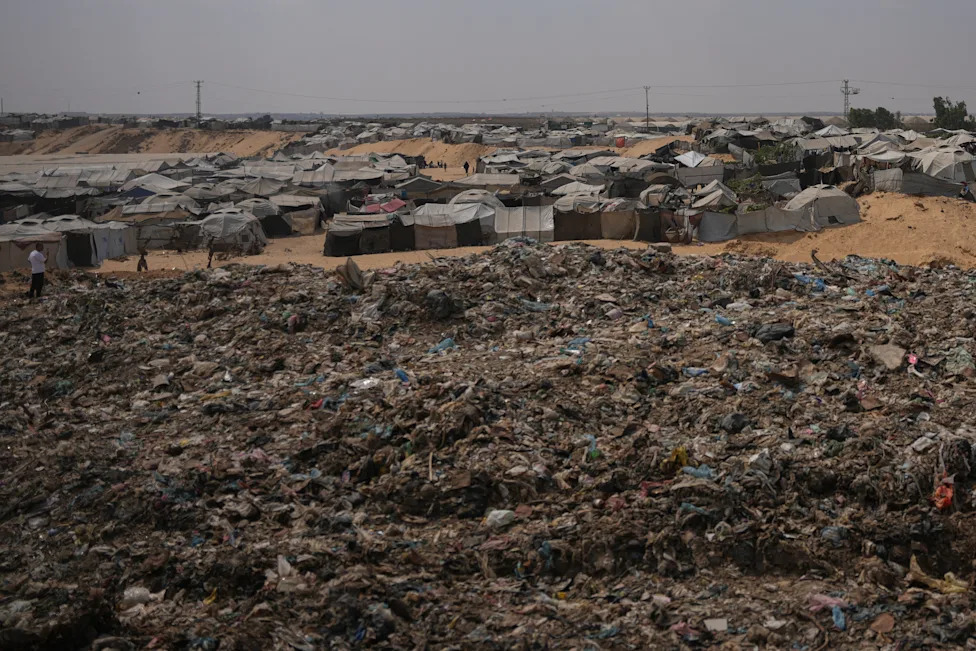
Tents sheltering displaced Palestinians stand near a landfill in Deir al-Balah, in the central Gaza Strip, Thursday, July 23, 2026. (AP Photo/Abdel Kareem Hana)(AP Photo/Abdel Kareem Hana)
A copy of the agreement obtained and verified by the AP states that weapons held by Hamas-run police units would be transferred to a U.S.-backed Palestinian technocratic body, the National Committee for the Administration of Gaza, once it arrives. The agreement ties decommissioning of heavy weapons, dismantling of production sites and tunnel destruction to the committee's arrival and to deployment of international forces — and links those steps to a phased Israeli withdrawal.
Much of the territory currently under Israeli control in Gaza has been largely destroyed and depopulated. Most of the territory's roughly 2 million Palestinians live in the remaining areas, where hundreds of thousands shelter in tent camps and ruined neighborhoods.
Political calculations at home complicate Israel's position. Prime Minister Benjamin Netanyahu faces an uphill reelection campaign ahead of October elections, with far-right coalition partners urging continued pressure on Hamas and critics faulting his government for failing to prevent the Oct. 7 attack.
Hamas-led militants attacked Israeli communities on Oct. 7, killing about 1,200 people — mostly civilians — and seizing 251 hostages. Israel's subsequent military campaign has, according to the Gaza Health Ministry, resulted in more than 73,000 deaths. The Gaza Health Ministry's tallies are used by U.N. agencies and others as key indicators, though the ministry does not distinguish between fighters and civilians in its total and reports women and children make up roughly half of fatalities.
Spielman said Israel appreciates the U.S. role and Trump's stated commitment to Israeli security, but that the government's opposition to a premature withdrawal is grounded in intelligence indicating Hamas is rearming, recruiting fighters and rebuilding military capability. It is not clear exactly what Israel has conveyed to the White House; two people familiar with the plan told the AP that Israel had raised objections with former British prime minister Tony Blair, who serves on the Trump-led Board of Peace, and sought assurances including the ability to continue operations in Gaza if necessary.
Even after the ceasefire took effect last October, Israel has continued limited strikes, saying it targets Hamas operatives and infrastructure. Overnight Saturday into Sunday, health officials reported at least 12 people were killed in Israeli strikes, including children; a strike on a residential apartment in southern Gaza killed three members of one family, including a 4-year-old, medical staff at Nasser Hospital said. The Israeli military said the strikes targeted Hamas operatives but provided no further details.
Help us improve.