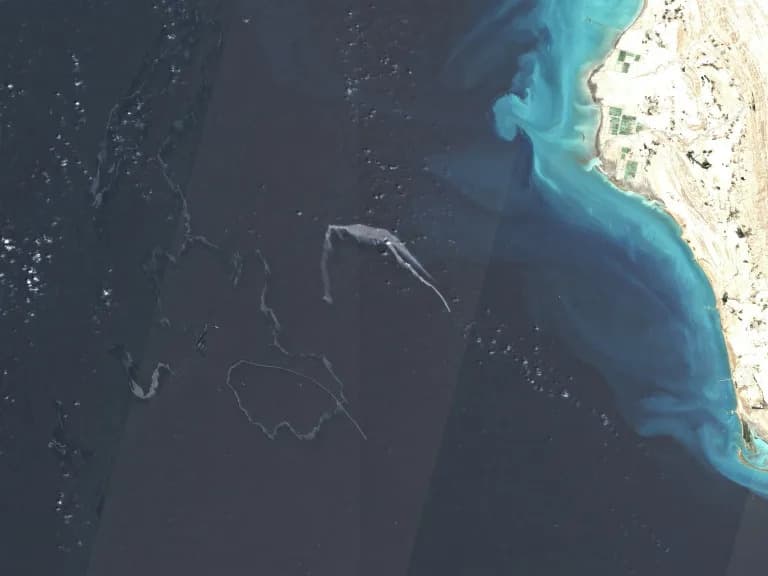
Scientists warn that more than 1,500 commercial vessels idled near the Strait of Hormuz since Feb. 28 may have accumulated extensive biofouling on their hulls, and when those ships sail again they could carry invasive species and pathogens to ports worldwide. Biofouling communities commonly enter a rapid growth phase after about 10 days, and many trapped ships have been stationary for months beginning in spring — heightening reproductive and dispersal risks. Researchers urge pre-departure assessments, targeted in-water cleaning when feasible, and enhanced port monitoring, while noting practical limits to widescale de-fouling amid urgent human and shipping priorities.
Idle Ships Near Strait of Hormuz Could Trigger Global Spread of Invasive Marine Species
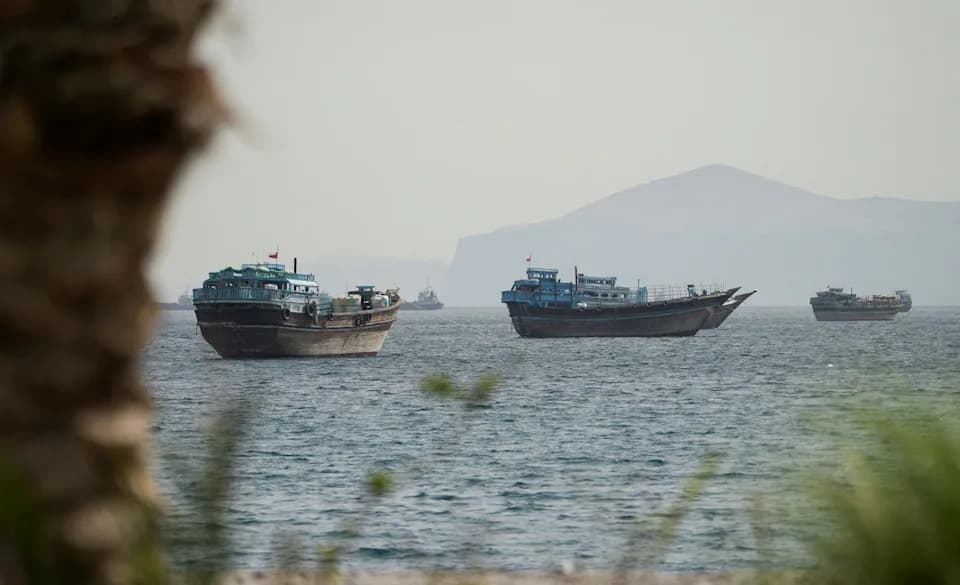
Vessels sail through the Strait of Hormuz, Musandam, Oman, on May 22, 2026.
Stalled commercial vessels anchored near the Strait of Hormuz are creating more than an economic headache: scientists warn that more than 1,500 idled ships may have become floating reservoirs of marine life on their hulls, and when trade resumes those organisms could be transported around the world.
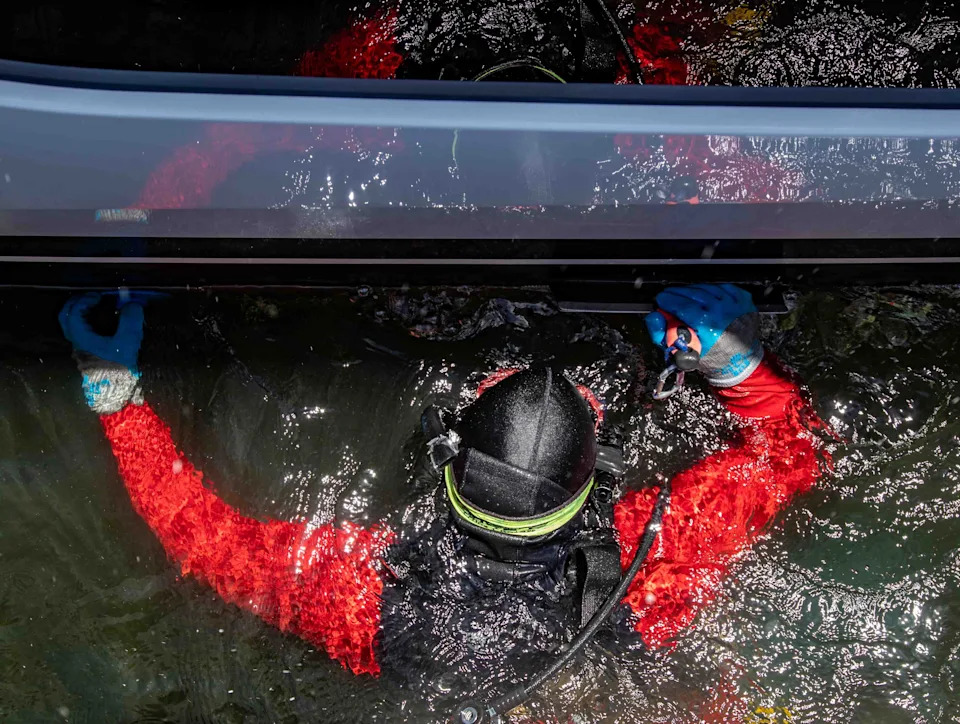
A commercial diver from Atlantic Underwater Diving Services works to remove barnacles and other growths that attached themselves to the hull of one of the luxury yachts at the Town of Palm Beach Marina August 13, 2024.
Why This Is A Biosecurity Concern
When ships remain stationary for days or weeks, the submerged parts of their hulls become colonized by microbes, algae and larger organisms — a process called biofouling. Researchers say biofouling communities commonly enter a rapid growth phase after roughly 10 days. Cargo ships typically sit in port for less than two days, but many vessels near the Strait of Hormuz have been stationary for months, beginning in spring when water temperatures favor reproduction and growth.
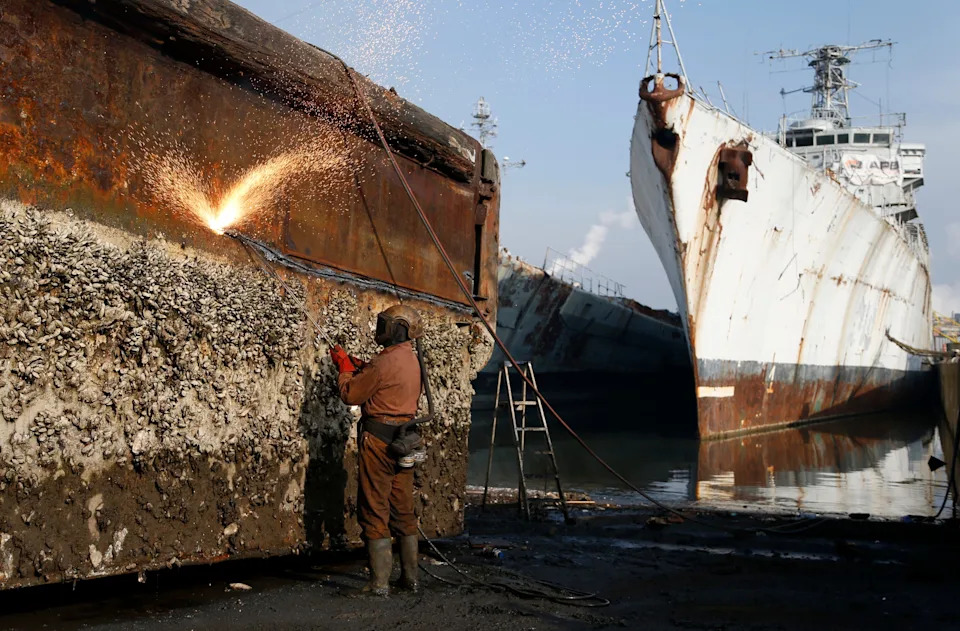
A worker uses a cutting torch to dismantle the hull of a barge covered in barnacles near French navy vessels at the Galloo ship recycling plant in Ghent March 24, 2015.
“A Perfect Storm”
"If you had to sort of design a worst-case scenario, it would look a lot like this," said Mario Tamburri, lead author of a new international study and a professor at the University of Maryland Center for Environmental Science. "It's a perfect storm."
Potential Ecological and Economic Impacts
When nonnative organisms are moved to new waters they can outcompete native species, damage coastal infrastructure and introduce pathogens harmful to marine life and sometimes people. Heavy biofouling also increases hull drag, forcing ships to burn more fuel and generating extra emissions. The International Maritime Organization estimates biofouling contributes to about 10% of global shipping fuel consumption, prompting operators to spend billions annually on antifouling coatings and cleaning.
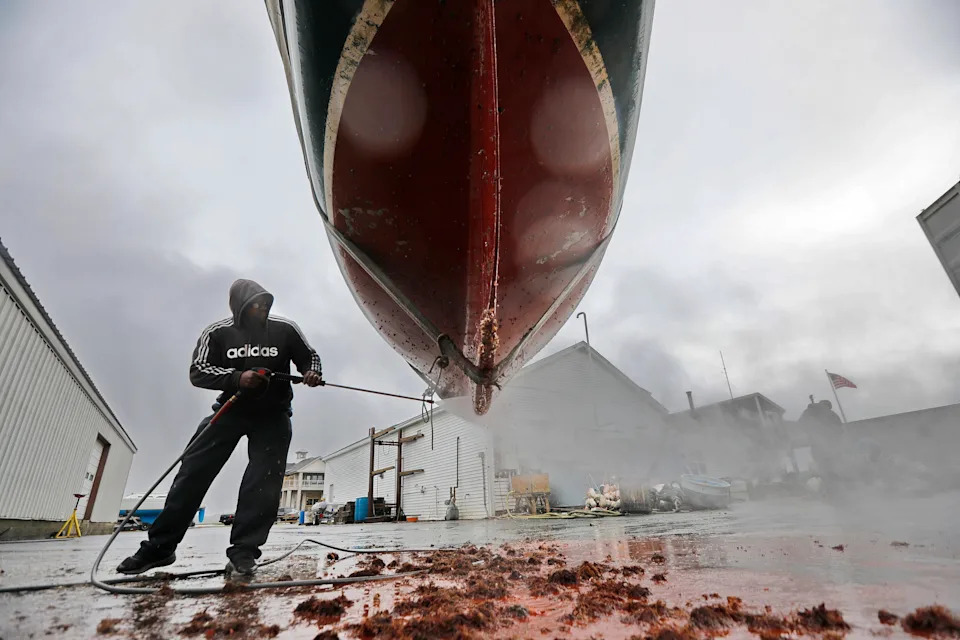
Will Cruz uses a powerwasher to remove the barnacles and growth accumulated over the boating season, from the hull of a sailboat they just removed from the water at Barden's Boat Yard in Marion.
Historical Examples
- Austrominius modestus: An Australasian barnacle that arrived in Western Europe during World War II after New Zealand ships were held in English ports; it outcompeted native species.
- Garveia fransiscana: The rope grass hydroid, native to the Indo-Pacific, likely arrived in the Chesapeake Bay via commercial shipping about a century ago and now obstructs power plant cooling systems, costing millions annually to manage.
- Vibrio cholerae: In the early 1990s, the cholera-causing bacterium was detected on five ships that had arrived in U.S. Gulf ports from Latin America during an outbreak, prompting U.S. agencies to recommend high-seas ballast-water exchange.
Why Organisms From the Persian Gulf Are Particularly Worrisome
Species that thrive in the Strait of Hormuz, the Gulf of Oman and the Persian Gulf tolerate extreme conditions — surface temperatures there can range from roughly 60°F in winter to about 95°F in summer. That physiological tolerance makes them especially likely to succeed when introduced to other warm, high-salinity ports such as those in Southeast Asia and India.
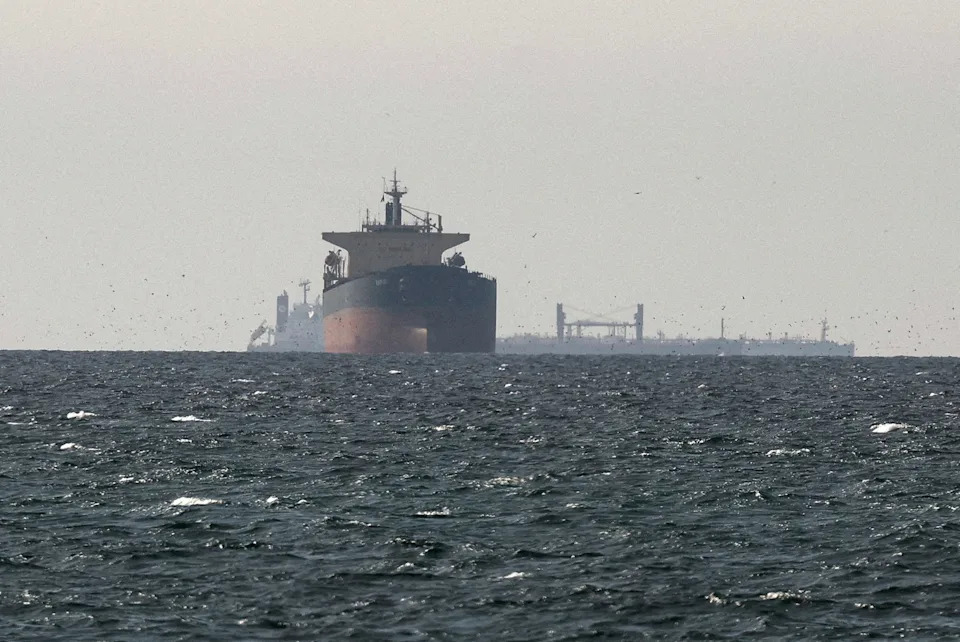
Cargo ships in the Gulf, near the Strait of Hormuz, as seen from northern Ras al-Khaimah, near the border with Oman’s Musandam governance, amid the U.S.-Israeli conflict with Iran, in United Arab Emirates, March 11, 2026.
Practical Challenges And Recommendations
The study acknowledges major practical barriers to large-scale hull cleaning: limited cleaning capacity, competing priorities to evacuate crew and reopen trade lanes, and resource constraints at many ports. Given those realities, researchers recommend:
- Estimating biofouling buildup before departure so authorities can assess risk;
- Prioritizing early-detection monitoring at nearby and destination ports using low-cost rapid assessments;
- Conducting in-water cleaning or professional hull maintenance where feasible and safe;
- Strengthening international biofouling management, surveillance and information-sharing among governments and the maritime industry.
While human safety and the restoration of commerce understandably take precedence, researchers urge that ecological risks not be ignored — both because invasions can cause long-term environmental damage and because they carry substantial economic costs.
Longer-Term Outlook
Climate change may magnify these risks as ocean temperatures rise: native species already near their thermal limits could be displaced more easily by invaders adapted to warmer, saltier conditions.
Reporter: Christopher Cann, USA TODAY. Contact: [email protected].
Help us improve.