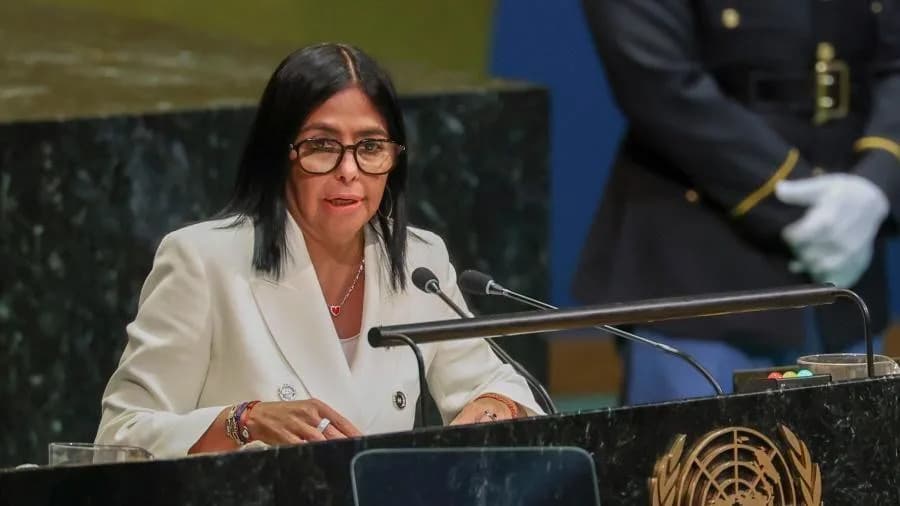
Venezuela's government and opposition agreed to hold in-person transition talks in Caracas next week, officials said. The initial agenda will prioritize earthquake relief, strengthening democratic institutions, and protecting political rights. The negotiations—backed by the United States and other international actors—aim to produce a clear timetable for new elections, though some pro-Chavista factions remain distrustful of the process.
Venezuela, Government And Opposition To Begin In-Person Transition Talks In Caracas Next Week
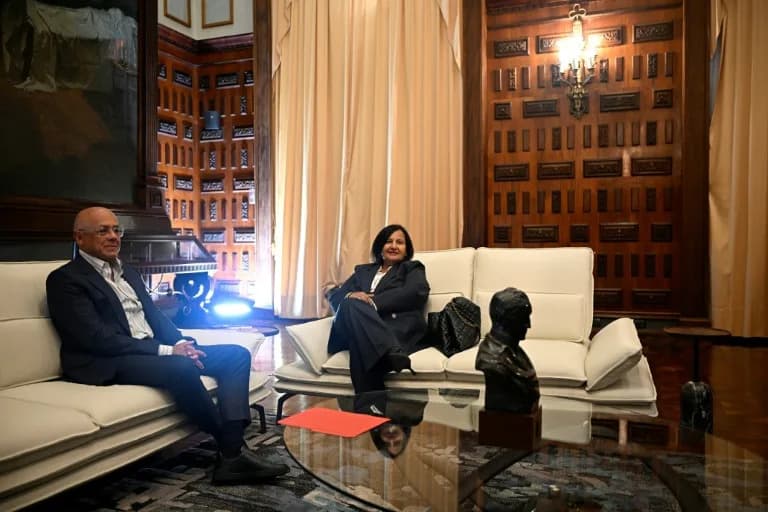
The head of Venezuela's National Assembly, Jorge Rodriguez (L), first met with opposition figure Dinorah Figuera in June 2026, but their formal political transition talks will soon begin (Federico PARRA)
Venezuela's government and opposition announced on Saturday that in-person political transition talks will convene next week in Caracas. The meeting comes amid a period of intense political uncertainty and follows devastating earthquakes in the country's north last month that officials say killed more than 5,500 people.
Agenda And Participants
Jorge Rodriguez, head of the National Assembly and the government's chief negotiator, said after a phone call with opposition figure Dinorah Figuera that "we agreed on a first in-person meeting in Caracas next week." He added the parties "have established a working agenda with clear and verifiable objectives," and that the opening session will focus on delivering aid to quake victims, reinforcing democratic institutions, and protecting political rights.
The government delegation will include Jorge Rodriguez and former foreign minister Jorge Arreaza. Figuera — who leads an opposition bloc that won a legislative majority in 2015 and has spent time in exile — confirmed the phone call and the agenda items, while noting her negotiating team does not include several high-profile opposition figures.
Context And International Support
The transition discussions are supported by the United States and other international actors, who have described the talks as a vehicle for rebuilding democratic institutions, strengthening the electoral process, and guaranteeing broad political participation. Observers hope the negotiations will result in a concrete calendar for new, internationally observed elections.
"This marks a new chapter in the fight to build a dignified future for all Venezuelans," Dinorah Figuera said in a statement thanking international supporters, and singling out U.S. Senator Marco Rubio for his backing.
Divisions And Outstanding Issues
Some Chavista supporters of the Maduro movement remain wary of a process perceived as limited to representatives approved by specific foreign governments. The opposition has also disputed the outcome of Venezuela's last vote in 2024, and several exiled opposition figures were not invited to the talks.
As negotiators meet, key challenges will include establishing mutual verification mechanisms, ensuring inclusive representation, and agreeing on a timetable and safeguards for free and fair elections. Humanitarian assistance for communities devastated by the recent quakes is expected to be a priority in the initial sessions.
Reporting credits: pgf/sst/acb
Help us improve.